

p73(アセチルLys321)ウサギポリクローナル抗体
コンジュゲーション: 非共役
ウサギポリクローナル抗体
アプリケーション
反応性
ヒト、ラット、マウス
遺伝子名
TP73
保存
小分けして-20℃で保存してください(12ヶ月間有効)。凍結融解サイクルは避けてください。
要約
| 製品名 | p73(アセチルLys321)ウサギポリクローナル抗体 |
| 説明 | ウサギポリクローナル抗体 |
| 宿主 | うさぎ |
| 反応性 | ヒト、ラット、マウス |
| コンジュゲーション | 非共役 |
| 修飾 | アセチル化 |
| アイソタイプ | IgG |
| クローン性 | ポリクローナル |
| 形態 | 液体 |
| 濃度 | 非共役 |
| 保存 | 小分けして-20℃で保存してください(12ヶ月間有効)。凍結融解サイクルは避けてください。 |
| 配送 | 氷嚢。 |
| バッファー | 50% グリセロール、0.5% 保護タンパク質、0.02% 新タイプ防腐剤 N を含む PBS 液。 |
| 精製 | アフィニティー精製 |
抗原情報
| 遺伝子名 | TP73 |
| 別名 | TP73; P73; Tumor protein p73; p53-like transcription factor; p53-related protein |
| 遺伝子ID | 7161 |
| SwissProt ID | O15350 |
| 免疫原 | 抗血清は、Lys321のアセチル化部位周辺のヒトp73由来の合成アセチルペプチドに対して産生された。アミノ酸範囲:281-330 |
アプリケーション
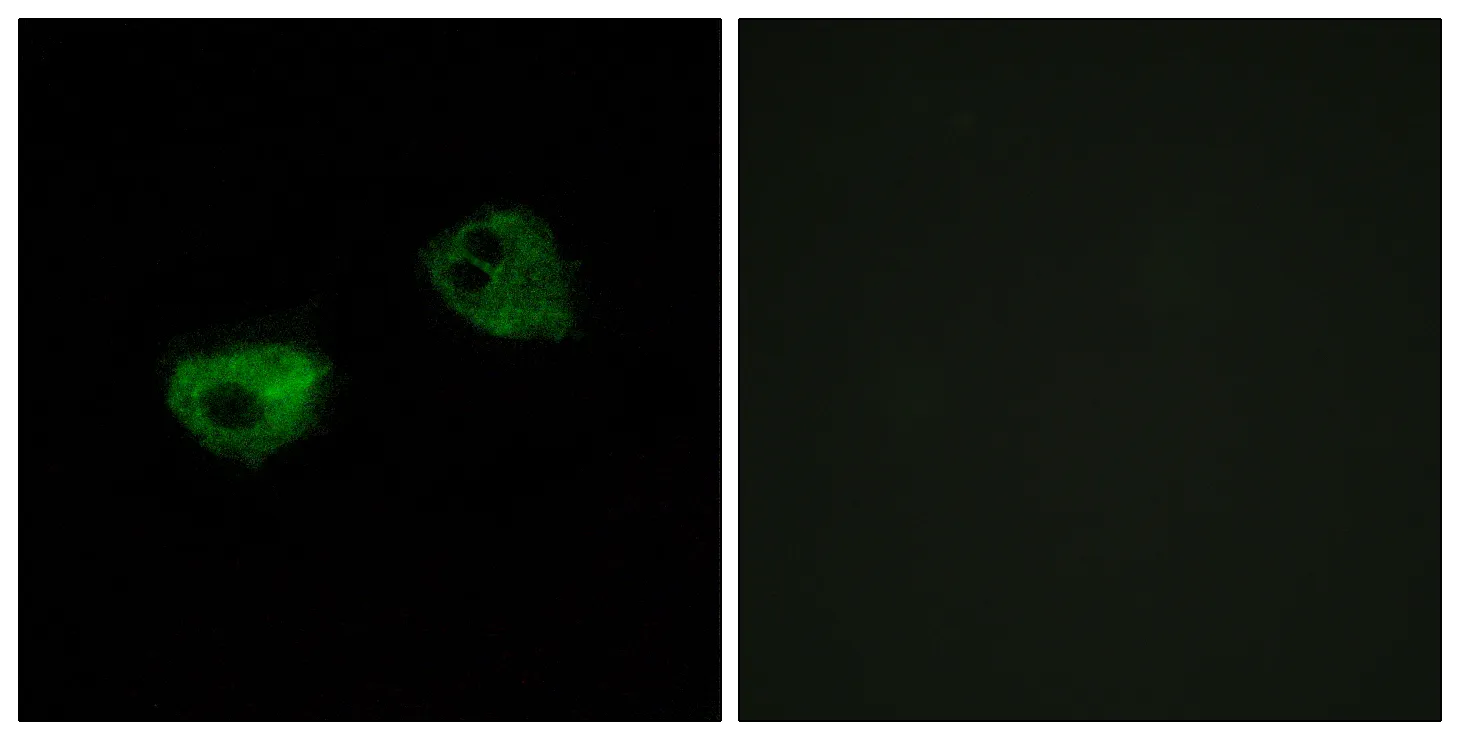
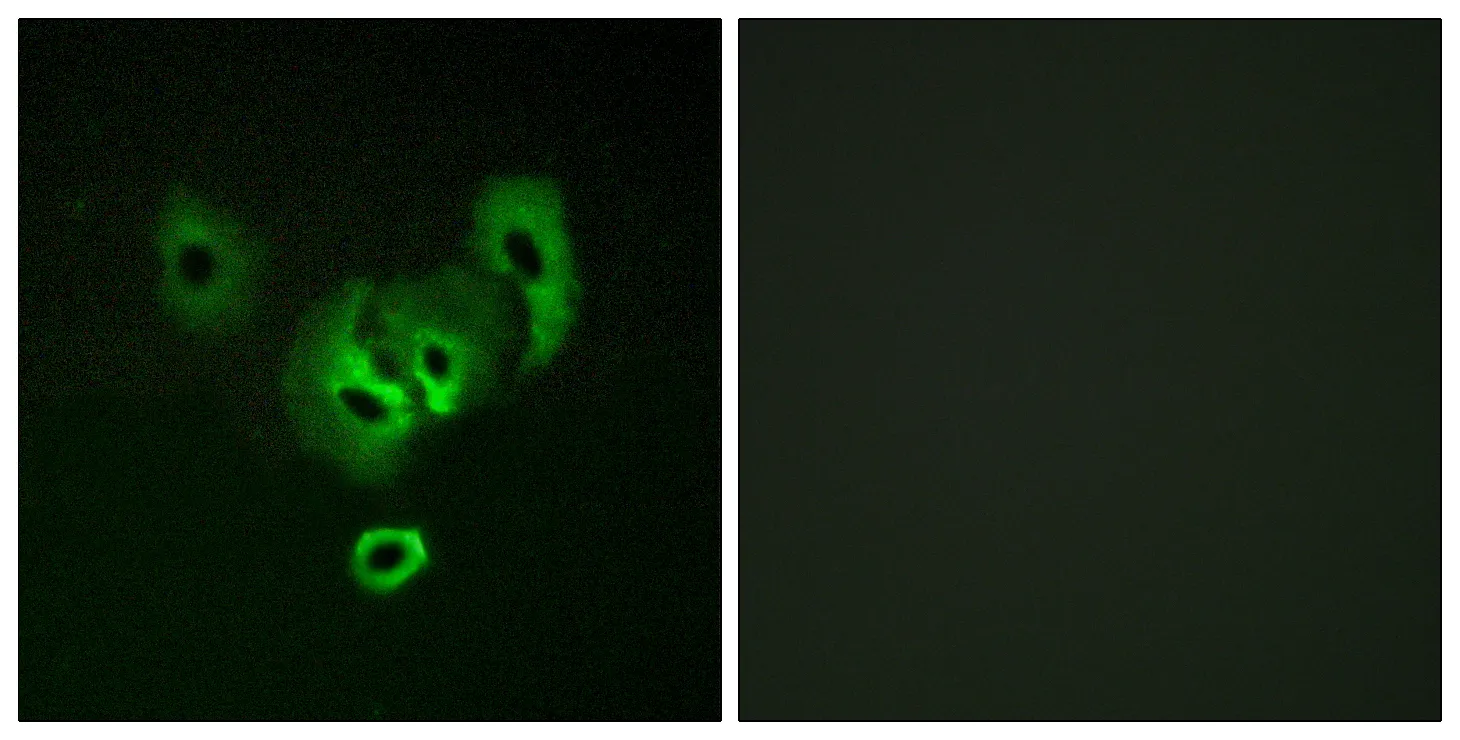
| アプリケーション | WB,IHC,ICC/IF,ELISA |
| 希釈倍率 | WB 1:500-1:2000,IHC 1:100-1:300,ICC/IF 1:50-1:200,ELISA 1:10000-1:20000 |
| 分子量 | 70kDa |
研究分野
| p53;Neurotrophin; |
背景
| 腫瘍タンパク質p73(TP73)ホモサピエンス この遺伝子は、ストレスや発達に対する細胞応答に関与する転写因子p53ファミリーのメンバーをコードしています。この遺伝子は、神経芽腫やその他の腫瘍で頻繁に欠失し、複数の腫瘍抑制遺伝子を含むと考えられている染色体1p36上の領域にマッピングされます。この遺伝子が単一対立遺伝子発現していることが実証されており(おそらく母親の対立遺伝子に由来)、神経芽腫の候補遺伝子であるという考えを支持しています。この遺伝子については、選択的スプライシングや代替プロモーターの使用に起因する多くの転写バリアントが見つかっていますが、一部のバリアントの生物学的妥当性や完全長の性質は決定されていません。[RefSeq提供、2011年2月],補因子:サブユニットあたり1つの亜鉛イオンを結合します。,疾患:ヒト癌のさまざまな細胞株で頻繁に変異する染色体領域にマッピングされます。 p53とは対照的に、ヒトの癌において頻繁に変異することはないと思われる。神経芽腫および乏突起膠腫ではヘミ接合性が観察される。,ドメイン:酸性転写活性化ドメイン、中央DNA結合ドメイン、およびABLチロシンキナーゼSH3ドメインに結合するC末端オリゴマー化ドメインを有する。,ドメイン:WW結合モチーフはWWOXとの相互作用を媒介する。,機能:DNA損傷に対するアポトーシス応答に関与する。転写活性化ドメインを含むアイソフォームはアポトーシス促進性であり、このドメインを欠くアイソフォームはアポトーシス抑制性であり、p53および転写活性化p73アイソフォームの機能を阻害する。腫瘍抑制タンパク質である可能性がある。,誘導:DNA損傷によって誘導されない。転写活性化ドメインを欠くアイソフォームは遺伝子誘導を阻害します。,その他:RANBP9との相互作用により活性化および安定化されます。,PTM:アイソフォームα(アイソフォームβはそうではありません)はLys-627がSUMO化されており、プロテアソーム分解を促進しますが、転写活性には影響しません。,類似性:p53ファミリーに属します。,類似性:1つのSAM(無菌αモチーフ)ドメインを含みます。,細胞内局在:DNA損傷に反応して核内に蓄積します。,サブユニット:p53/TP53およびCABLES1との複合体中に存在します。C末端オリゴマー化ドメインはABLチロシンキナーゼSH3ドメインに結合します。HECW2と相互作用します。アイソフォームβはホモタイプ的に相互作用し、p53/TP53と相互作用しますが、アイソフォームαは相互作用しません。アイソフォームガンマは、ホモタイプ的に相互作用し、すべてのp73アイソフォームと相互作用します。アイソフォームデルタは、アイソフォームガンマ、アイソフォームアルファ、およびホモタイプ的に相互作用します。アイソフォームアルファとベータはHIPK2と相互作用します。アイソフォームアルファはRANBP9と相互作用します。アイソフォームベータはWWOXと相互作用します。,組織特異性:脳、腎臓、胎盤、結腸、心臓、肝臓、脾臓、骨格筋、前立腺、胸腺、膵臓。胎児組織で高発現しています。, |