

Synphilin-1 Rabbit Polyclonal Antibody

Synphilin-1 Rabbit Polyclonal Antibody

Cat: APRab18509
Boyut:20μL Fiyat:$99_x000D_
Boyut:50μL Fiyat:$118_x000D_
Boyut:100μL Fiyat:$220_x000D_
Boyut:200μL Fiyat:$380_x000D_
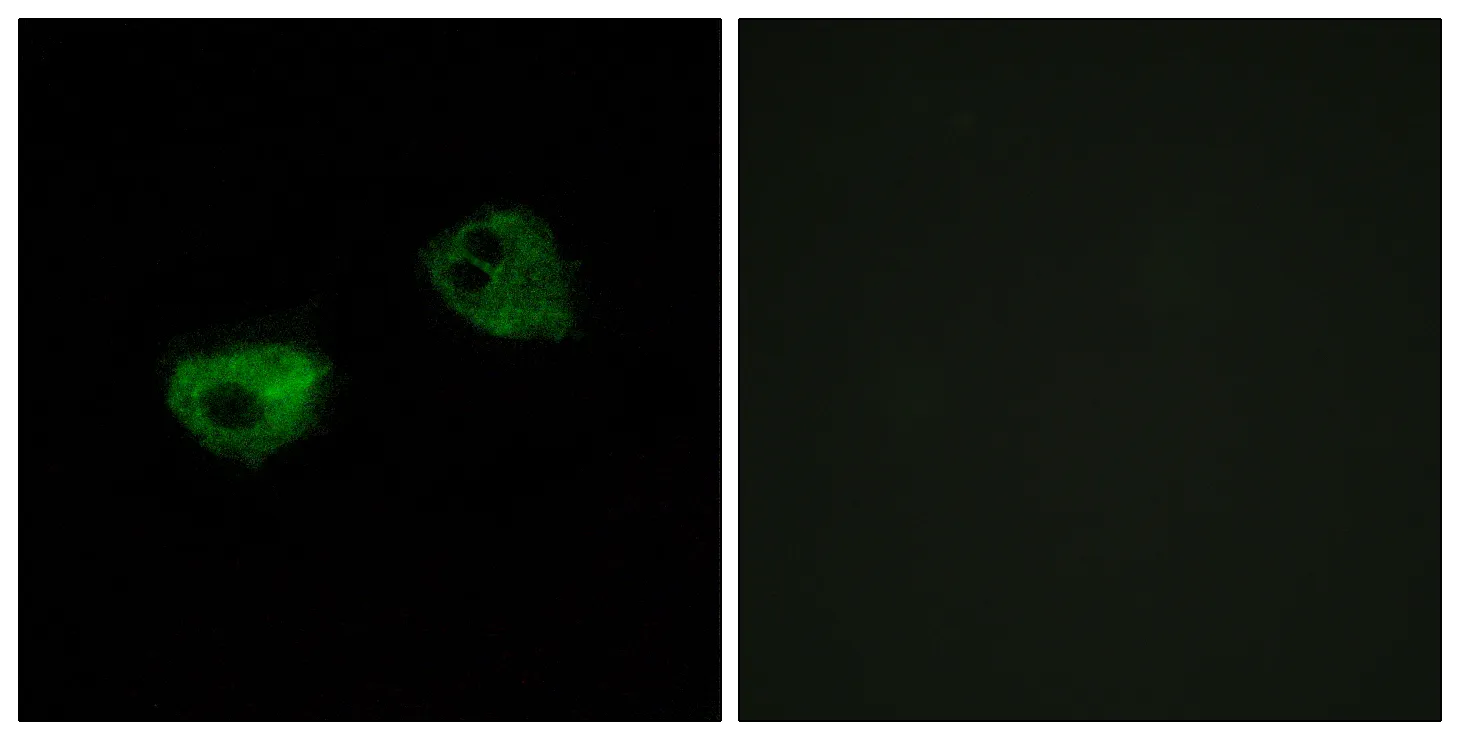
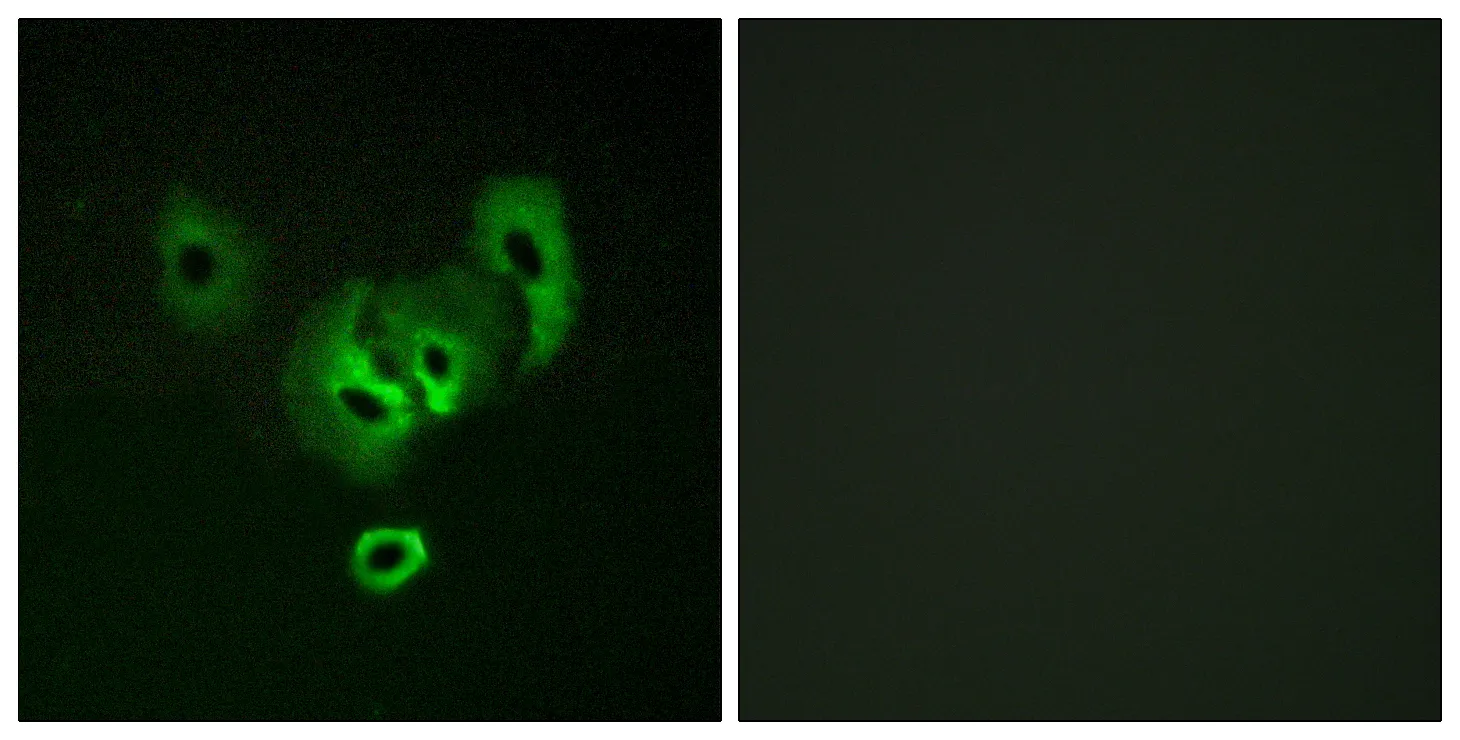
Uygulama:WB,IHC,ICC/IF,ELISA
Reaktivite:Human,Mouse
Konjuge:Unconjugated
İsteğe bağlı konjugeler: Biotin, FITC (ücretsiz). Diğer 26 konjugatı görün.

Gen Adı:SNCAIP
Category: ポリクローナル抗体 Tags: , , , , , , , , ,
Synphilin-1 Rabbit Polyclonal Antibody
Konjugasyon: Unconjugated
Rabbit polyclonal Antibody
Uygulama
IHC  ICC/IF  ELISA WB,IHC,ICC/IF,ELISA
Reaktivite
Human,Mouse
Gen Adı
SNCAIP
Saklama
Aliquot and store at -20°C (valid for 12 months). Avoid freeze/thaw cycles.
Özet
Ürün Adı Synphilin-1 Rabbit Polyclonal Antibody
Açıklama Rabbit polyclonal Antibody
Konak Rabbit
Reaktivite Human,Mouse
Konjugasyon Unconjugated
Modifikasyon Unmodified
İzotip IgG
Klonalite Polyclonal
Form Liquid
Konsantrasyon Unconjugated
Saklama Aliquot and store at -20°C (valid for 12 months). Avoid freeze/thaw cycles.
Nakliye Ice bags.
Tampon Liquid in PBS containing 50% glycerol, 0.5% protective protein and 0.02% New type preservative N.
Saflaştırma Affinity purification
Antijen Bilgisi
Gen Adı SNCAIP
Alternatif İsimler SNCAIP; Synphilin-1; Sph1; Alpha-synuclein-interacting protein
Gen Kimliği 9627
SwissProt Kimliği Q9Y6H5
İmmünojen The antiserum was produced against synthesized peptide derived from human Synphilin-1. AA range:797-846
Uygulama
Uygulama WB,IHC,ICC/IF,ELISA
Seyreltme Oranı WB 1:500-1:2000,IHC 1:100-1:300,ICC/IF 1:50-1:200,ELISA 1:5000-1:20000
Moleküler Ağırlık 100kDa
Araştırma Alanı
Parkinson's disease;
Arka Plan
This gene encodes a protein containing several protein-protein interaction domains, including ankyrin-like repeats, a coiled-coil domain, and an ATP/GTP-binding motif. The encoded protein interacts with alpha-synuclein in neuronal tissue and may play a role in the formation of cytoplasmic inclusions and neurodegeneration. A mutation in this gene has been associated with Parkinson's disease. Alternative splicing results in multiple transcript variants. [provided by RefSeq, Apr 2015],disease:Defects in SNCAIP are a cause of Parkinson disease (PD) [MIM:168600]. PD is a complex, multifactorial disorder that typically manifests after the age of 50 years, although early-onset cases (before 50 years) are known. PD generally arises as a sporadic condition but is occasionally inherited as a simple mendelian trait. Although sporadic and familial PD are very similar, inherited forms of the disease usually begin at earlier ages and are associated with atypical clinical features. PD is characterized by bradykinesia, resting tremor, muscular rigidity and postural instability, as well as by a clinically significant response to treatment with levodopa. The pathology involves the loss of dopaminergic neurons in the substantia nigra and the presence of Lewy bodies (intraneuronal accumulations of aggregated proteins), in surviving neurons in various areas of the brain.,miscellaneous:Constructs encoding portions of SNCA and SNCAIP co-transfected in mammalian cells promote cytosolic inclusions resembling the Lewy bodies of Parkinson disease. Coexpression of SNCA, SNCAIP, and PARK2 result in the formation of Lewy body-like ubiquitin-positive cytosolic inclusions. Familial mutations in PARK2 disrupt the ubiquitination of SNCAIP and the formation of the ubiquitin-positive inclusions. These results provide a molecular basis for the ubiquitination of Lewy body-associated proteins and link PARK2 and SNCA in a common pathogenic mechanism through their interaction with SNCAIP.,PTM:Ubiquitinated; mediated by SIAH1 or RNF19A and leading to its subsequent proteasomal degradation.,similarity:Contains 6 ANK repeats.,subunit:Associates with SNCA, RNF19A AND PARK2.,tissue specificity:Widely expressed, with highest levels in brain, heart and placenta.,
   💬 WhatsApp