

SGK1(リン酸化Ser78)ウサギポリクローナル抗体
コンジュゲーション: 非共役
ウサギポリクローナル抗体
アプリケーション
反応性
ヒト、マウス、ラット
遺伝子名
SGK1
保存
小分けして-20℃で保存してください(12ヶ月間有効)。凍結融解サイクルは避けてください。
要約
| 製品名 | SGK1(リン酸化Ser78)ウサギポリクローナル抗体 |
| 説明 | ウサギポリクローナル抗体 |
| 宿主 | うさぎ |
| 反応性 | ヒト、マウス、ラット |
| コンジュゲーション | 非共役 |
| 修飾 | リン酸化 |
| アイソタイプ | IgG |
| クローン性 | ポリクローナル |
| 形態 | 液体 |
| 濃度 | 非共役 |
| 保存 | 小分けして-20℃で保存してください(12ヶ月間有効)。凍結融解サイクルは避けてください。 |
| 配送 | 氷嚢。 |
| バッファー | 50% グリセロール、0.5% 保護タンパク質、0.02% 新タイプ防腐剤 N を含む PBS 液。 |
| 精製 | アフィニティー精製 |
抗原情報
| 遺伝子名 | SGK1 |
| 別名 | SGK1; SGK; Serine/threonine-protein kinase Sgk1; Serum/glucocorticoid-regulated kinase 1 |
| 遺伝子ID | 6446 |
| SwissProt ID | O00141 |
| 免疫原 | 抗血清は、Ser78のリン酸化部位周辺のヒトSGK由来の合成ペプチドに対して作製された。アミノ酸範囲:41-90 |
アプリケーション
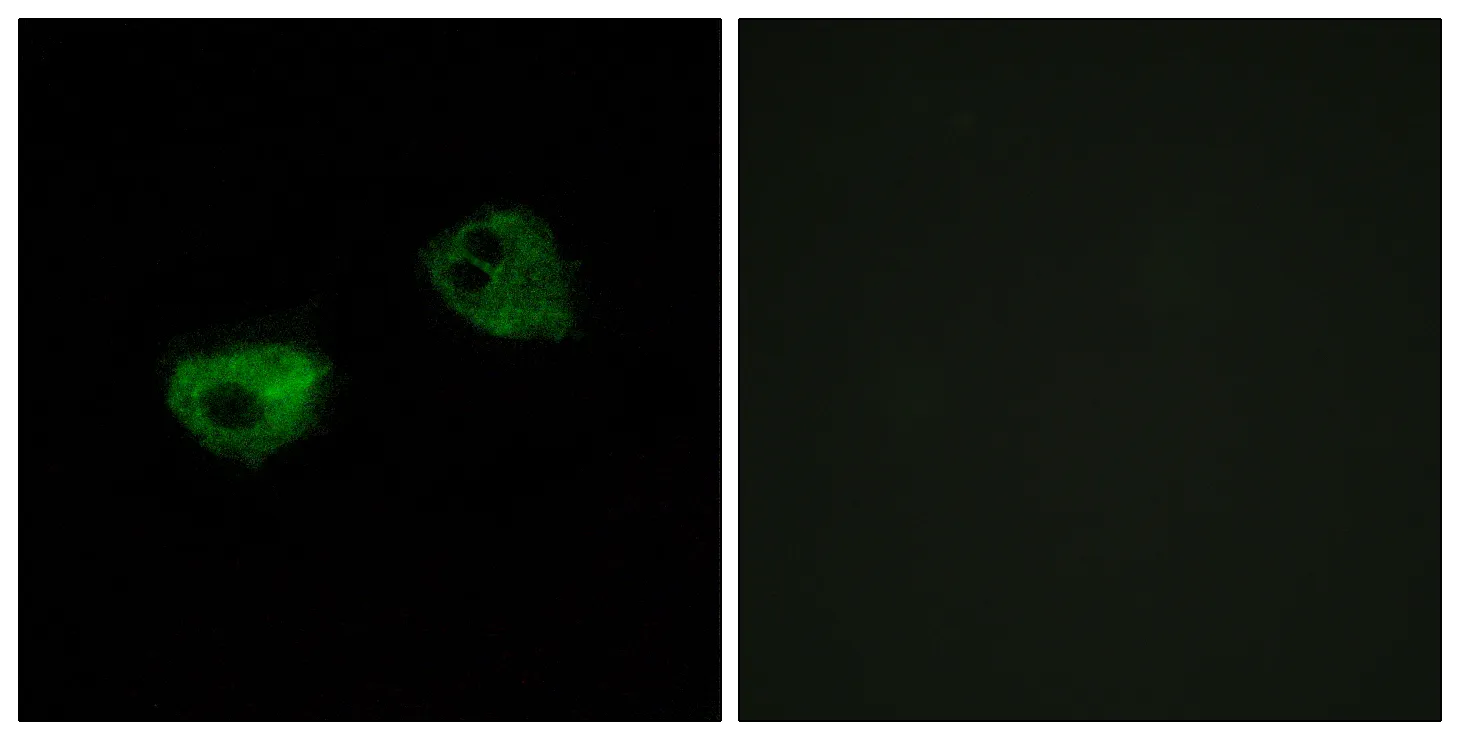
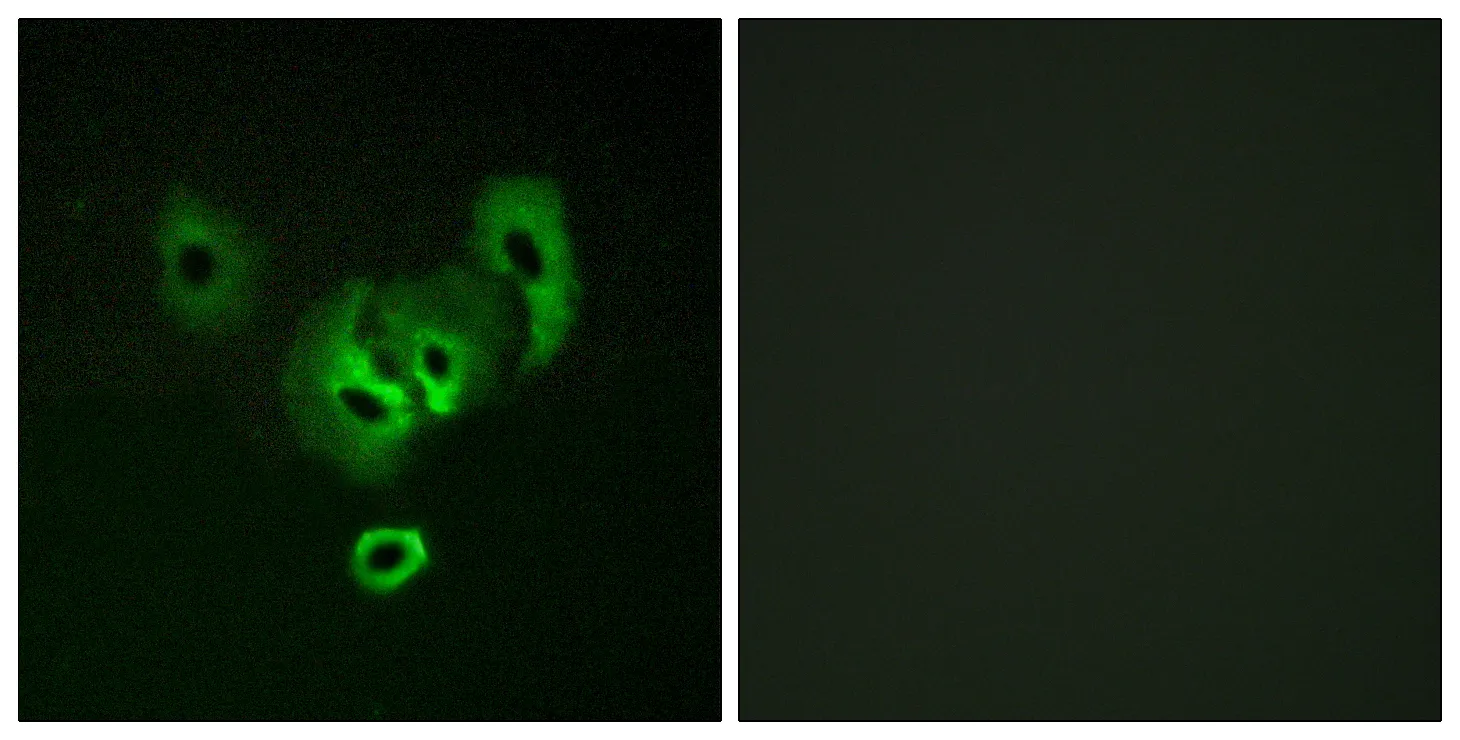
| アプリケーション | WB,IHC,ELISA |
| 希釈倍率 | WB 1:500-1:2000,IHC 1:50-1:300,ELISA 1:2000-1:20000 |
| 分子量 | 54kDa |
研究分野
| Aldosterone-regulated sodium reabsorption; |
背景
| この遺伝子は、細胞ストレス応答において重要な役割を果たすセリン/スレオニンプロテインキナーゼをコードしています。このキナーゼは特定のカリウム、ナトリウム、および塩素イオンチャネルを活性化するため、細胞生存、神経細胞の興奮性、および腎臓からのナトリウム排泄といったプロセスの調節に関与していることが示唆されています。この遺伝子の高発現は、高血圧や糖尿病性腎症といった病態の一因となる可能性があります。この遺伝子には、異なるアイソフォームをコードする複数の選択的スプライシング転写バリアントが知られています。[RefSeq提供、2009年1月],触媒活性:ATP + タンパク質 = ADP + リン酸化タンパク質。,酵素調節:キナーゼドメイン(Thr-256)とC末端調節領域(Ser-422)の2つの特定の部位がリン酸化されて初めて、完全な活性化が起こります。,機能:細胞ストレス応答において重要な役割を果たすプロテインキナーゼ。特定のカリウム、ナトリウム、および塩素イオンチャネルを活性化し、細胞生存、神経興奮性、腎臓からのナトリウム排泄といったプロセスの調節に関与していることを示唆しています。持続的な高レベルおよび活性は、高血圧や糖尿病性腎症などの病態の一因となる可能性があります。細胞生存シグナルを媒介し、プロアポトーシス性FOXO3Aをリン酸化して負に制御します。NEDD4Lをリン酸化することでNEDD4Lは不活性化され、その後、ENaC、Kv1.3、EAAT1などの様々なチャネルやトランスポーターが活性化されます。,誘導:血清および/またはグルココルチコイドによって。培養細胞においては、過剰な細胞外グルコースおよびTGF-βによって。,PTM:リン酸化によって制御されます。ホスホイノシチド3キナーゼ(PI3キナーゼ)経路はSer-422のリン酸化を促進し、PDPK1によるThr-256のリン酸化を増加させます。,PTM:NEDD4Lによってユビキチン化され、プロテアソーム分解を促進します。SYVN1によって小胞体でユビキチン化され、プロテアソーム分解を迅速に促進し、休止細胞における高いターンオーバー率を維持します。,類似性:タンパク質キナーゼスーパーファミリーに属します。 AGC Ser/Thr タンパク質キナーゼファミリー。,類似性: 1 つの AGC キナーゼ C 末端ドメインを含みます。,類似性: 1 つのタンパク質キナーゼドメインを含みます。,細胞内局在: 核内、リン酸化により生成されます。,サブユニット: NEDD4 および NEDD4L と相互作用します。,組織特異性:ほとんどの組織で発現しますが、膵臓に最も多く発現し、次いで胎盤、腎臓、肺の順になります。, |