Raf-B (phospho Thr599) Rabbit Polyclonal Antibody

Raf-B (phospho Thr599) Rabbit Polyclonal Antibody

Cat: APRab05345
Boyut:20μL Fiyat:$99_x000D_
Boyut:50μL Fiyat:$118_x000D_
Boyut:100μL Fiyat:$220_x000D_
Boyut:200μL Fiyat:$380_x000D_
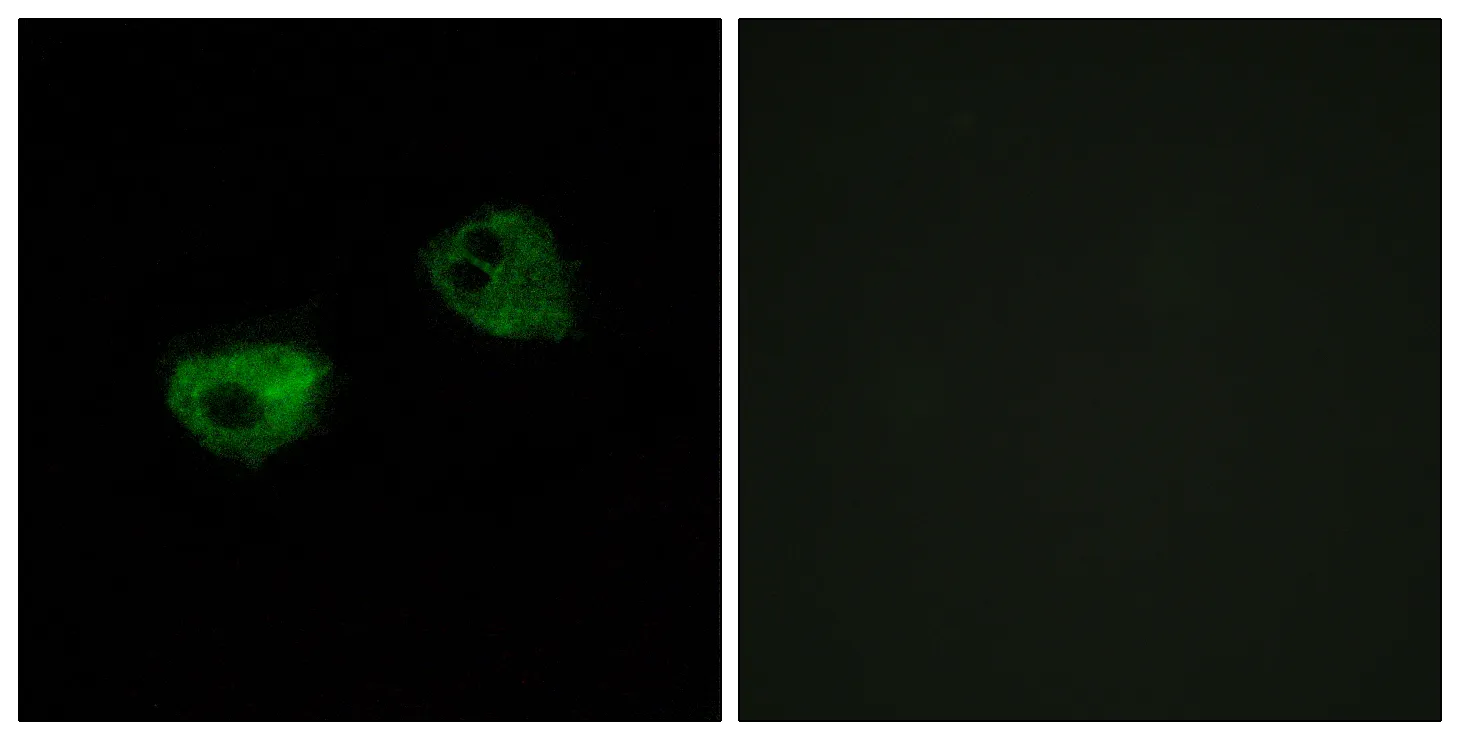
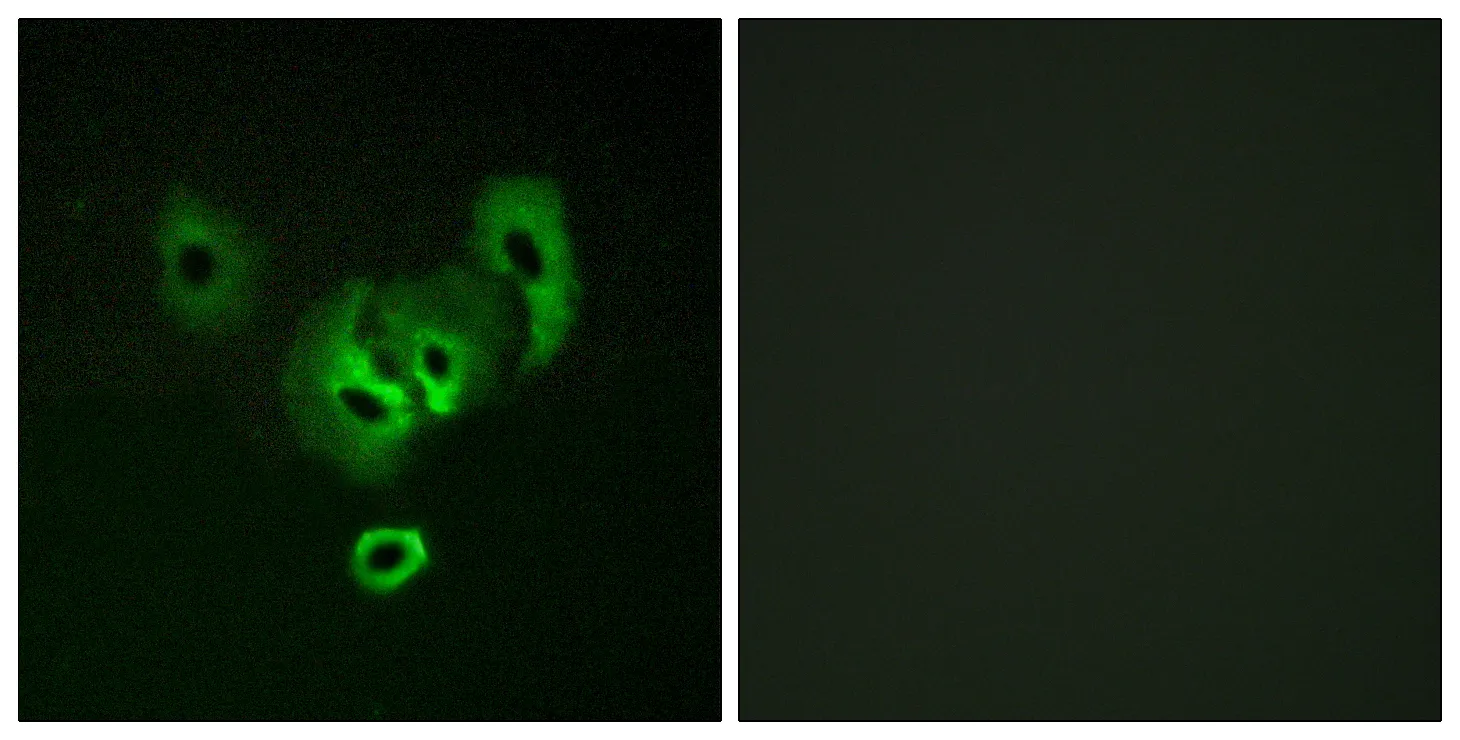
Uygulama:WB,IHC,ICC/IF,ELISA
Reaktivite:Human,Mouse,Rat
Konjuge:Unconjugated
İsteğe bağlı konjugeler: Biotin, FITC (ücretsiz). Diğer 26 konjugatı görün.

Gen Adı:BRAF
Category: ポリクローナル抗体 Tags: , , , , , , , , , ,
Raf-B (phospho Thr599) Rabbit Polyclonal Antibody
Konjugasyon: Unconjugated
Rabbit polyclonal Antibody
Uygulama
IHC  ICC/IF  ELISA WB,IHC,ICC/IF,ELISA
Reaktivite
Human,Mouse,Rat
Gen Adı
BRAF
Saklama
Aliquot and store at -20°C (valid for 12 months). Avoid freeze/thaw cycles.
Özet
Ürün Adı Raf-B (phospho Thr599) Rabbit Polyclonal Antibody
Açıklama Rabbit polyclonal Antibody
Konak Rabbit
Reaktivite Human,Mouse,Rat
Konjugasyon Unconjugated
Modifikasyon Phosphorylated
İzotip IgG
Klonalite Polyclonal
Form Liquid
Konsantrasyon Unconjugated
Saklama Aliquot and store at -20°C (valid for 12 months). Avoid freeze/thaw cycles.
Nakliye Ice bags.
Tampon Liquid in PBS containing 50% glycerol, 0.5% protective protein and 0.02% New type preservative N.
Saflaştırma Affinity purification
Antijen Bilgisi
Gen Adı BRAF
Alternatif İsimler BRAF; BRAF1; RAFB1; Serine/threonine-protein kinase B-raf; Proto-oncogene B-Raf; p94; v-Raf murine sarcoma viral oncogene homolog B1
Gen Kimliği 673
SwissProt Kimliği P15056
İmmünojen The antiserum was produced against synthesized peptide derived from human B-RAF around the phosphorylation site of Thr599. AA range:571-620
Uygulama
Uygulama WB,IHC,ICC/IF,ELISA
Seyreltme Oranı WB 1:500-1:2000,IHC 1:100-1:300,ICC/IF 1:50-1:200,ELISA 1:20000-1:40000
Moleküler Ağırlık -
Araştırma Alanı
Regulation of Actin Dynamics; MAPK_ERK_Growth;MAPK_G_Protein; Cell Growth; mTOR
Arka Plan
This gene encodes a protein belonging to the raf/mil family of serine/threonine protein kinases. This protein plays a role in regulating the MAP kinase/ERKs signaling pathway, which affects cell division, differentiation, and secretion. Mutations in this gene are associated with cardiofaciocutaneous syndrome, a disease characterized by heart defects, mental retardation and a distinctive facial appearance. Mutations in this gene have also been associated with various cancers, including non-Hodgkin lymphoma, colorectal cancer, malignant melanoma, thyroid carcinoma, non-small cell lung carcinoma, and adenocarcinoma of lung. A pseudogene, which is located on chromosome X, has been identified for this gene. [provided by RefSeq, Jul 2008],catalytic activity:ATP + a protein = ADP + a phosphoprotein.,cofactor:Binds 2 zinc ions per subunit.,disease:Defects in BRAF are a cause of cardiofaciocutaneous syndrome (CFC syndrome) [MIM:115150]; also known as cardio-facio-cutaneous syndrome. CFC syndrome is characterized by a distinctive facial appearance, heart defects and mental retardation. Heart defects include pulmonic stenosis, atrial septal defects and hypertrophic cardiomyopathy. Some affected individuals present with ectodermal abnormalities such as sparse, friable hair, hyperkeratotic skin lesions and a generalized ichthyosis-like condition. Typical facial features are similar to Noonan syndrome. They include high forehead with bitemporal constriction, hypoplastic supraorbital ridges, downslanting palpebral fissures, a depressed nasal bridge, and posteriorly angulated ears with prominent helices. The inheritance of CFC syndrome is autosomal dominant.,disease:Defects in BRAF are involved in a wide range of cancers.,disease:Defects in BRAF are involved in lung cancer [MIM:211980].,disease:Defects in BRAF are involved in non-Hodgkin lymphoma (NHL) [MIM:605027]. NHL is a cancer that starts in cells of the lymph system, which is part of the body's immune system. NHLs can occur at any age and are often marked by enlarged lymph nodes, fever and weight loss.,disease:Defects in BRAF may be a cause of colorectal cancer (CRC) [MIM:114500].,function:Involved in the transduction of mitogenic signals from the cell membrane to the nucleus. May play a role in the postsynaptic responses of hippocampal neuron.,similarity:Belongs to the protein kinase superfamily. TKL Ser/Thr protein kinase family. RAF subfamily.,similarity:Contains 1 phorbol-ester/DAG-type zinc finger.,similarity:Contains 1 protein kinase domain.,similarity:Contains 1 RBD (Ras-binding) domain.,subunit:Interacts with RIT1.,tissue specificity:Brain and testis.,
   💬 WhatsApp