

PKC ζ(リン酸化Thr410)ウサギポリクローナル抗体
コンジュゲーション: 非共役
ウサギポリクローナル抗体
アプリケーション
反応性
ヒト、マウス、ラット
遺伝子名
PRKCZ
保存
小分けして-20℃で保存してください(12ヶ月間有効)。凍結融解サイクルは避けてください。
要約
| 製品名 | PKC ζ(リン酸化Thr410)ウサギポリクローナル抗体 |
| 説明 | ウサギポリクローナル抗体 |
| 宿主 | うさぎ |
| 反応性 | ヒト、マウス、ラット |
| コンジュゲーション | 非共役 |
| 修飾 | リン酸化 |
| アイソタイプ | IgG |
| クローン性 | ポリクローナル |
| 形態 | 液体 |
| 濃度 | 非共役 |
| 保存 | 小分けして-20℃で保存してください(12ヶ月間有効)。凍結融解サイクルは避けてください。 |
| 配送 | 氷嚢。 |
| バッファー | 50% グリセロール、0.5% 保護タンパク質、0.02% 新タイプ防腐剤 N を含む PBS 液。 |
| 精製 | アフィニティー精製 |
抗原情報
| 遺伝子名 | PRKCZ |
| 別名 | PRKCZ; PKC2; Protein kinase C zeta type; nPKC-zeta |
| 遺伝子ID | 5590 |
| SwissProt ID | Q05513 |
| 免疫原 | 抗血清は、Thr410のリン酸化部位周辺のヒトPKCゼータ由来の合成ペプチドに対して作製された。アミノ酸範囲:376-425 |
アプリケーション
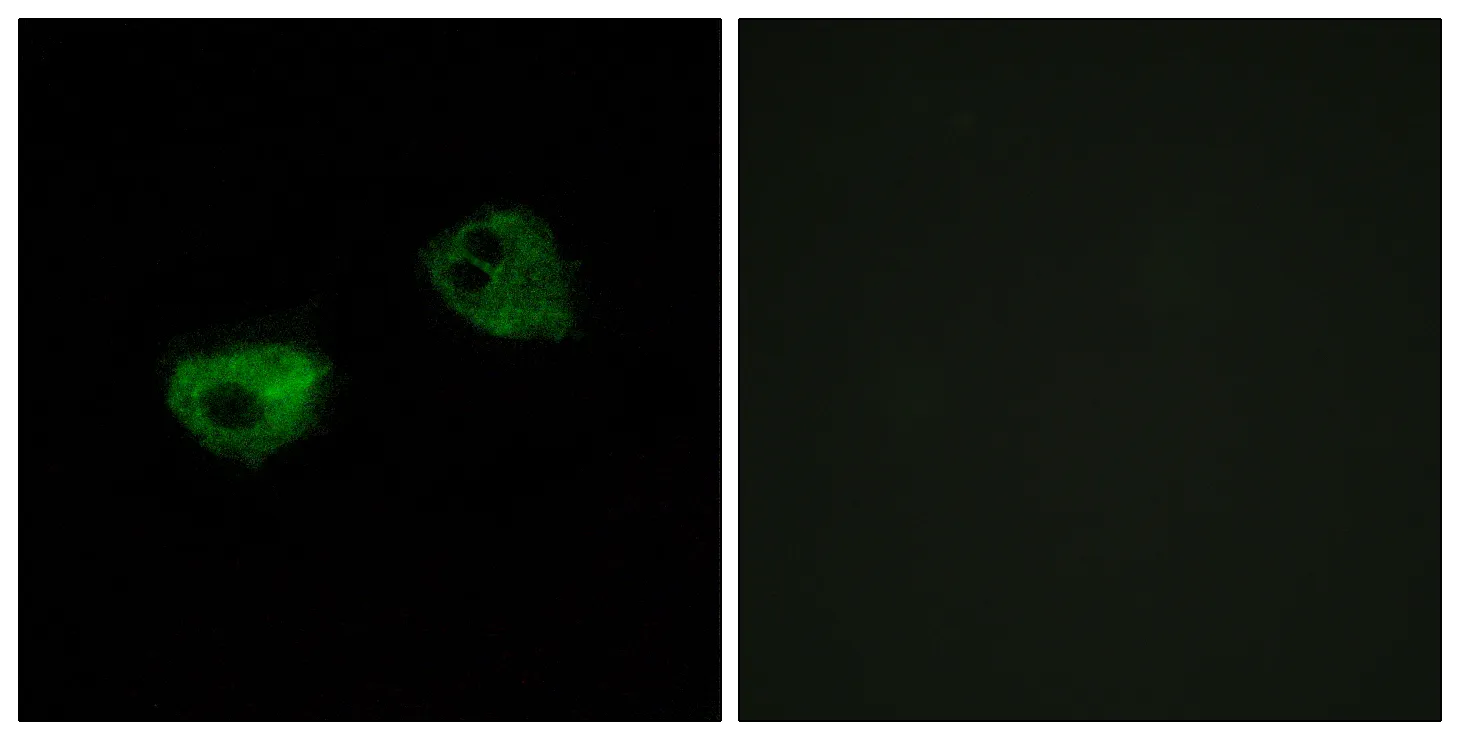
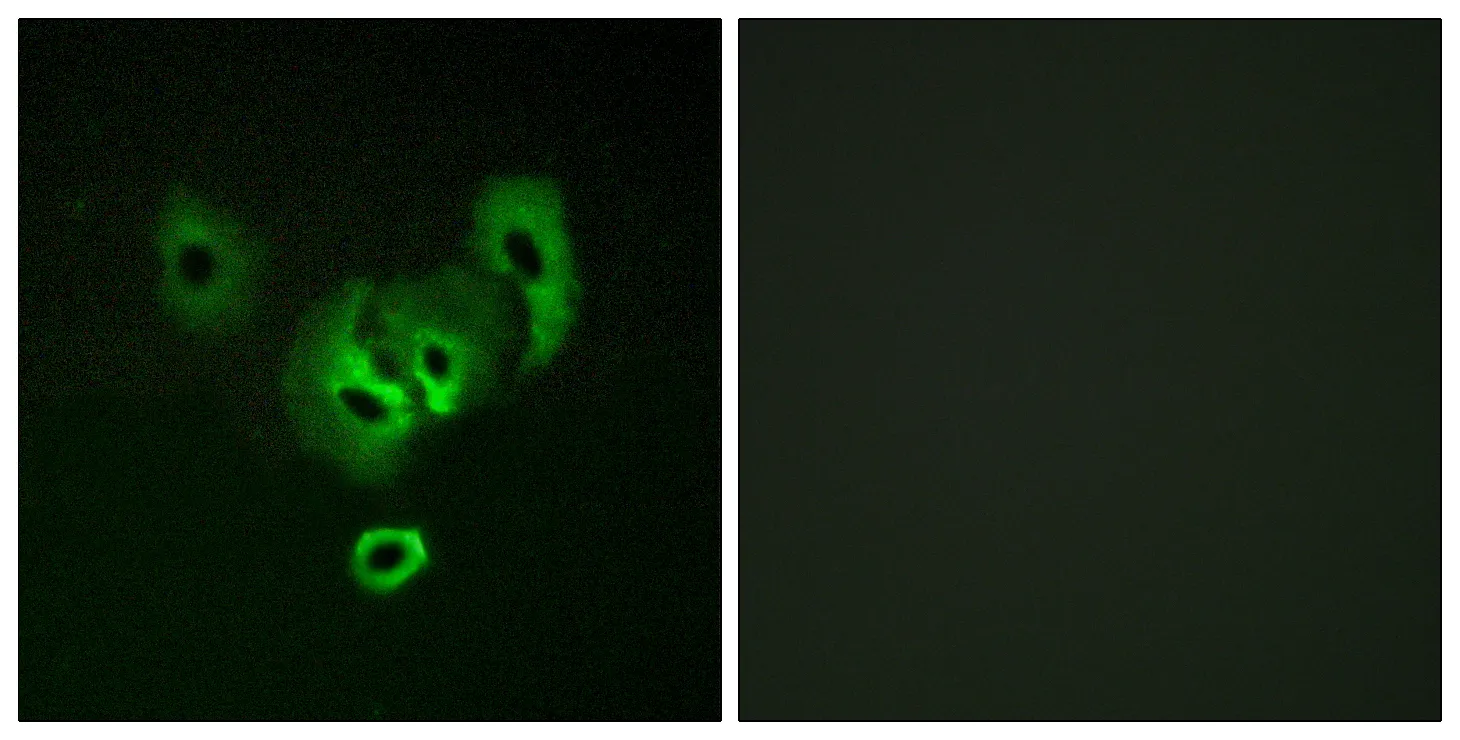
| アプリケーション | WB,IHC,ICC/IF,ELISA |
| 希釈倍率 | WB 1:500-1:2000,IHC 1:100-1:300,ICC/IF 1:200-1:1000,ELISA 1:10000-1:20000 |
| 分子量 | 70kDa |
研究分野
| Regulation_Microtubule; Regulation of Actin Dynamics; Stem cell pathway; Insulin Receptor; PI3K/Akt; B Cell Receptor; AMPK |
背景
| プロテインキナーゼC(PKC)ゼータは、増殖、分化、分泌など、様々な細胞プロセスに関与するセリン/スレオニンキナーゼのPKCファミリーの一員です。カルシウム依存性の古典的なPKCアイソザイムとは異なり、PKCゼータはカルシウムとジアシルグリセロールに依存しないキナーゼ活性を示し、ホスファチジルセリンには依存しません。さらに、PKCゼータは一般的なPKC阻害剤に非感受性であり、ホルボールエステルによって活性化されません。古典的なPKCアイソザイムとは異なり、PKCゼータはジンクフィンガーモジュールを1つしか有しません。これらの構造的および生化学的特性から、ゼータ亜種はPKCの他のアイソザイムと関連はあるものの、異なる性質を持つことが示唆されます。選択的スプライシングにより、異なるアイソフォームをコードする複数の転写産物バリアントが生成されます。 [RefSeq提供、2008年7月],触媒活性:ATP + タンパク質 = ADP + リン酸化タンパク質。,ドメイン:C1ドメインはジアシルグリセロール(DAG)に結合しません。,ドメイン:OPRドメインは、SQSTM1およびPARD6Bと相互排他的な相互作用を媒介します。,酵素調節:ホスファチジルイノシトール3,4,5-トリスリン酸は生理的活性化因子である可能性があります。完全に活性化するには、Thr-410(キナーゼドメインの活性化ループ)とThr-560(ターンモチーフ)の2つの特定の部位がリン酸化される必要があります。,機能:PKCはジアシルグリセロールによって活性化され、ジアシルグリセロールは様々な細胞タンパク質をリン酸化します。PKCは、腫瘍プロモーターの一種であるホルボールエステルの受容体としても機能します。上皮細胞の分極において中心的な役割を果たす四元複合体のサブユニット。,機能:カルシウム非依存性、リン脂質依存性、セリンおよびスレオニン特異的酵素。,類似性:プロテインキナーゼスーパーファミリーに属します。,類似性:プロテインキナーゼスーパーファミリーに属します。AGC Ser/Thr プロテインキナーゼファミリー。PKC サブファミリー。,類似性:AGC キナーゼ C 末端ドメインを 1 つ含みます。,類似性:OPR ドメインを 1 つ含みます。,類似性:ホルボールエステル/DAG 型ジンクフィンガーを 1 つ含みます。,類似性:プロテインキナーゼドメインを 1 つ含みます。,細胞内局在:網膜において、桿体双極細胞の末端に局在します (類似性による)。エンドソームと会合します。,サブユニット:SQSTM1 および KCNAB2 と三元複合体を形成します。 SQSTM1およびGABRR3と別の三元複合体を形成する。SQSTM1およびMAP2K5と複合体を形成する(類似性による)。PARD6A、PARD6B、PARD6G、およびSQSTM1と相互作用する。PARD3、PARD6A、PARD6B、PARD6G、およびCDC42またはRAC1と複合体を形成する。ADAP1/CENTA1と相互作用する。SQSTM1およびPAWRからなる三元複合体を形成する。SQSTM1と直接相互作用する(可能性が高い)。IKBKBと相互作用する。,組織特異性:脳で発現し、肺、腎臓、精巣でも発現が弱い。, |