

PKA Iα reg Rabbit Polyclonal Antibody

PKA Iα reg Rabbit Polyclonal Antibody

Cat: APRab16182
Boyut:20μL Fiyat:$99_x000D_
Boyut:50μL Fiyat:$118_x000D_
Boyut:100μL Fiyat:$220_x000D_
Boyut:200μL Fiyat:$380_x000D_
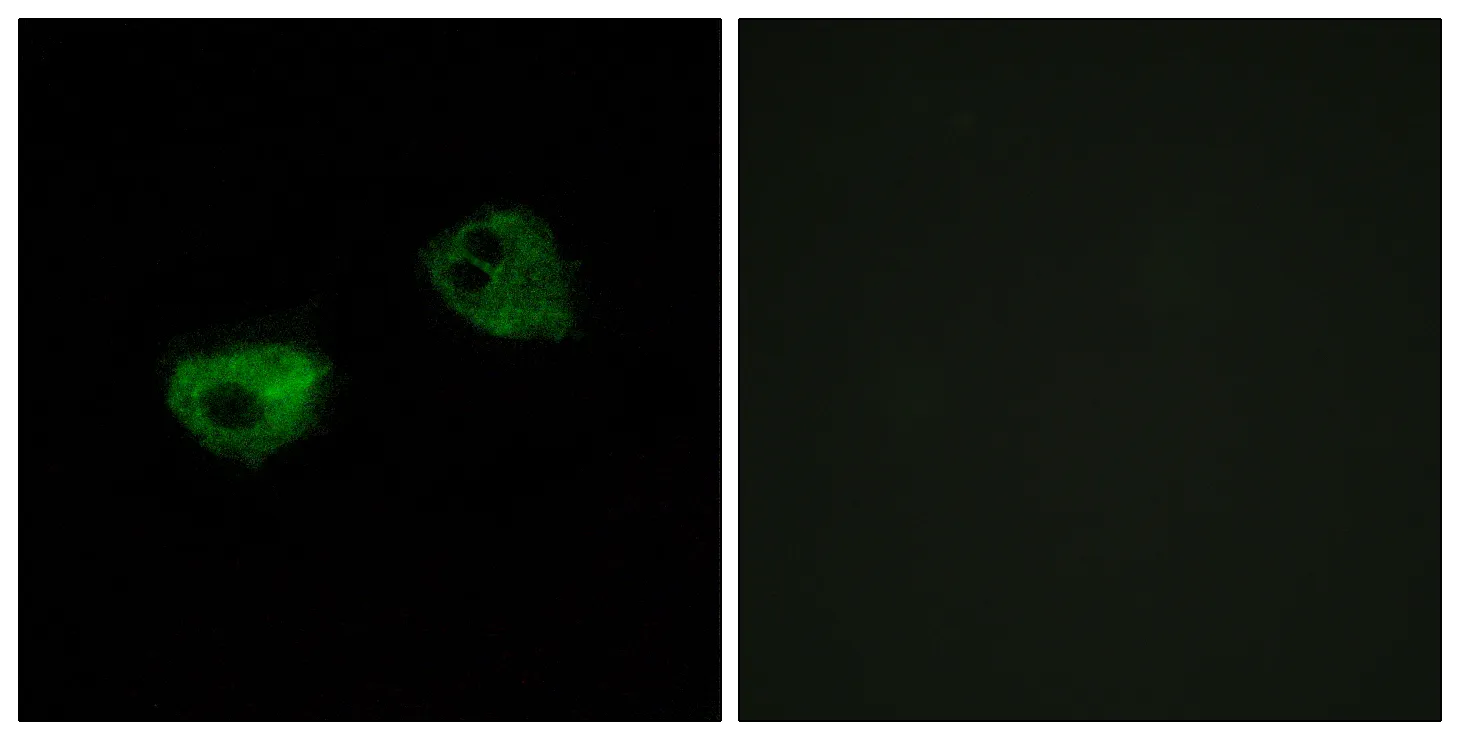
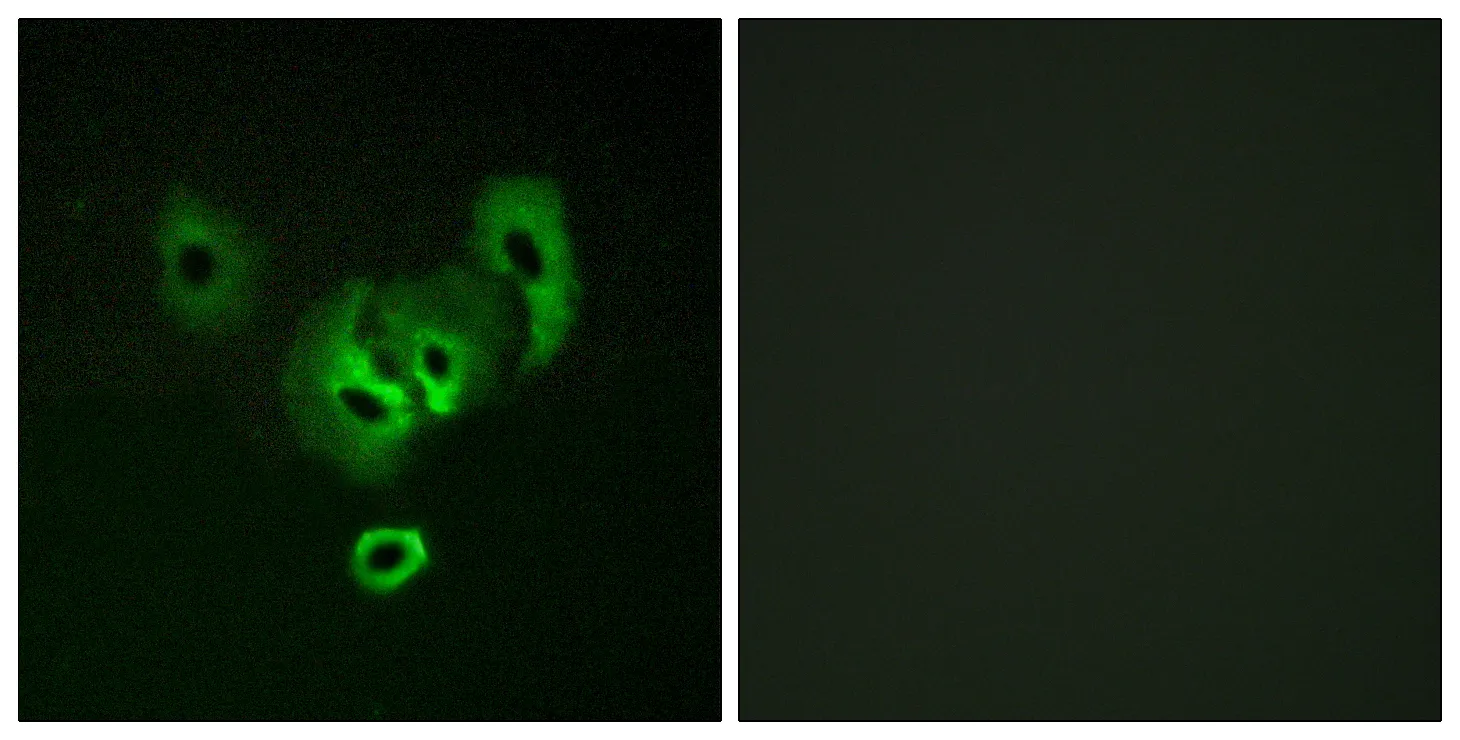
Uygulama:WB,IHC,ICC/IF,ELISA
Reaktivite:Human,Mouse,Rat
Konjuge:Unconjugated
İsteğe bağlı konjugeler: Biotin, FITC (ücretsiz). Diğer 26 konjugatı görün.

Gen Adı:PRKAR1A
Category: ポリクローナル抗体 Tags: , , , , , , , , , ,
PKA Iα reg Rabbit Polyclonal Antibody
Konjugasyon: Unconjugated
Rabbit polyclonal Antibody
Uygulama
IHC  ICC/IF  ELISA WB,IHC,ICC/IF,ELISA
Reaktivite
Human,Mouse,Rat
Gen Adı
PRKAR1A
Saklama
Aliquot and store at -20°C (valid for 12 months). Avoid freeze/thaw cycles.
Özet
Ürün Adı PKA Iα reg Rabbit Polyclonal Antibody
Açıklama Rabbit polyclonal Antibody
Konak Rabbit
Reaktivite Human,Mouse,Rat
Konjugasyon Unconjugated
Modifikasyon Unmodified
İzotip IgG
Klonalite Polyclonal
Form Liquid
Konsantrasyon Unconjugated
Saklama Aliquot and store at -20°C (valid for 12 months). Avoid freeze/thaw cycles.
Nakliye Ice bags.
Tampon Liquid in PBS containing 50% glycerol, 0.5% protective protein and 0.02% New type preservative N.
Saflaştırma Affinity purification
Antijen Bilgisi
Gen Adı PRKAR1A
Alternatif İsimler PRKAR1A; PKR1; PRKAR1; TSE1; cAMP-dependent protein kinase type I-alpha regulatory subunit; Tissue-specific extinguisher 1; TSE1
Gen Kimliği 5573
SwissProt Kimliği P10644
İmmünojen The antiserum was produced against synthesized peptide derived from human KAP0. AA range:271-320
Uygulama
Uygulama WB,IHC,ICC/IF,ELISA
Seyreltme Oranı WB 1:500-1:2000,IHC 1:100-1:300,ICC/IF 1:200-1:1000,ELISA 1:10000-1:20000
Moleküler Ağırlık 43kDa
Araştırma Alanı
Apoptosis_Inhibition;Apoptosis_Mitochondrial;Apoptosis_Overview;Insulin_Receptor;
Arka Plan
cAMP is a signaling molecule important for a variety of cellular functions. cAMP exerts its effects by activating the cAMP-dependent protein kinase, which transduces the signal through phosphorylation of different target proteins. The inactive kinase holoenzyme is a tetramer composed of two regulatory and two catalytic subunits. cAMP causes the dissociation of the inactive holoenzyme into a dimer of regulatory subunits bound to four cAMP and two free monomeric catalytic subunits. Four different regulatory subunits and three catalytic subunits have been identified in humans. This gene encodes one of the regulatory subunits. This protein was found to be a tissue-specific extinguisher that down-regulates the expression of seven liver genes in hepatoma x fibroblast hybrids. Mutations in this gene cause Carney complex (CNC). This gene can fuse to the RET protooncogdisease:Defects in PRKAR1A are the cause of Carney complex type 1 (CNC1) [MIM:160980]. CNC is a multiple neoplasia syndrome characterized by spotty skin pigmentation, cardiac and other myxomas, endocrine tumors, and psammomatous melanotic schwannomas.,disease:Defects in PRKAR1A are the cause of intracardiac myxoma [MIM:255960]. Inheritance is autosomal recessive.,disease:Defects in PRKAR1A are the cause of primary pigmented nodular adrenocortical disease type 1 (PPNAD1) [MIM:610489]. Primary pigmented nodular adrenocortical disease is a rare bilateral adrenal defect causing ACTH-independent Cushing syndrome. Macroscopic appearance of the adrenals is characteristic with small pigmented micronodules observed in the cortex. PPNAD1 is most often diagnosed in patients with Carney complex, but it can also be observed in patients without other manifestations or familial history.,PTM:The pseudophosphorylation site binds to the substrate-binding region of the catalytic chain, resulting in the inhibition of its activity.,similarity:Belongs to the cAMP-dependent kinase regulatory chain family.,similarity:Contains 2 cyclic nucleotide-binding domains.,subunit:The inactive form of the enzyme is composed of two regulatory chains and two catalytic chains. Activation by cAMP produces two active catalytic monomers and a regulatory dimer that binds four cAMP molecules. PRKAR1A also interacts with RFC2; the complex may be involved in cell survival. Interacts with AKAP4.,tissue specificity:Four types of regulatory chains are found: I-alpha, I-beta, II-alpha, and II-beta. Their expression varies among tissues and is in some cases constitutive and in others inducible.,
   💬 WhatsApp