Na+ CP type IVα Rabbit Polyclonal Antibody

Na+ CP type IVα Rabbit Polyclonal Antibody

Cat: APRab14374
Boyut:20μL Fiyat:$99_x000D_
Boyut:50μL Fiyat:$118_x000D_
Boyut:100μL Fiyat:$220_x000D_
Boyut:200μL Fiyat:$380_x000D_
Uygulama:WB,IHC
Reaktivite:Human,Mouse,Rat
Konjuge:Unconjugated
İsteğe bağlı konjugeler: Biotin, FITC (ücretsiz). Diğer 26 konjugatı görün.

Gen Adı:SCN4A
Category: ポリクローナル抗体 Tags: , , , , , , ,
Na+ CP type IVα Rabbit Polyclonal Antibody
Konjugasyon: Unconjugated
Rabbit polyclonal Antibody
Uygulama
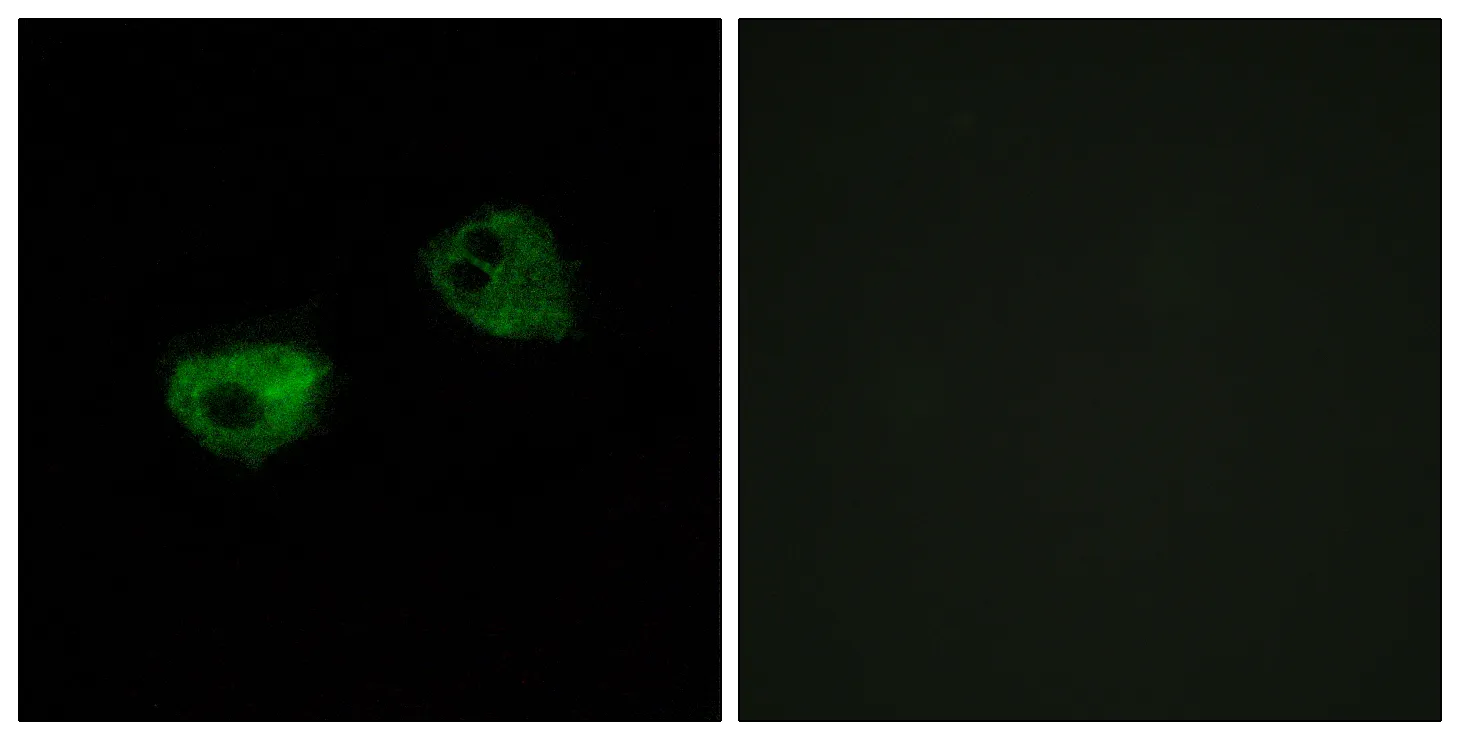
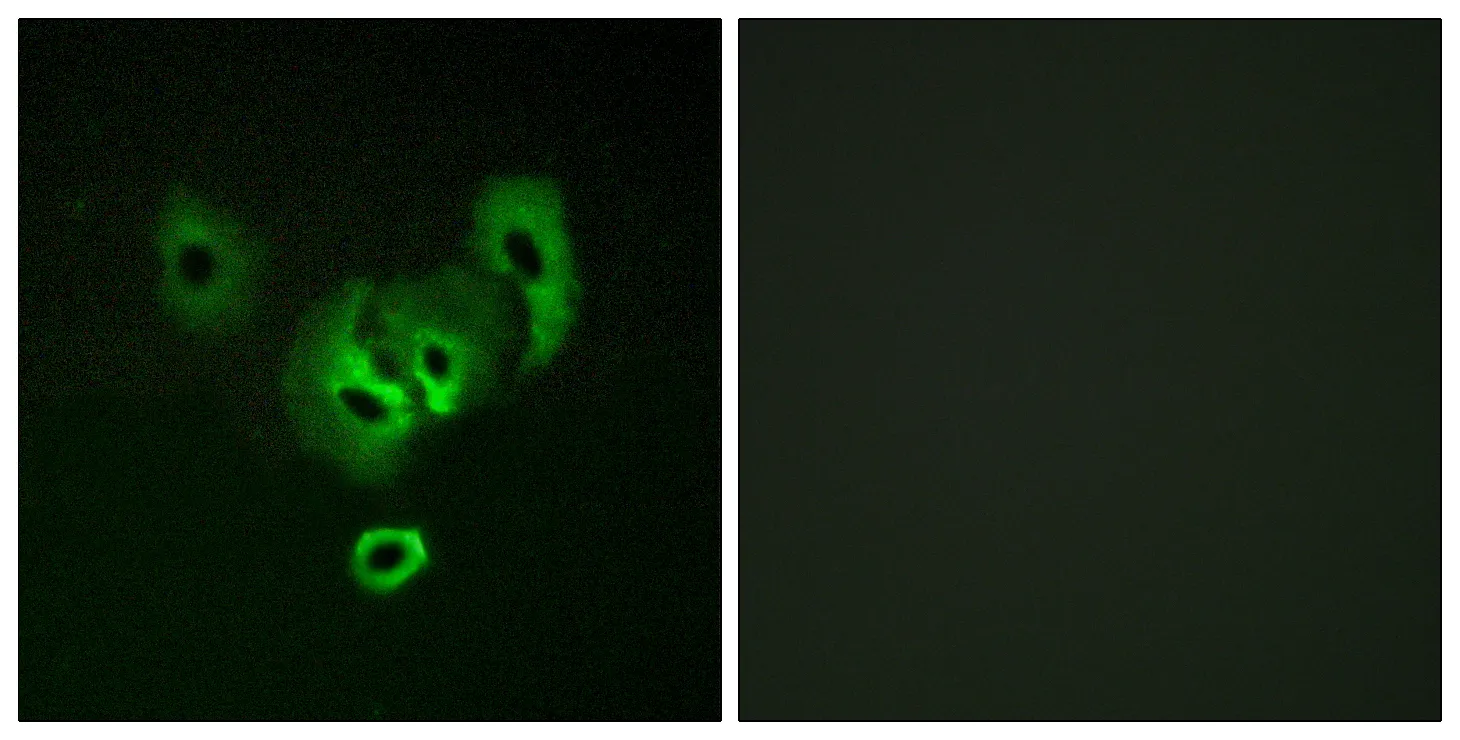
IHC  ICC/IF  ELISA WB,IHC
Reaktivite
Human,Mouse,Rat
Gen Adı
SCN4A
Saklama
Aliquot and store at -20°C (valid for 12 months). Avoid freeze/thaw cycles.
Özet
Ürün Adı Na+ CP type IVα Rabbit Polyclonal Antibody
Açıklama Rabbit polyclonal Antibody
Konak Rabbit
Reaktivite Human,Mouse,Rat
Konjugasyon Unconjugated
Modifikasyon Unmodified
İzotip IgG
Klonalite Polyclonal
Form Liquid
Konsantrasyon Unconjugated
Saklama Aliquot and store at -20°C (valid for 12 months). Avoid freeze/thaw cycles.
Nakliye Ice bags.
Tampon Liquid in PBS containing 50% glycerol, 0.5% protective protein and 0.02% New type preservative N.
Saflaştırma Affinity purification
Antijen Bilgisi
Gen Adı SCN4A
Alternatif İsimler SCN4A; Sodium channel protein type 4 subunit alpha; SkM1; Sodium channel protein skeletal muscle subunit alpha; Sodium channel protein type IV subunit alpha; Voltage-gated sodium channel subunit alpha Nav1.4
Gen Kimliği 6329
SwissProt Kimliği P35499
İmmünojen The antiserum was produced against synthesized peptide derived from human SCN4A. AA range:431-480
Uygulama
Uygulama WB,IHC
Seyreltme Oranı WB 1:500-1:2000,IHC 1:50-1:300
Moleküler Ağırlık 200kDa
Araştırma Alanı
Arka Plan
Voltage-gated sodium channels are transmembrane glycoprotein complexes composed of a large alpha subunit with 24 transmembrane domains and one or more regulatory beta subunits. They are responsible for the generation and propagation of action potentials in neurons and muscle. This gene encodes one member of the sodium channel alpha subunit gene family. It is expressed in skeletal muscle, and mutations in this gene have been linked to several myotonia and periodic paralysis disorders. [provided by RefSeq, Jul 2008],disease:Defects in SCN4A are a cause of periodic paralysis hypokalemic (HOKPP) [MIM:170400]; also designated HYPOPP. HOKPP is an autosomal dominant disorder manifested by episodic flaccid generalized muscle weakness associated with falls of serum potassium levels.,disease:Defects in SCN4A are the cause of a congenital myasthenic syndrome due to mutation in SCNA4 (CMSSCNA4) [MIM:603967]. CMSSCNA4 is a congenital myasthenic syndrome associated with fatigable generalized weakness and recurrent attacks of respiratory and bulbar paralysis since birth. The fatigable weakness involves lid-elevator, external ocular, facial, limb and truncal muscles and an decremental response of the compound muscle action potential on repetitive stimulation.,disease:Defects in SCN4A are the cause of myotonia SCN4A-related (MYOSCN4A) [MIM:608390]. Myotonia is characterized by sustained muscle tensing that prevents muscles from relaxing normally. Myotonia causes muscle stiffness that can interfere with movement. In some people the stiffness is very mild, while in other cases it may be severe enough to interfere with walking, running, and other activities of daily life. MYOSCN4A is a phenotypically highly variable myotonia aggravated by potassium loading, and often by cold. MYOSCN4A includes myotonia permanens and myotonia fluctuans. In myotonia permanens, the myotonia is generalized and there is a hypertrophy of the muscle, particularly in the neck and the shoulder. Attacks of severe muscle stiffness of the thoracic muscles may be life threatening due to impaired ventilation. In myotonia fluctuans, the muscle stiffness may fluctuate from day to day, provoked by exercise.,disease:Defects in SCN4A are the cause of paramyotonia congenita of von Eulenburg (PMC) [MIM:168300]. PMC is an autosomal dominant channelopathy characterized by myotonia, increased by exposure to cold, intermittent flaccid paresis, not necessarily dependent on cold or myotonia, lability of serum potassium, nonprogressive nature and lack of atrophy or hypertrophy of muscles. In some patients, myotonia is not increased by cold exposure (paramyotonia without cold paralysis). Patients may have a combination phenotype of PMC and HYPP.,disease:Defects in SCN4A are the cause of periodic paralysis hyperkalemic (HYPP) [MIM:170500]. HYPP is an autosomal dominant channelopathy characterized by episodic flaccid generalized muscle weakness associated with high levels of serum potassium. Concurrence of myotonia is found in HYPP patients.,disease:Defects in SCN4A are the cause of periodic paralysis normokalemic (NKPP) [MIM:170500]. NKPP is a disorder closely related to hyperkalemic periodic paralysis, but marked by a lack of alterations in potassium levels during attacks of muscle weakness.,domain:The sequence contains 4 internal repeats, each with 5 hydrophobic segments (S1,S2,S3,S5,S6) and one positively charged segment (S4). Segments S4 are probably the voltage-sensors and are characterized by a series of positively charged amino acids at every third position.,function:This protein mediates the voltage-dependent sodium ion permeability of excitable membranes. Assuming opened or closed conformations in response to the voltage difference across the membrane, the protein forms a sodium-selective channel through which Na(+) ions may pass in accordance with their electrochemical gradient. This sodium channel may be present in both denervated and innervated skeletal muscle.,online information:SCN4A entry,similarity:Belongs to the sodium channel family.,similarity:Contains 1 IQ domain.,subunit:Muscle sodium channels contain an alpha subunit and a smaller beta subunit. Interacts with the PDZ domain of the syntrophin SNTA1, SNTB1 and SNTB2.,
   💬 WhatsApp