

Kv2.1 (phospho Ser567) Rabbit Polyclonal Antibody

Kv2.1 (phospho Ser567) Rabbit Polyclonal Antibody

Cat: APRab04930
Boyut:20μL Fiyat:$99_x000D_
Boyut:50μL Fiyat:$118_x000D_
Boyut:100μL Fiyat:$220_x000D_
Boyut:200μL Fiyat:$380_x000D_
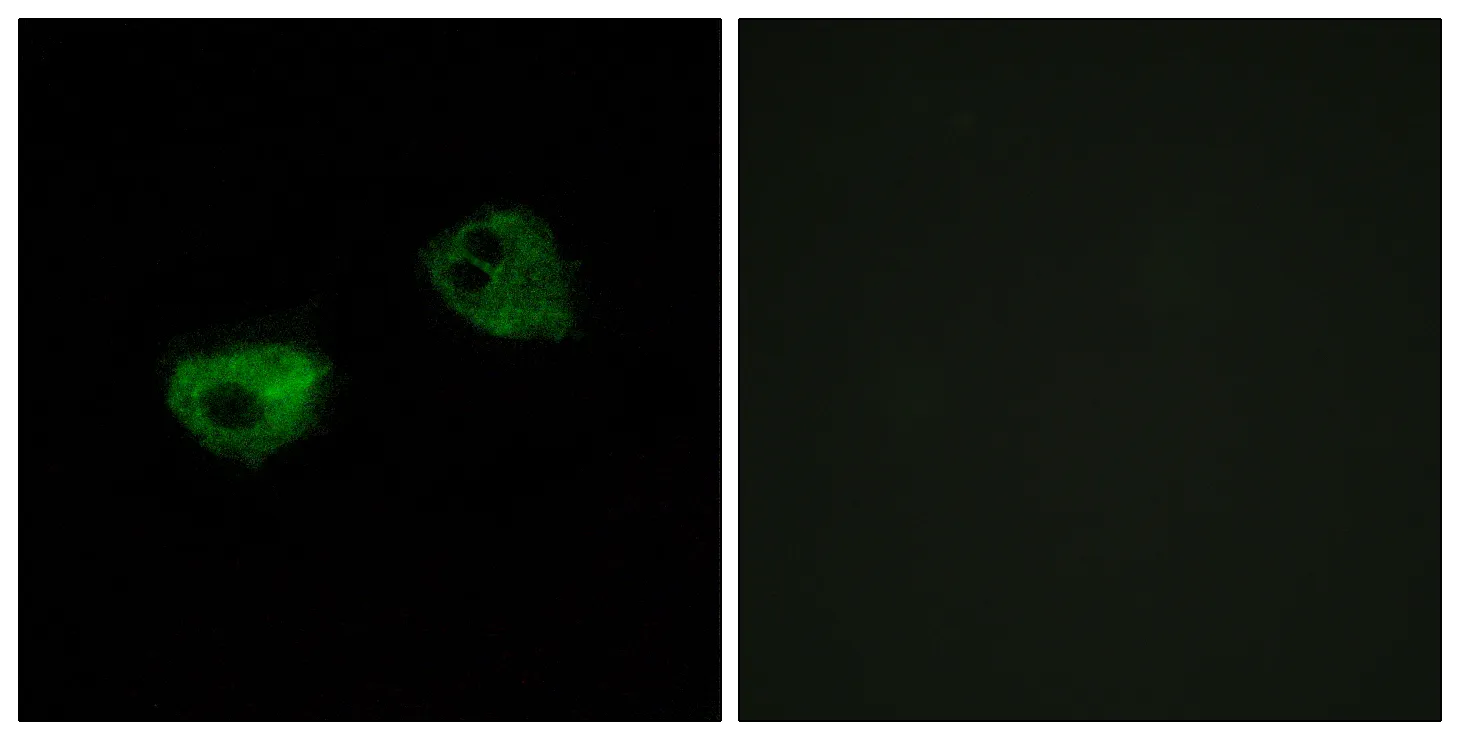
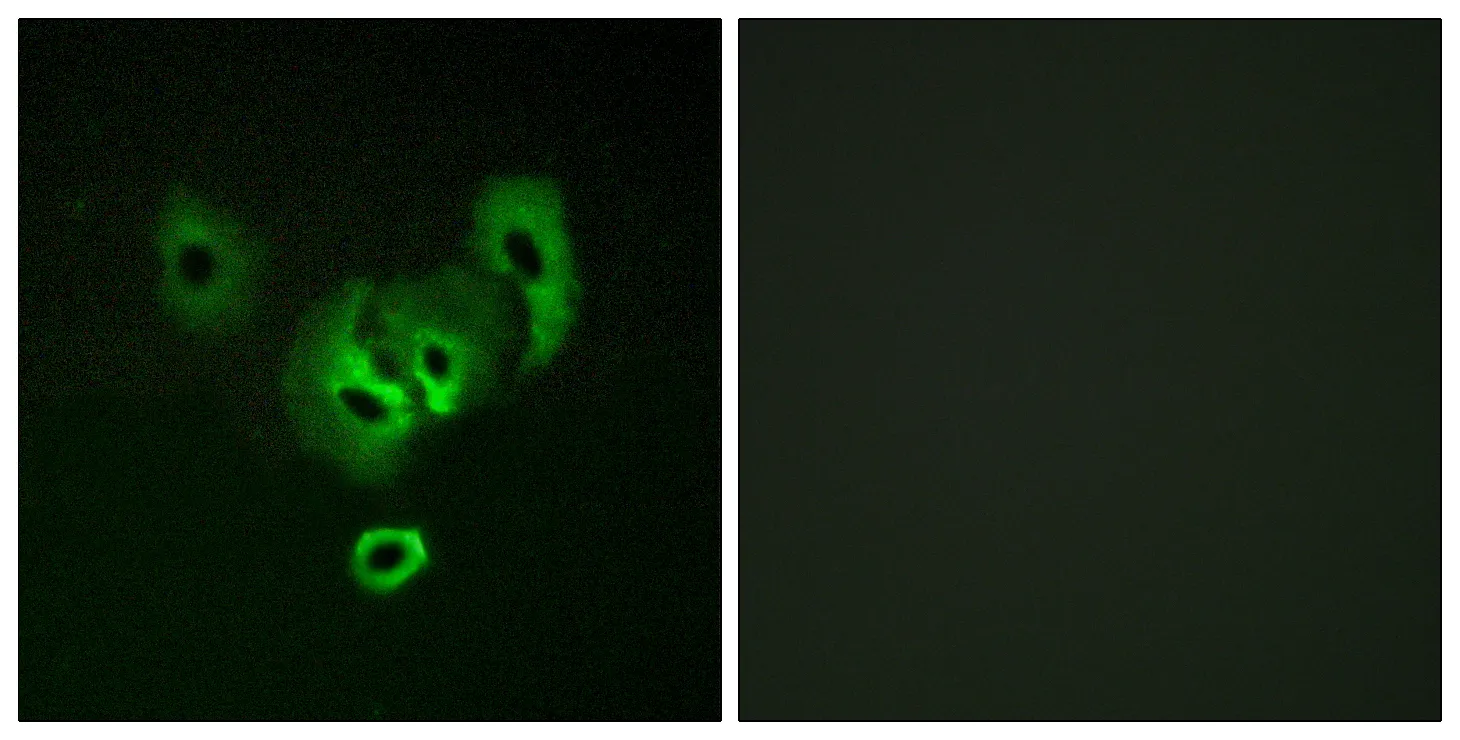
Uygulama:IHC,ICC/IF,ELISA
Reaktivite:Human,Mouse,Rat
Konjuge:Unconjugated
İsteğe bağlı konjugeler: Biotin, FITC (ücretsiz). Diğer 26 konjugatı görün.

Gen Adı:KCNB1
Category: ポリクローナル抗体 Tags: , , , , , , , , ,
Kv2.1 (phospho Ser567) Rabbit Polyclonal Antibody
Konjugasyon: Unconjugated
Rabbit polyclonal Antibody
Uygulama
IHC  ICC/IF  ELISA IHC,ICC/IF,ELISA
Reaktivite
Human,Mouse,Rat
Gen Adı
KCNB1
Saklama
Aliquot and store at -20°C (valid for 12 months). Avoid freeze/thaw cycles.
Özet
Ürün Adı Kv2.1 (phospho Ser567) Rabbit Polyclonal Antibody
Açıklama Rabbit polyclonal Antibody
Konak Rabbit
Reaktivite Human,Mouse,Rat
Konjugasyon Unconjugated
Modifikasyon Phosphorylated
İzotip IgG
Klonalite Polyclonal
Form Liquid
Konsantrasyon Unconjugated
Saklama Aliquot and store at -20°C (valid for 12 months). Avoid freeze/thaw cycles.
Nakliye Ice bags.
Tampon Liquid in PBS containing 50% glycerol, 0.5% protective protein and 0.02% New type preservative N.
Saflaştırma Affinity purification
Antijen Bilgisi
Gen Adı KCNB1
Alternatif İsimler KCNB1; Potassium voltage-gated channel subfamily B member 1; Delayed rectifier potassium channel 1; DRK1; h-DRK1; Voltage-gated potassium channel subunit Kv2.1
Gen Kimliği 3745
SwissProt Kimliği Q14721
İmmünojen The antiserum was produced against synthesized peptide derived from human Kv2.1/KCNB1 around the phosphorylation site of Ser567. AA range:533-582
Uygulama
Uygulama IHC,ICC/IF,ELISA
Seyreltme Oranı IHC 1:100-1:300,ICC/IF 1:200-1:1000,ELISA 1:5000-1:20000
Moleküler Ağırlık -
Araştırma Alanı
Taste transduction;
Arka Plan
Voltage-gated potassium (Kv) channels represent the most complex class of voltage-gated ion channels from both functional and structural standpoints. Their diverse functions include regulating neurotransmitter release, heart rate, insulin secretion, neuronal excitability, epithelial electrolyte transport, smooth muscle contraction, and cell volume. Four sequence-related potassium channel genes - shaker, shaw, shab, and shal - have been identified in Drosophila, and each has been shown to have human homolog(s). This gene encodes a member of the potassium channel, voltage-gated, shab-related subfamily. This member is a delayed rectifier potassium channel and its activity is modulated by some other family members. [provided by RefSeq, Jul 2008],domain:The segment S4 is probably the voltage-sensor and is characterized by a series of positively charged amino acids at every third position.,domain:The tail may be important in modulation of channel activity and/or targeting of the channel to specific subcellular compartments.,function:Mediates the voltage-dependent potassium ion permeability of excitable membranes. Channels open or close in response to the voltage difference across the membrane, letting potassium ions pass in accordance with their electrochemical gradient.,PTM:Highly phosphorylated on serine residues in the C-terminal. Differential phosphorylation on a subset of serines allows graded activity-dependent regulation of channel gating. Phosphorylation on Ser-457, Ser-541, Ser-567, Ser-607, Ser-656 and Ser-720 as well as the N-terminal Ser-15 are all regulated by calcineurin-mediated dephosphorylation. Particularly, Ser-607 and Tyr-128 are significant sites of voltage-gated regulation through phosphorylation/ dephosphorylation activities. Tyr-128 can be dephosphorylated by PTPalpha and cyt-PTPepsilon. Phosphorylation levels on Ser-607 are supersensitive to neuronal activity. Phosphorylation on Ser-567 is reduced during postnatal development with low levels at P2 and P5. Levels then increase to reach adult levels by P14. Phosphorylation levels on Ser-564 and Ser-607 are greatly reduced during seizures, by 40% and 85% respectively.,similarity:Belongs to the potassium channel family. B (Shab) subfamily.,subunit:Heteromultimer with KCNG2, KCNG3, KCNG4, KCNS1, KCNS2, KCNS3 and KCNV2.,
   💬 WhatsApp