

KV1.1 Rabbit Polyclonal Antibody

KV1.1 Rabbit Polyclonal Antibody

Cat: APRab13159
Boyut:20μL Fiyat:$99_x000D_
Boyut:50μL Fiyat:$118_x000D_
Boyut:100μL Fiyat:$220_x000D_
Boyut:200μL Fiyat:$380_x000D_
Uygulama:WB,IHC,ELISA
Reaktivite:Human,Mouse,Rat
Konjuge:Unconjugated
İsteğe bağlı konjugeler: Biotin, FITC (ücretsiz). Diğer 26 konjugatı görün.

Gen Adı:KCNA1
Category: ポリクローナル抗体 Tags: , , , , , , , ,
KV1.1 Rabbit Polyclonal Antibody
Konjugasyon: Unconjugated
Rabbit polyclonal Antibody
Uygulama
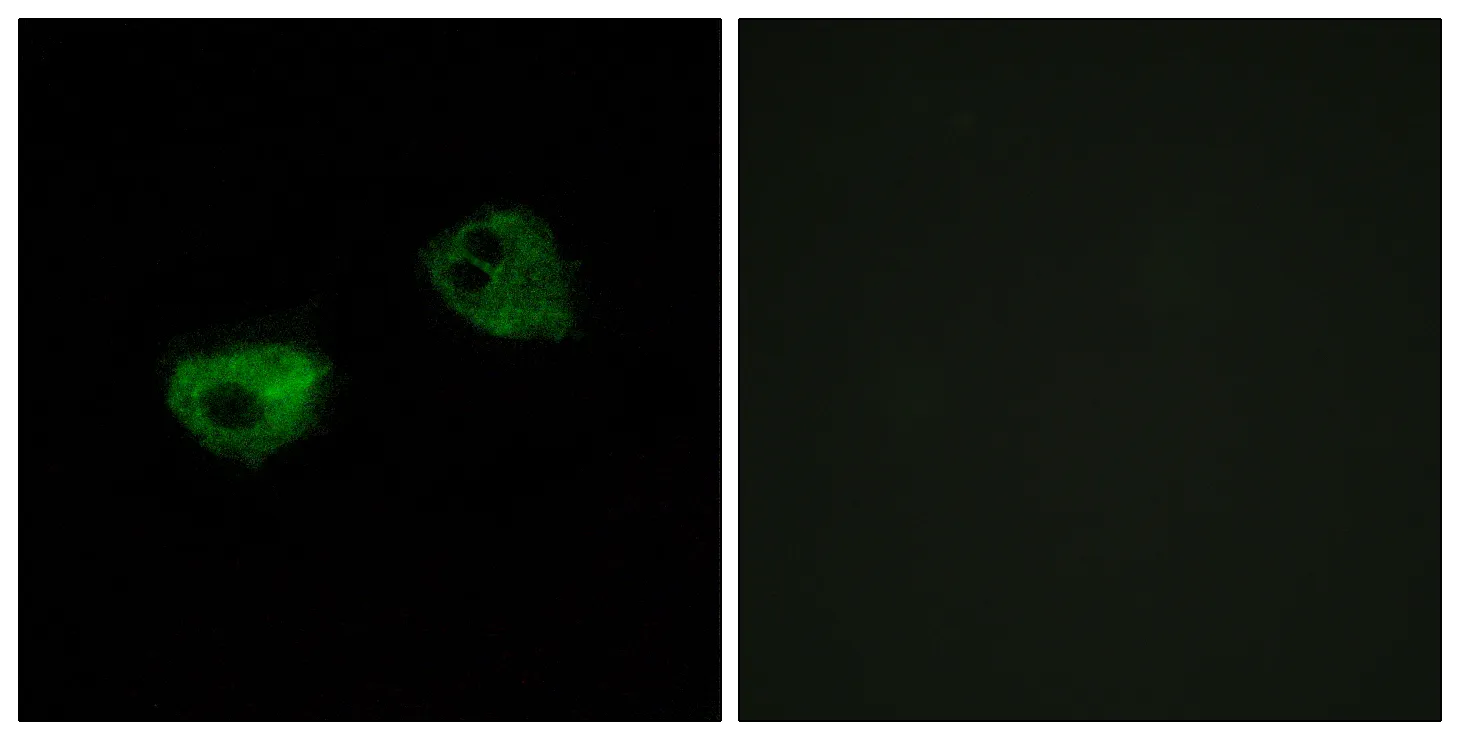
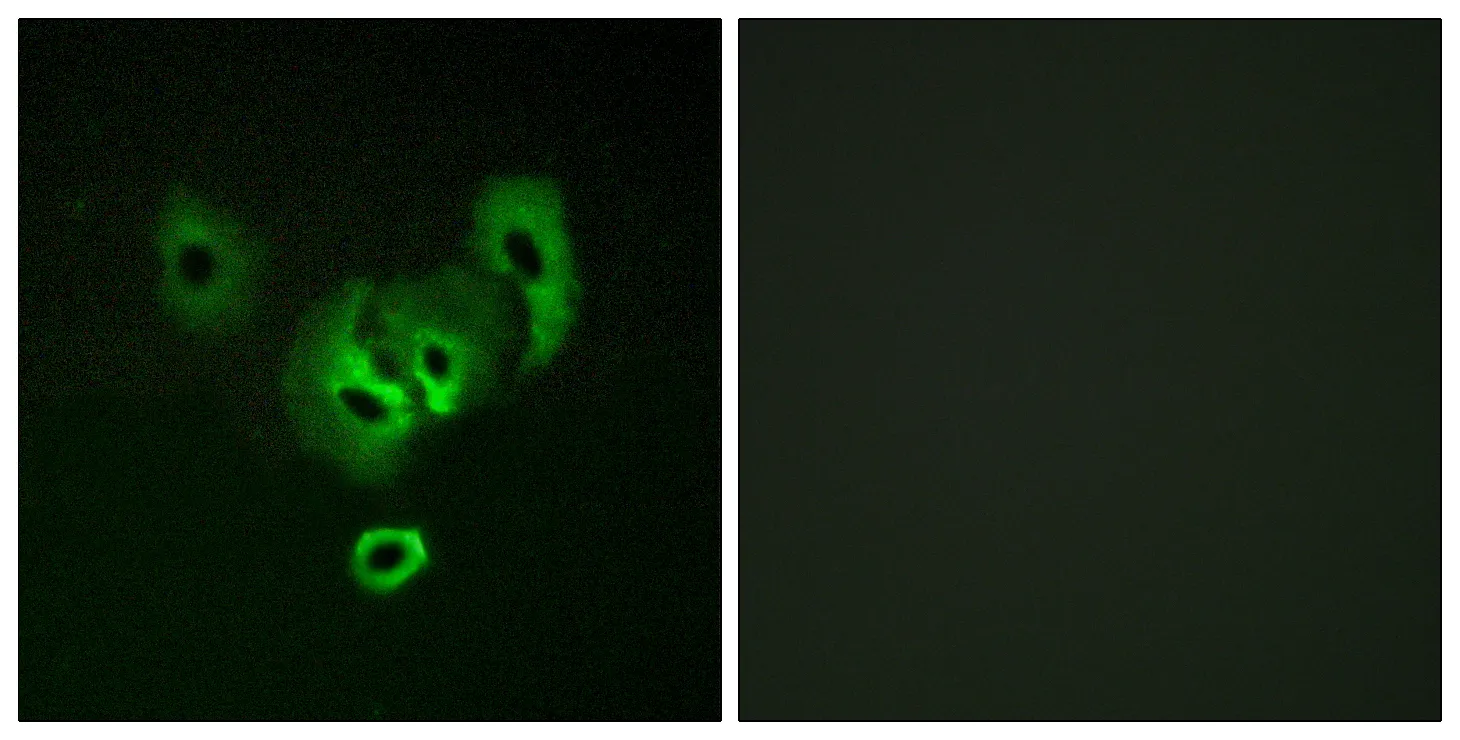
IHC  ICC/IF  ELISA WB,IHC,ELISA
Reaktivite
Human,Mouse,Rat
Gen Adı
KCNA1
Saklama
Aliquot and store at -20°C (valid for 12 months). Avoid freeze/thaw cycles.
Özet
Ürün Adı KV1.1 Rabbit Polyclonal Antibody
Açıklama Rabbit polyclonal Antibody
Konak Rabbit
Reaktivite Human,Mouse,Rat
Konjugasyon Unconjugated
Modifikasyon Unmodified
İzotip IgG
Klonalite Polyclonal
Form Liquid
Konsantrasyon Unconjugated
Saklama Aliquot and store at -20°C (valid for 12 months). Avoid freeze/thaw cycles.
Nakliye Ice bags.
Tampon Liquid in PBS containing 50% glycerol, 0.5% protective protein and 0.02% New type preservative N.
Saflaştırma Affinity purification
Antijen Bilgisi
Gen Adı KCNA1
Alternatif İsimler KCNA1; Potassium voltage-gated channel subfamily A member 1; Voltage-gated K(+) channel HuKI; Voltage-gated potassium channel HBK1; Voltage-gated potassium channel subunit Kv1.1
Gen Kimliği 3736
SwissProt Kimliği Q09470
İmmünojen The antiserum was produced against synthesized peptide derived from human KCNA1. AA range:256-305
Uygulama
Uygulama WB,IHC,ELISA
Seyreltme Oranı WB 1:500-1:2000,IHC 1:50-1:300,ELISA 1:2000-1:20000
Moleküler Ağırlık 57kDa
Araştırma Alanı
Arka Plan
This gene encodes a voltage-gated delayed potassium channel that is phylogenetically related to the Drosophila Shaker channel. The encoded protein has six putative transmembrane segments (S1-S6), and the loop between S5 and S6 forms the pore and contains the conserved selectivity filter motif (GYGD). The functional channel is a homotetramer. The N-terminus of the channel is associated with beta subunits that can modify the inactivation properties of the channel as well as affect expression levels. The C-terminus of the channel is complexed to a PDZ domain protein that is responsible for channel targeting. Mutations in this gene have been associated with myokymia with periodic ataxia (AEMK). [provided by RefSeq, Jul 2008],disease:Defects in KCNA1 are the cause of episodic ataxia type 1 (EA1) [MIM:160120]; also known as paroxysmal or episodic ataxia with myokymia (EAM) or paroxysmal ataxia with neuromyotonia. EA1 is an autosomal dominant disorder characterized by brief episodes of ataxia and dysarthria. Neurological examination during and between the attacks demonstrates spontaneous, repetitive discharges in the distal musculature (myokymia) that arise from peripheral nerve. Nystagmus is absent.,disease:Defects in KCNA1 are the cause of myokymia isolated type 1 (MK1) [MIM:160120]. Myokymia is a condition characterized by spontaneous involuntary contraction of muscle fiber groups that can be observed as vermiform movement of the overlying skin. Electromyography typically shows continuous motor unit activity with spontaneous oligo- and multiplet-discharges of high intraburst frequency (myokymic discharges). Isolated spontaneous muscle twitches occur in many persons and have no grave significance.,domain:The N-terminus may be important in determining the rate of inactivation of the channel while the tail may play a role in modulation of channel activity and/or targeting of the channel to specific subcellular compartments.,domain:The segment S4 is probably the voltage-sensor and is characterized by a series of positively charged amino acids at every third position.,function:Mediates the voltage-dependent potassium ion permeability of excitable membranes. Assuming opened or closed conformations in response to the voltage difference across the membrane, the protein forms a potassium-selective channel through which potassium ions may pass in accordance with their electrochemical gradient.,PTM:Palmitoylated on Cys-243; which may be required for membrane targeting.,RNA editing:Partially edited. RNA editing varies from 17% in the caudate nucleus to 68% in the spinal cord and to 77% in the medulla.,similarity:Belongs to the potassium channel family. A (Shaker) subfamily.,subunit:Heterotetramer of potassium channel proteins. Binds KCNAB2 and PDZ domains of DLG1, DLG2 and DLG4.,
   💬 WhatsApp