

KIR3.1 (phospho Ser185) Rabbit Polyclonal Antibody

KIR3.1 (phospho Ser185) Rabbit Polyclonal Antibody

Cat: APRab04921
Boyut:20μL Fiyat:$99_x000D_
Boyut:50μL Fiyat:$118_x000D_
Boyut:100μL Fiyat:$220_x000D_
Boyut:200μL Fiyat:$380_x000D_
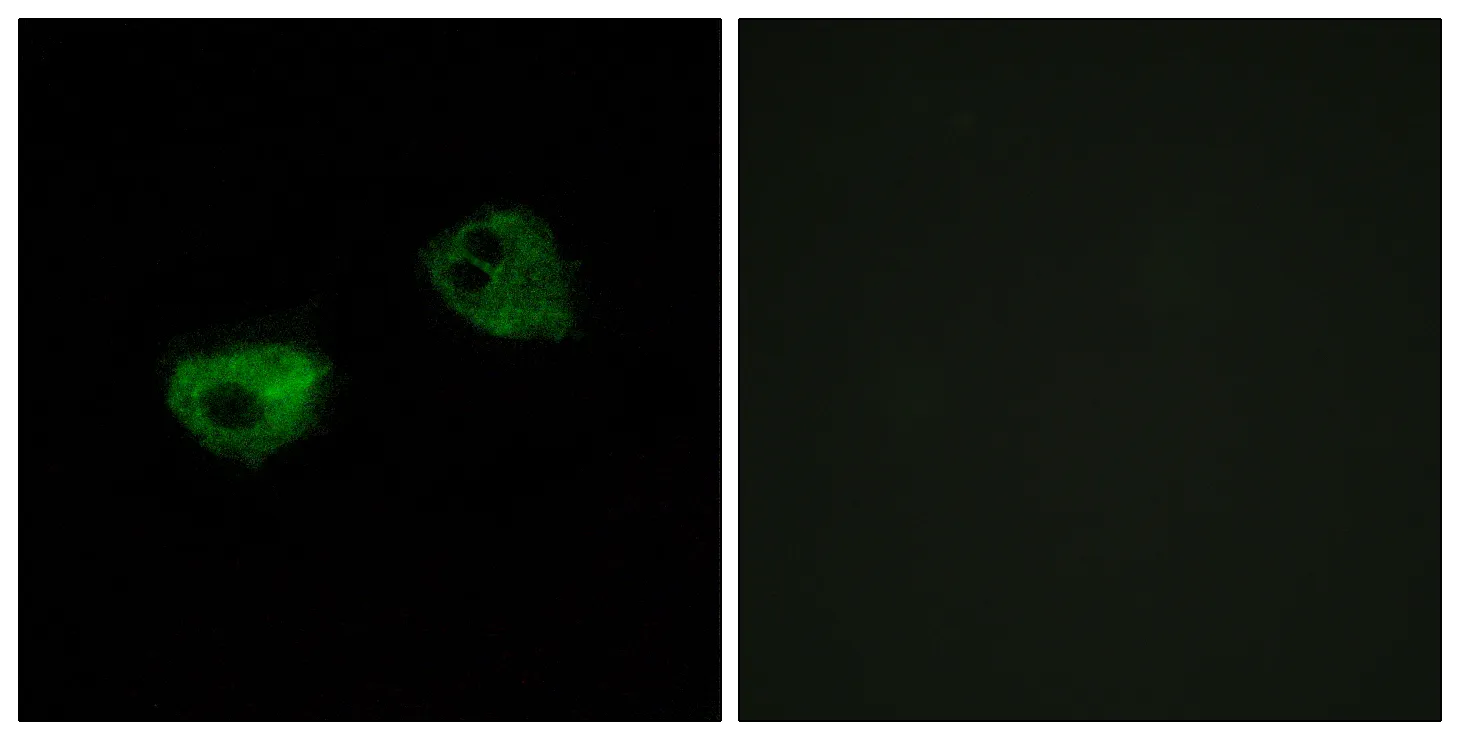
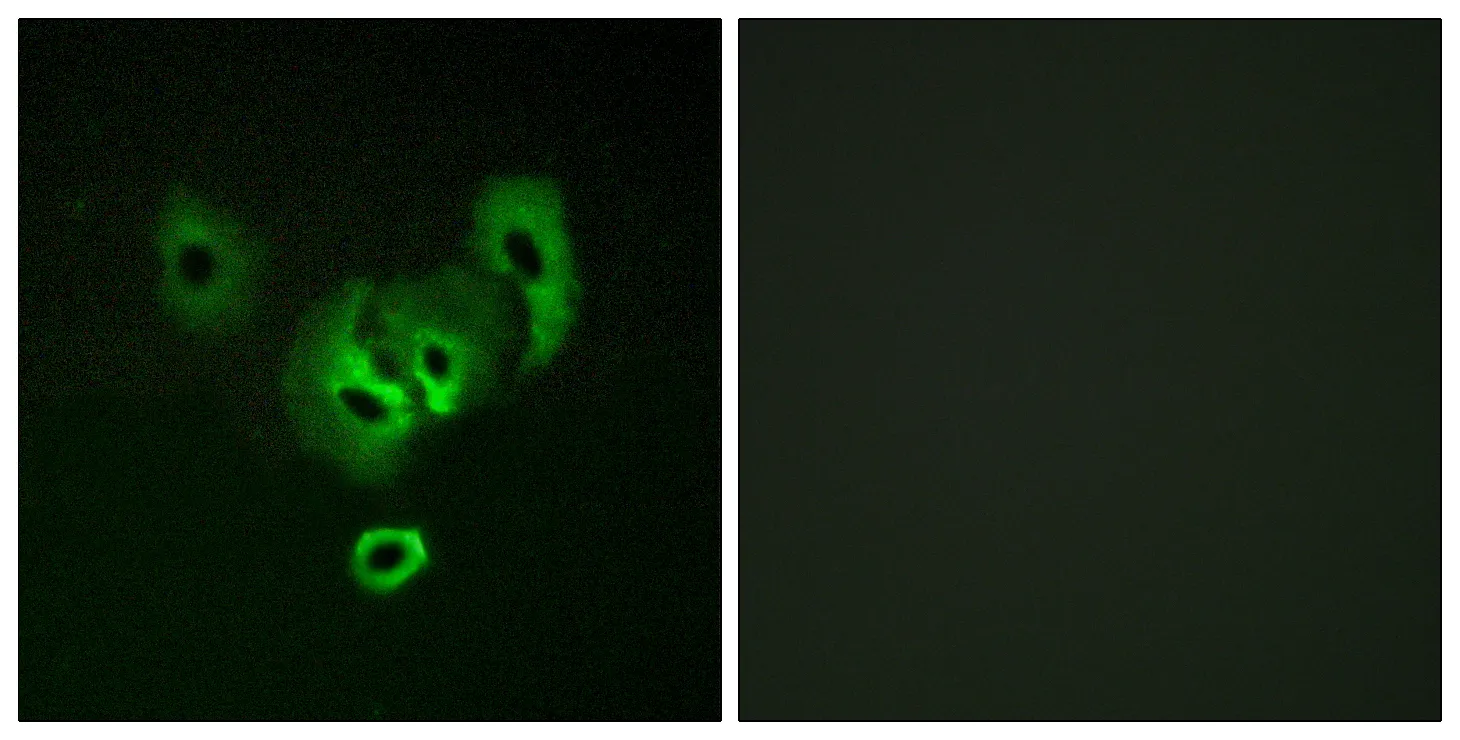
Uygulama:WB,IHC,ICC/IF,ELISA
Reaktivite:Human,Mouse,Rat,Monkey
Konjuge:Unconjugated
İsteğe bağlı konjugeler: Biotin, FITC (ücretsiz). Diğer 26 konjugatı görün.

Gen Adı:KCNJ3
Category: ポリクローナル抗体 Tags: , , , , , , , , , ,
KIR3.1 (phospho Ser185) Rabbit Polyclonal Antibody
Konjugasyon: Unconjugated
Rabbit polyclonal Antibody
Uygulama
IHC  ICC/IF  ELISA WB,IHC,ICC/IF,ELISA
Reaktivite
Human,Mouse,Rat,Monkey
Gen Adı
KCNJ3
Saklama
Aliquot and store at -20°C (valid for 12 months). Avoid freeze/thaw cycles.
Özet
Ürün Adı KIR3.1 (phospho Ser185) Rabbit Polyclonal Antibody
Açıklama Rabbit polyclonal Antibody
Konak Rabbit
Reaktivite Human,Mouse,Rat,Monkey
Konjugasyon Unconjugated
Modifikasyon Phosphorylated
İzotip IgG
Klonalite Polyclonal
Form Liquid
Konsantrasyon Unconjugated
Saklama Aliquot and store at -20°C (valid for 12 months). Avoid freeze/thaw cycles.
Nakliye Ice bags.
Tampon Liquid in PBS containing 50% glycerol, 0.5% protective protein and 0.02% New type preservative N.
Saflaştırma Affinity purification
Antijen Bilgisi
Gen Adı KCNJ3
Alternatif İsimler KCNJ3; GIRK1; G protein-activated inward rectifier potassium channel 1; GIRK-1; Inward rectifier K(+) channel Kir3.1; Potassium channel; inwardly rectifying subfamily J member 3
Gen Kimliği 3760
SwissProt Kimliği P48549
İmmünojen The antiserum was produced against synthesized peptide derived from human GIRK1/KIR3.1/KCNJ3 around the phosphorylation site of Ser185. AA range:151-200
Uygulama
Uygulama WB,IHC,ICC/IF,ELISA
Seyreltme Oranı WB 1:500-1:2000,IHC 1:100-1:300,ICC/IF 1:200-1:1000,ELISA 1:10000-1:20000
Moleküler Ağırlık 50kDa
Araştırma Alanı
Arka Plan
Potassium channels are present in most mammalian cells, where they participate in a wide range of physiologic responses. The protein encoded by this gene is an integral membrane protein and inward-rectifier type potassium channel. The encoded protein, which has a greater tendency to allow potassium to flow into a cell rather than out of a cell, is controlled by G-proteins and plays an important role in regulating heartbeat. It associates with three other G-protein-activated potassium channels to form a heteromultimeric pore-forming complex that also couples to neurotransmitter receptors in the brain and whereby channel activation can inhibit action potential firing by hyperpolarizing the plasma membrane. These multimeric G-protein-gated inwardly-rectifying potassium (GIRK) channels may play a role in the pathophysiology of epilepsy, addiction, Down's syndrome, atfunction:This potassium channel is controlled by G proteins. Inward rectifier potassium channels are characterized by a greater tendency to allow potassium to flow into the cell rather than out of it. Their voltage dependence is regulated by the concentration of extracellular potassium; as external potassium is raised, the voltage range of the channel opening shifts to more positive voltages. The inward rectification is mainly due to the blockage of outward current by internal magnesium. This receptor plays a crucial role in regulating the heartbeat.,similarity:Belongs to the inward rectifier-type potassium channel family.,subunit:Associates with GIRK2, GIRK3 or GIRK4 to form a G-protein activated heteromultimer pore-forming unit. The resulting inward current is much larger.,
   💬 WhatsApp