

KIR2.1 Rabbit Polyclonal Antibody

KIR2.1 Rabbit Polyclonal Antibody

Cat: APRab13026
Boyut:20μL Fiyat:$99_x000D_
Boyut:50μL Fiyat:$118_x000D_
Boyut:100μL Fiyat:$220_x000D_
Boyut:200μL Fiyat:$380_x000D_
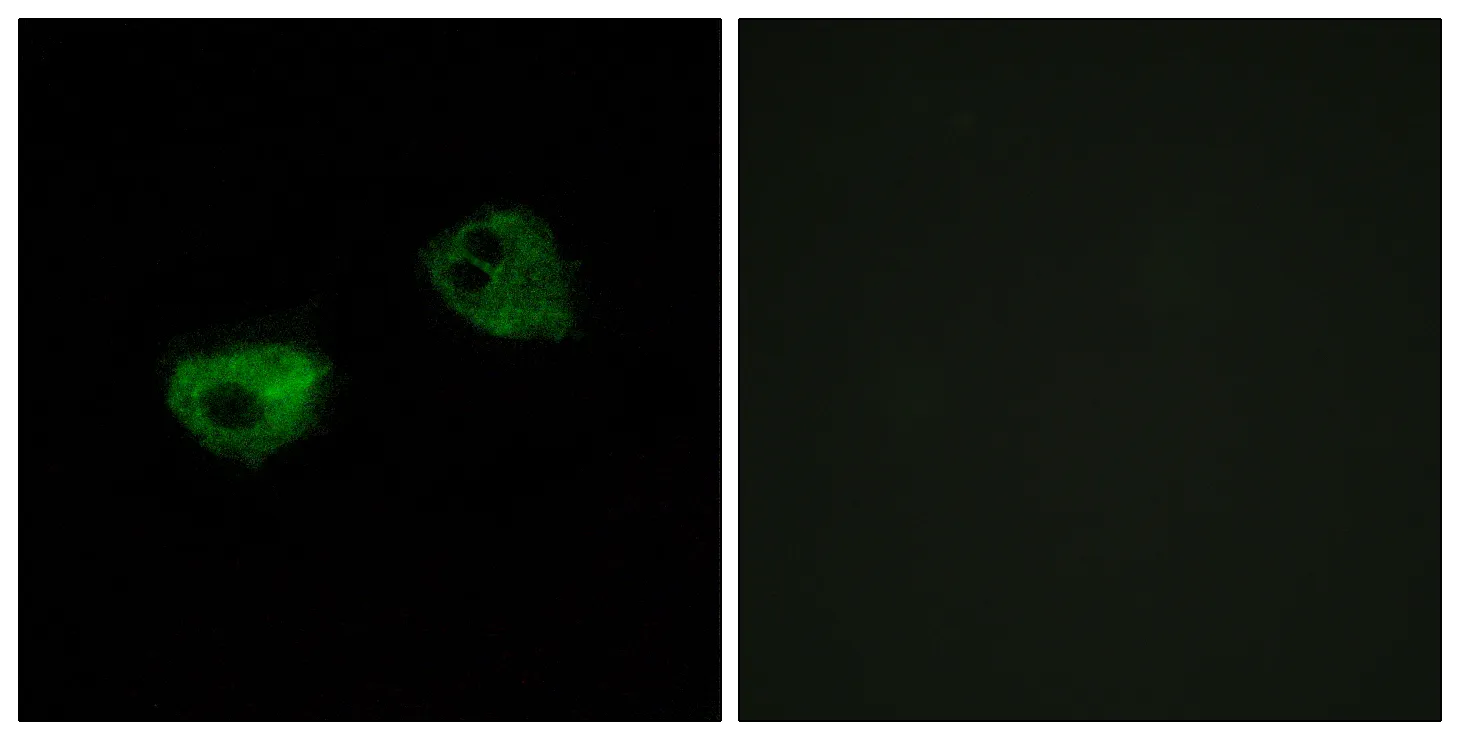
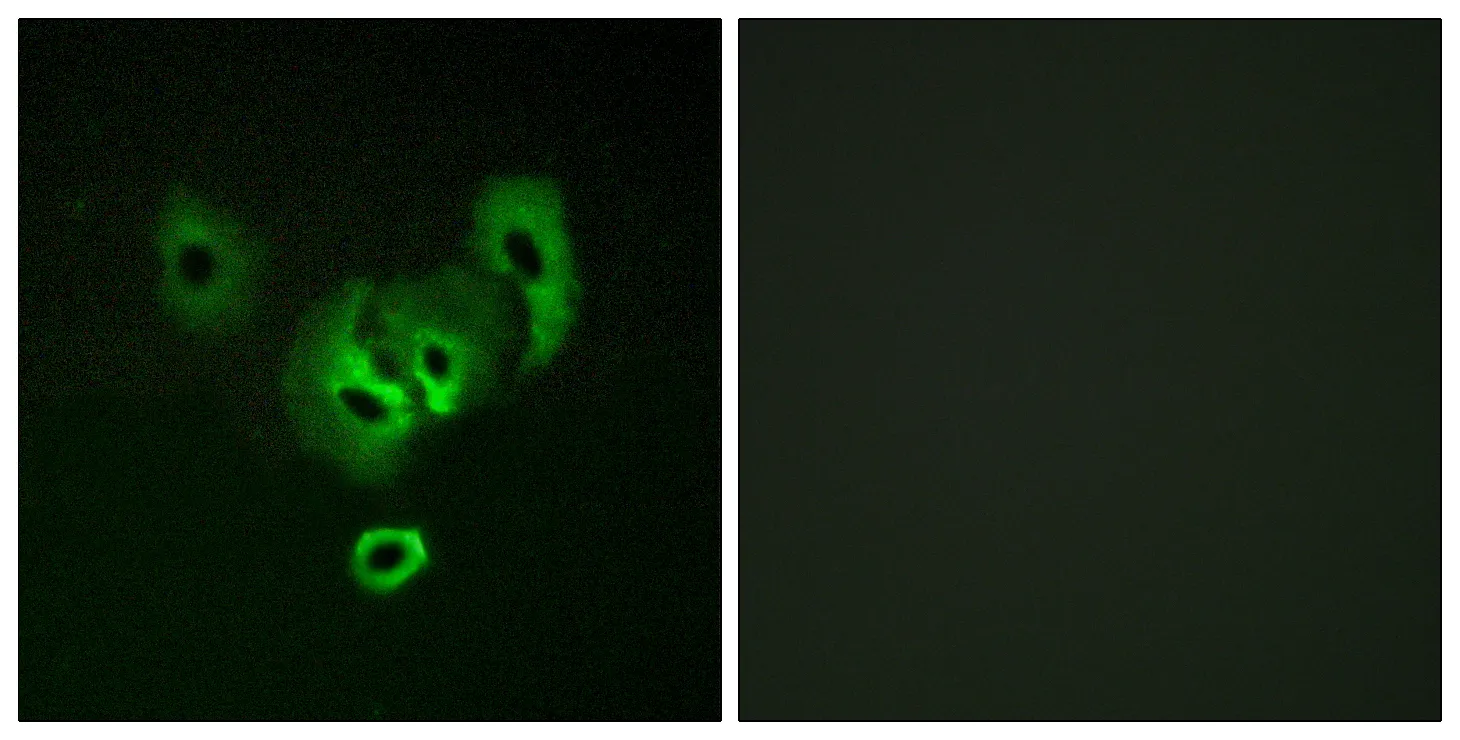
Uygulama:WB,IHC,ICC/IF,ELISA
Reaktivite:Human,Rat
Konjuge:Unconjugated
İsteğe bağlı konjugeler: Biotin, FITC (ücretsiz). Diğer 26 konjugatı görün.

Gen Adı:KCNJ2
Category: ポリクローナル抗体 Tags: , , , , , , , ,
KIR2.1 Rabbit Polyclonal Antibody
Konjugasyon: Unconjugated
Rabbit polyclonal Antibody
Uygulama
IHC  ICC/IF  ELISA WB,IHC,ICC/IF,ELISA
Reaktivite
Human,Rat
Gen Adı
KCNJ2
Saklama
Aliquot and store at -20°C (valid for 12 months). Avoid freeze/thaw cycles.
Özet
Ürün Adı KIR2.1 Rabbit Polyclonal Antibody
Açıklama Rabbit polyclonal Antibody
Konak Rabbit
Reaktivite Human,Rat
Konjugasyon Unconjugated
Modifikasyon Unmodified
İzotip IgG
Klonalite Polyclonal
Form Liquid
Konsantrasyon Unconjugated
Saklama Aliquot and store at -20°C (valid for 12 months). Avoid freeze/thaw cycles.
Nakliye Ice bags.
Tampon Liquid in PBS containing 50% glycerol, 0.5% protective protein and 0.02% New type preservative N.
Saflaştırma Affinity purification
Antijen Bilgisi
Gen Adı KCNJ2
Alternatif İsimler KCNJ2; IRK1; Inward rectifier potassium channel 2; Cardiac inward rectifier potassium channel; Inward rectifier K(+) channel Kir2.1; IRK-1; hIRK1; Potassium channel; inwardly rectifying subfamily J member 2
Gen Kimliği 3759
SwissProt Kimliği P63252
İmmünojen The antiserum was produced against synthesized peptide derived from human KCNJ2. AA range:81-130
Uygulama
Uygulama WB,IHC,ICC/IF,ELISA
Seyreltme Oranı WB 1:500-1:2000,IHC 1:100-1:300,ICC/IF 1:50-1:200,ELISA 1:5000-1:20000
Moleküler Ağırlık 48kDa
Araştırma Alanı
Arka Plan
Potassium channels are present in most mammalian cells, where they participate in a wide range of physiologic responses. The protein encoded by this gene is an integral membrane protein and inward-rectifier type potassium channel. The encoded protein, which has a greater tendency to allow potassium to flow into a cell rather than out of a cell, probably participates in establishing action potential waveform and excitability of neuronal and muscle tissues. Mutations in this gene have been associated with Andersen syndrome, which is characterized by periodic paralysis, cardiac arrhythmias, and dysmorphic features. [provided by RefSeq, Jul 2008],disease:Defects in KCNJ2 are the cause of long QT syndrome type 7 (LQT7) [MIM:170390]; also called Andersen syndrome or Andersen cardiodysrhythmic periodic paralysis. Long QT syndromes are heart disorders characterized by a prolonged QT interval on the ECG and polymorphic ventricular arrhythmias. They cause syncope and sudden death in response to excercise or emotional stress. LQT7 manifests itself as a clinical triad consisting of potassium-sensitive periodic paralysis, ventricular ectopy and dysmorphic features.,disease:Defects in KCNJ2 are the cause of short QT syndrome type 3 (SQT3) [MIM:609622]. Short QT syndromes are heart disorders characterized by idiopathic persistently and uniformly short QT interval on ECG in the absence of structural heart disease in affected individuals. They cause syncope and sudden death. SQT3 has a unique ECG phenotype characterized by asymmetrical T waves.,function:Probably participates in establishing action potential waveform and excitability of neuronal and muscle tissues. Inward rectifier potassium channels are characterized by a greater tendency to allow potassium to flow into the cell rather than out of it. Their voltage dependence is regulated by the concentration of extracellular potassium; as external potassium is raised, the voltage range of the channel opening shifts to more positive voltages. The inward rectification is mainly due to the blockage of outward current by internal magnesium. Can be blocked by extracellular barium or cesium.,similarity:Belongs to the inward rectifier-type potassium channel family.,subunit:Homomultimeric and heteromultimeric association with Kir2.3, resulting in an enhanced G-protein-induced current. Association, via its PDZ-recognition domain, with LIN7A, LIN7B, LIN7C, DLG1, CASK and APBA1 plays a key role in its localization and trafficking.,tissue specificity:Heart, brain, placenta, lung, skeletal muscle, and kidney. Diffusely distributed throughout the brain.,
   💬 WhatsApp