

HSF1 (phospho Ser303) Rabbit Polyclonal Antibody

HSF1 (phospho Ser303) Rabbit Polyclonal Antibody

Cat: APRab04797
Boyut:20μL Fiyat:$99_x000D_
Boyut:50μL Fiyat:$118_x000D_
Boyut:100μL Fiyat:$220_x000D_
Boyut:200μL Fiyat:$380_x000D_
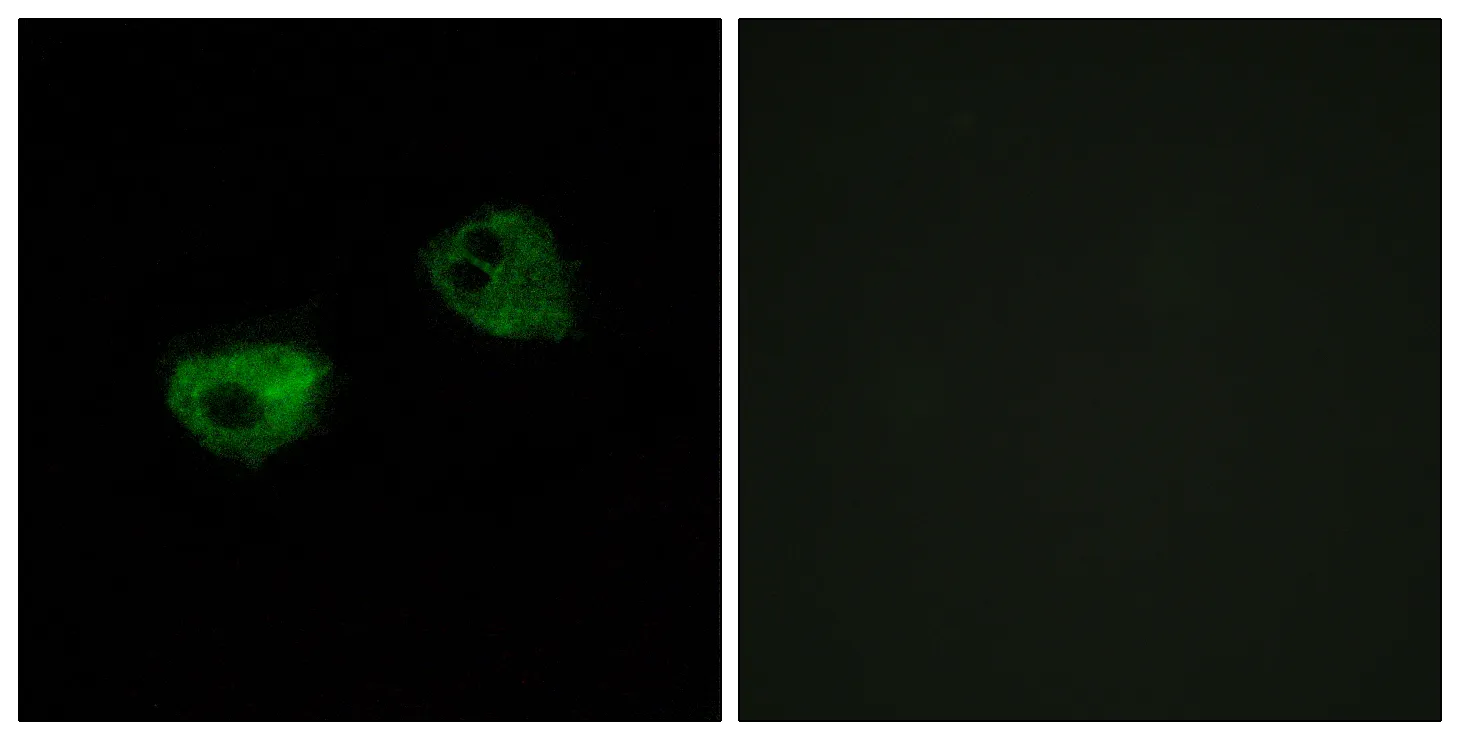
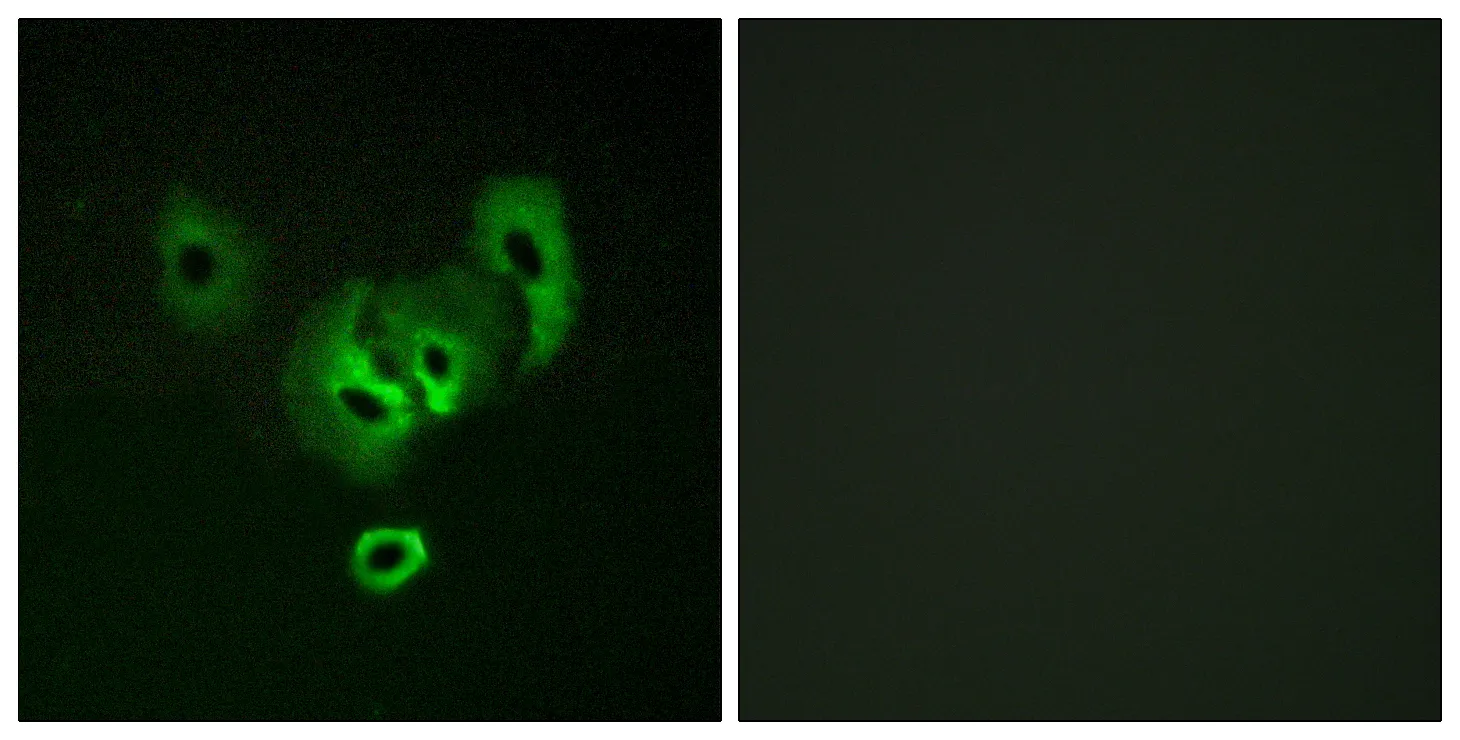
Uygulama:WB,IHC,ICC/IF,ELISA
Reaktivite:Human,Mouse
Konjuge:Unconjugated
İsteğe bağlı konjugeler: Biotin, FITC (ücretsiz). Diğer 26 konjugatı görün.

Gen Adı:HSF1
Category: ポリクローナル抗体 Tags: , , , , , , , , ,
HSF1 (phospho Ser303) Rabbit Polyclonal Antibody
Konjugasyon: Unconjugated
Rabbit polyclonal Antibody
Uygulama
IHC  ICC/IF  ELISA WB,IHC,ICC/IF,ELISA
Reaktivite
Human,Mouse
Gen Adı
HSF1
Saklama
Aliquot and store at -20°C (valid for 12 months). Avoid freeze/thaw cycles.
Özet
Ürün Adı HSF1 (phospho Ser303) Rabbit Polyclonal Antibody
Açıklama Rabbit polyclonal Antibody
Konak Rabbit
Reaktivite Human,Mouse
Konjugasyon Unconjugated
Modifikasyon Phosphorylated
İzotip IgG
Klonalite Polyclonal
Form Liquid
Konsantrasyon Unconjugated
Saklama Aliquot and store at -20°C (valid for 12 months). Avoid freeze/thaw cycles.
Nakliye Ice bags.
Tampon Liquid in PBS containing 50% glycerol, 0.5% protective protein and 0.02% New type preservative N.
Saflaştırma Affinity purification
Antijen Bilgisi
Gen Adı HSF1
Alternatif İsimler HSF1; HSTF1; Heat shock factor protein 1; HSF 1; Heat shock transcription factor 1; HSTF 1
Gen Kimliği 3297
SwissProt Kimliği Q00613
İmmünojen The antiserum was produced against synthesized peptide derived from human HSF1 around the phosphorylation site of Ser303. AA range:270-319
Uygulama
Uygulama WB,IHC,ICC/IF,ELISA
Seyreltme Oranı WB 1:500-1:2000,IHC 1:100-1:300,ICC/IF 1:200-1:1000,ELISA 1:10000-1:20000
Moleküler Ağırlık 82kDa
Araştırma Alanı
SAPK_JNK
Arka Plan
heat shock transcription factor 1(HSF1) Homo sapiens The product of this gene is a transcription factor that is rapidly induced after temperature stress and binds heat shock promoter elements (HSE). This protein plays a role in the regulation of lifespan. Expression of this gene is repressed by phsphorylation, which promotes binding by heat shock protein 90. [provided by RefSeq, Aug 2016],function:DNA-binding protein that specifically binds heat shock promoter elements (HSE) and activates transcription. In higher eukaryotes, HSF is unable to bind to the HSE unless the cells are heat shocked.,PTM:Phosphorylated on multiple serine residues, a subset of which are involved in stress-related regulation of transcription activation. Constitutive phosphorylation represses transcriptional activity at normal temperatures. Levels increase on specific residues heat-shock and enhance HSF1 transactivation activity. Phosphorylation on Ser-307 derepresses activation on heat-stress and in combination with Ser-303 phosphorylation appears to be involved in recovery after heat-stress. Phosphorylated on Ser-230 by CAMK2, in vitro. Cadmium also enhances phosphorylation at this site. Phosphorylation on Ser-303 is a prerequisite for HSF1 sumoylation. Phosphorylation on Ser-121 inhibits transactivation and promotes HSP90 binding. Phosphorylation on Thr-142 also mediates transcriptional activity induced by heat.,PTM:Sumoylated BY SUMO1 AND SUMO2 on heat-shock. Heat-inducible sumoylation occurs after 15 min of heat-shock, after which levels decrease and at 4 hours, levels return to control levels. Sumoylation has no effect on HSE binding nor on transcriptional activity. Phosphorylation on Ser-303 is a prerequisite for sumoylation.,similarity:Belongs to the HSF family.,subcellular location:Cytoplasmic during normal growth. On activation, translocates to nuclear stress granules. Colocalizes with SUMO1 in nuclear stress granules.,subunit:Monomer. Under normal conditions, interacts with HSP90AA1 in the HSP90 multichaperone complex; the interaction prevents trimerization and activation of HSF1. On activation by heat-stress or by other factors such as metal ions, HSF1 is released from the complex, homotrimerizes, is hyperphosphorylated and translocated to the nucleus where, subsequently, it can activate transcription. Binds the complex through the regulatory domain. Interacts with SYMPK and CSTF2 in heat-stressed cells. Interacts with FKBP4 in the HSP90 multichaperone complex; the interaction is independent of the phosphorylation state of HSF1. Interacts with MAPKAPK2.,
   💬 WhatsApp