

FKRP Rabbit Polyclonal Antibody

FKRP Rabbit Polyclonal Antibody

Cat: APRab11015
Boyut:20μL Fiyat:$99_x000D_
Boyut:50μL Fiyat:$118_x000D_
Boyut:100μL Fiyat:$220_x000D_
Boyut:200μL Fiyat:$380_x000D_
Uygulama:WB,ICC/IF,ELISA
Reaktivite:Human,Mouse,Rat
Konjuge:Unconjugated
İsteğe bağlı konjugeler: Biotin, FITC (ücretsiz). Diğer 26 konjugatı görün.

Gen Adı:FKRP
Category: ポリクローナル抗体 Tags: , , , , , , , ,
FKRP Rabbit Polyclonal Antibody
Konjugasyon: Unconjugated
Rabbit polyclonal Antibody
Uygulama
IHC  ICC/IF  ELISA WB,ICC/IF,ELISA
Reaktivite
Human,Mouse,Rat
Gen Adı
FKRP
Saklama
Aliquot and store at -20°C (valid for 12 months). Avoid freeze/thaw cycles.
Özet
Ürün Adı FKRP Rabbit Polyclonal Antibody
Açıklama Rabbit polyclonal Antibody
Konak Rabbit
Reaktivite Human,Mouse,Rat
Konjugasyon Unconjugated
Modifikasyon Unmodified
İzotip IgG
Klonalite Polyclonal
Form Liquid
Konsantrasyon Unconjugated
Saklama Aliquot and store at -20°C (valid for 12 months). Avoid freeze/thaw cycles.
Nakliye Ice bags.
Tampon Liquid in PBS containing 50% glycerol, 0.5% protective protein and 0.02% New type preservative N.
Saflaştırma Affinity purification
Antijen Bilgisi
Gen Adı FKRP
Alternatif İsimler FKRP; Fukutin-related protein
Gen Kimliği 79147
SwissProt Kimliği Q9H9S5
İmmünojen The antiserum was produced against synthesized peptide derived from human FKRP. AA range:1-50
Uygulama
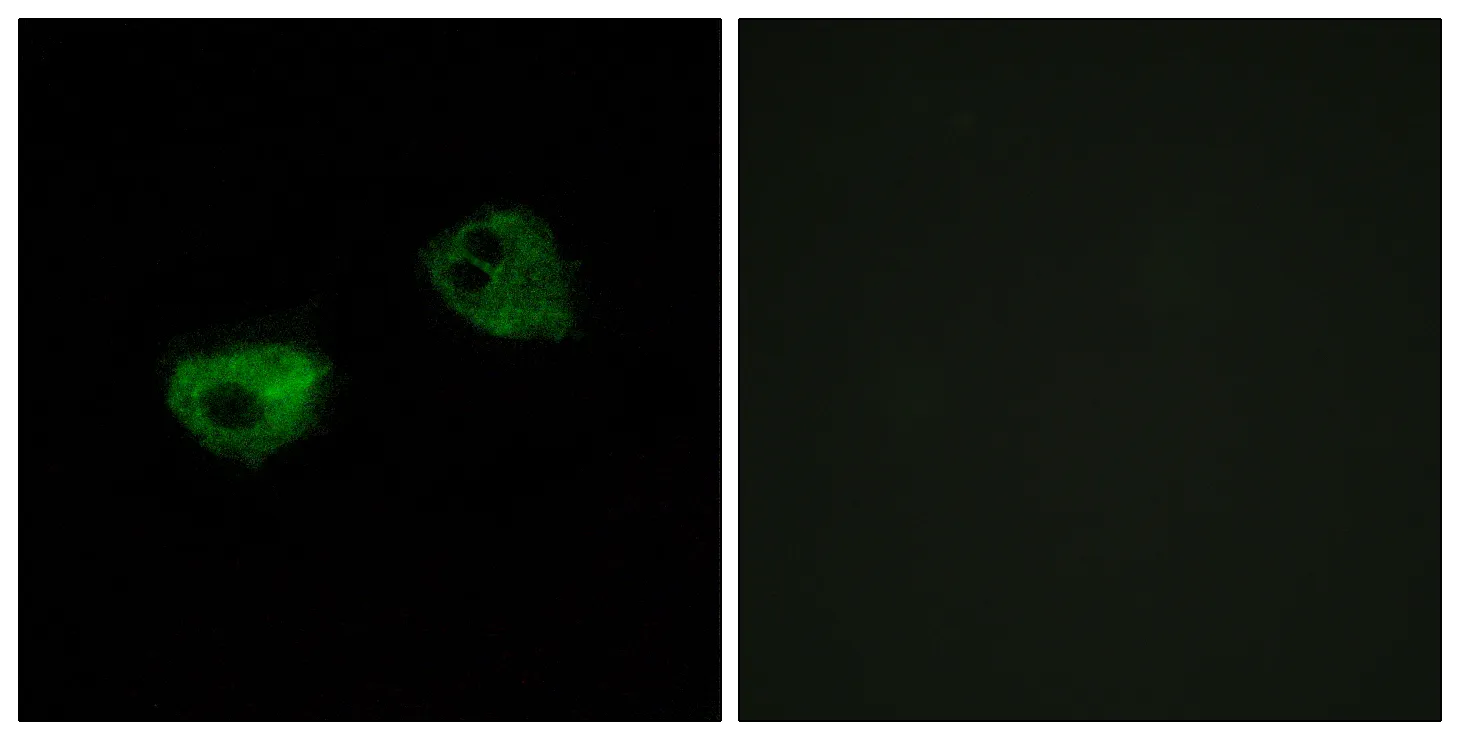
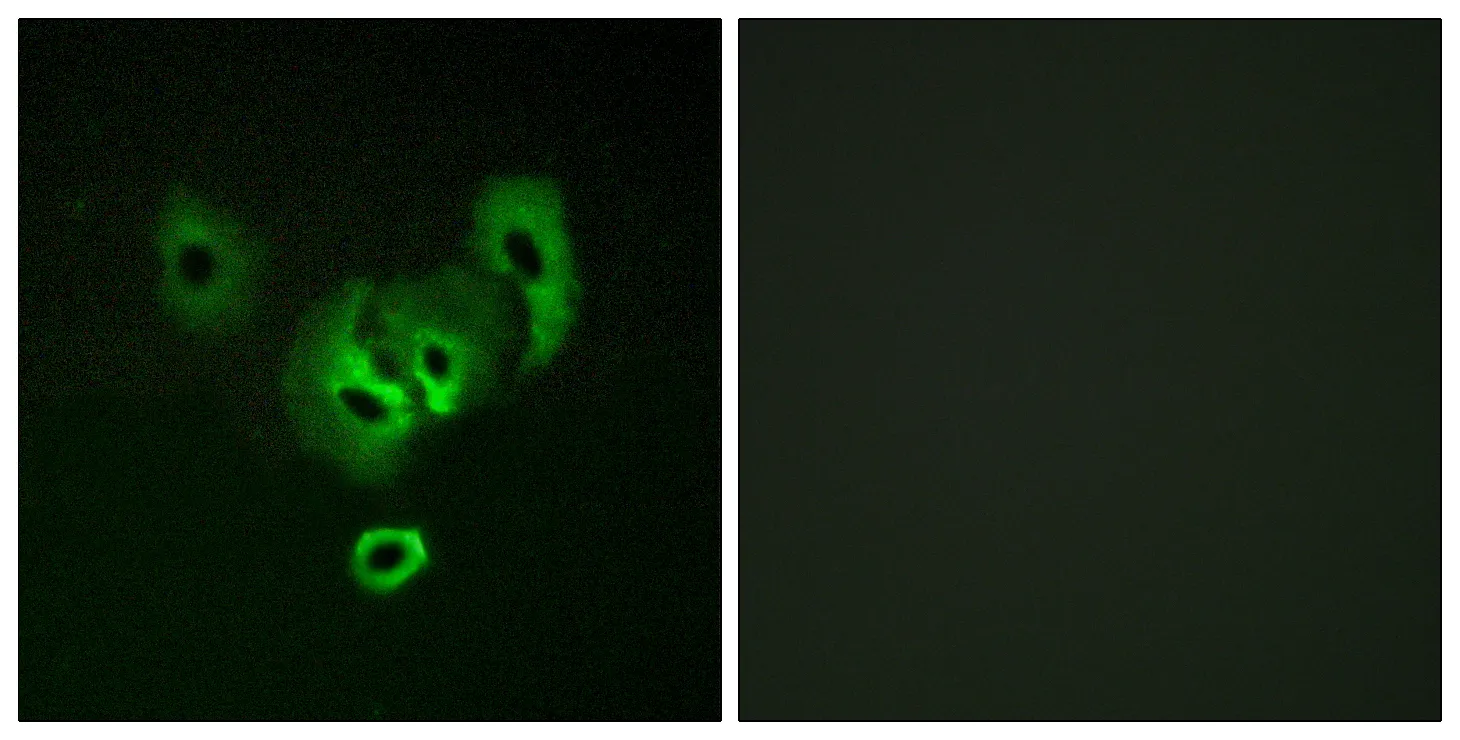
Uygulama WB,ICC/IF,ELISA
Seyreltme Oranı WB 1:500-1:2000,ICC/IF 1:200-1:1000,ELISA 1:10000-1:20000
Moleküler Ağırlık 50kDa
Araştırma Alanı
Arka Plan
This gene encodes a protein which is targeted to the medial Golgi apparatus and is necessary for posttranslational modification of dystroglycan. Mutations in this gene have been associated with congenital muscular dystrophy, mental retardation, and cerebellar cysts. Several alternatively spliced transcript variants of this gene have been described, but the full-length nature of some of these variants has not been determined. [provided by RefSeq, Oct 2008],disease:Defects in FKRP are the cause of congenital muscular dystrophy type 1C (MDC1C) [MIM:606612]. Congenital muscular dystrophies (CMD) are a heterogeneous group of autosomal recessive disorders characterized by hypotonia, muscle weakness, and joint contractures that present at birth or during the first 6 months of life and have dystrophic changes on skeletal muscle biopsy. Mental retardation with or without structural CNS changes may accompany some forms. MDC1C is a form of CMD with onset in the first weeks of life and a severe phenotype with inability to walk, muscle hypertrophy, marked elevation of serum creatine kinase, a secondary deficiency of laminin alpha2, and a marked reduction in alpha-dystroglycan expression. Only a subset of MDC1C patients have brain involvements.,disease:Defects in FKRP are the cause of limb-girdle muscular dystrophy type 2I (LGMD2I) [MIM:607155]. LGMD2I is an autosomal recessive disorder with age of onset ranging from childhood to adult life, and variable severity. Clinical features include proximal muscle weakness, waddling gait, calf hypertrophy, cardiomyopathy and respiratory insufficiency. A reduction of alpha-dystroglycan and laminin alpha-2 expression can be observed on skeletal muscle biopsy from LGMD2I patients.,disease:Defects in FKRP may be a cause of muscle-eye-brain disease (MEB) [MIM:253280]. MEB is an autosomal recessive disorder characterized by congenital muscular dystrophy, ocular abnormalities, cobblestone lissencephaly and cerebellar hypoplasia. MEB patients present severe congenital myopia, congenital glaucoma, pallor of the optic disks, retinal hypoplasia, mental retardation, hydrocephalus, abnormal electroencephalograms, generalized muscle weakness and myoclonic jerks.,disease:Defects in FKRP may be a cause of Walker-Warburg syndrome (WWS) [MIM:236670]; also known as hydrocephalus-agyria-retinal dysplasia or HARD syndrome. WWS is an autosomal recessive disorder characterized by cobblestone lissencephaly, hydrocephalus, agyria, retinal displasia, with or without encephalocele. It is often associated with congenital muscular dystrophy and usually lethal within the first few months of life.,function:Could be a transferase involved in the modification of glycan moieties of alpha-dystroglycan (DAG1).,online information:GlycoGene database,similarity:Belongs to the licD transferase family.,tissue specificity:Expressed predominantly in skeletal muscle, placenta, and heart and relatively weakly in brain, lung, liver kidney and pancreas.,
   💬 WhatsApp