DREAM (phospho Ser63) Rabbit Polyclonal Antibody

DREAM (phospho Ser63) Rabbit Polyclonal Antibody

Cat: APRab04564
Boyut:20μL Fiyat:$99_x000D_
Boyut:50μL Fiyat:$118_x000D_
Boyut:100μL Fiyat:$220_x000D_
Boyut:200μL Fiyat:$380_x000D_
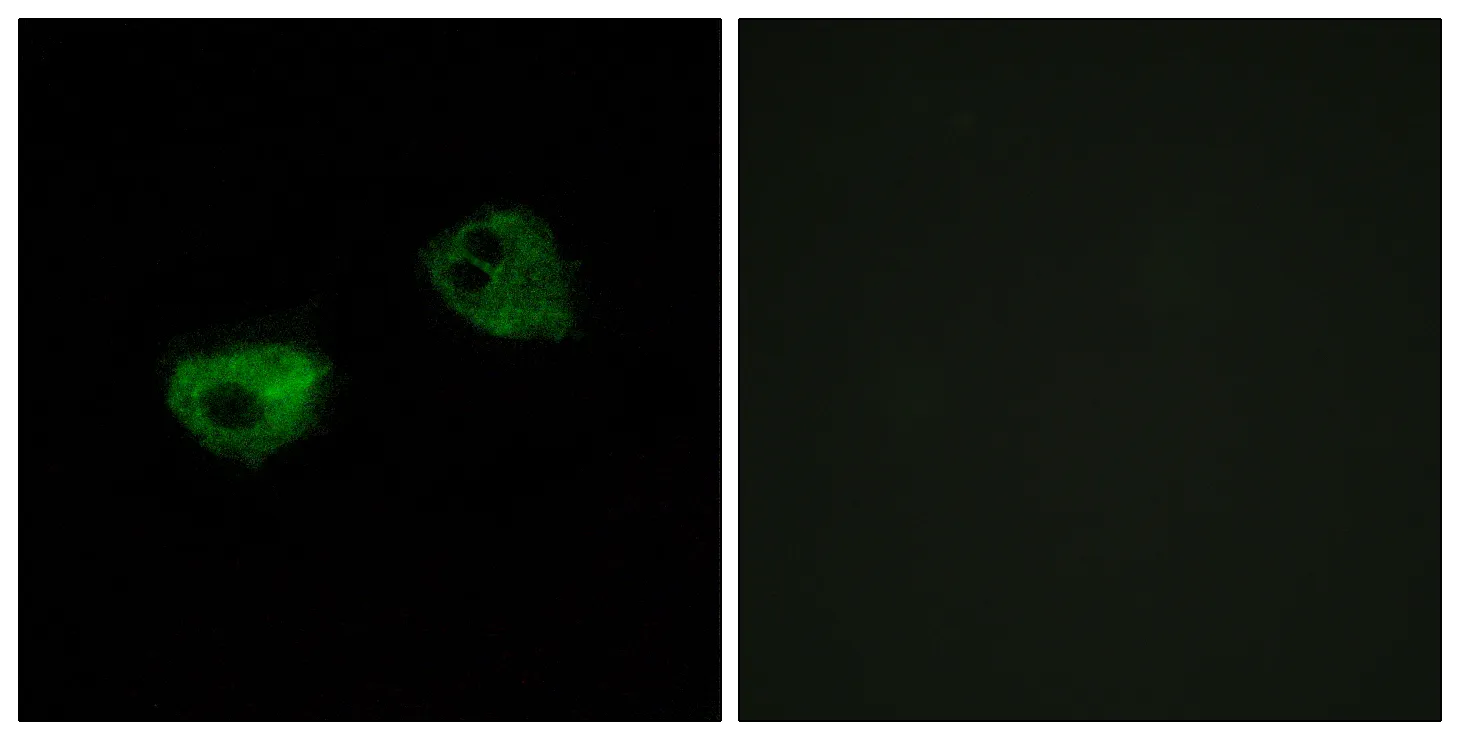
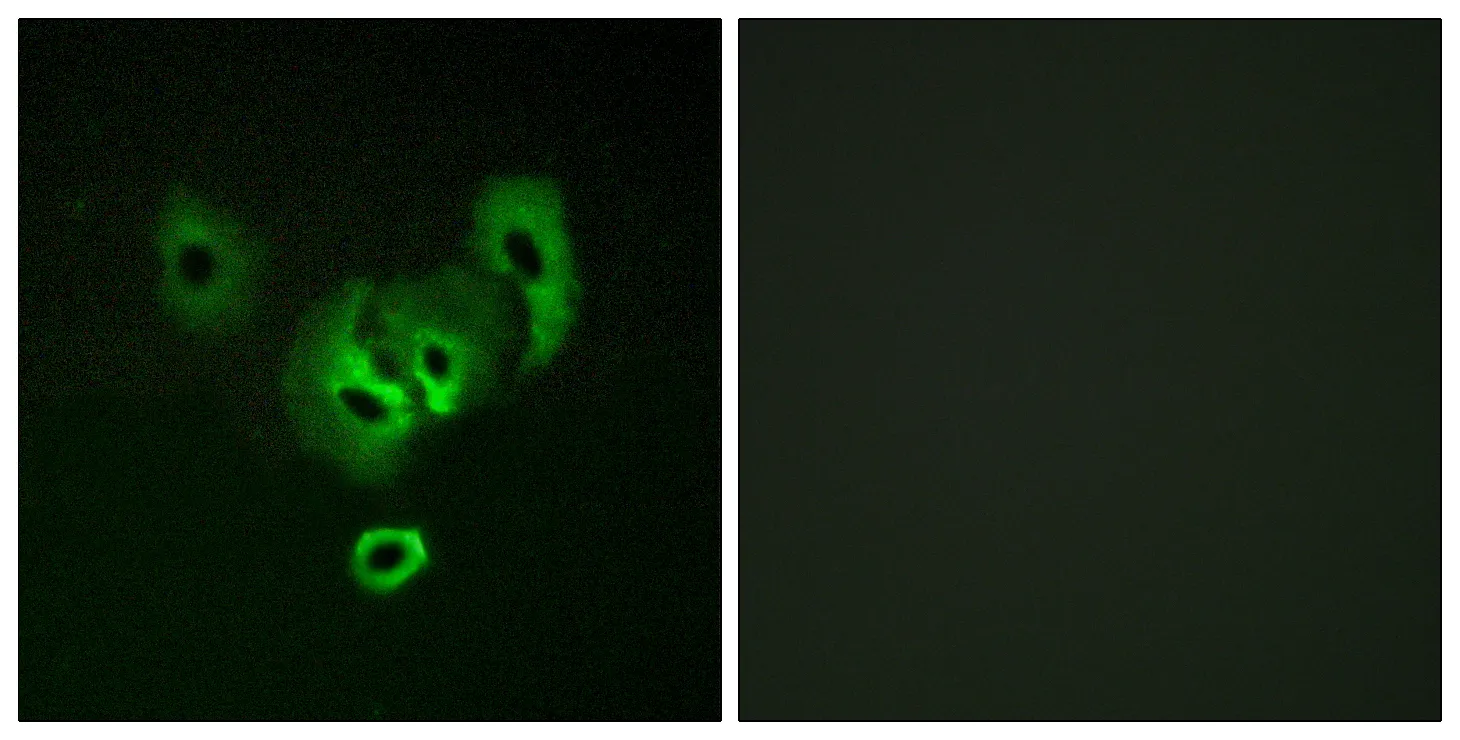
Uygulama:WB,IHC,ICC/IF,ELISA
Reaktivite:Human,Mouse
Konjuge:Unconjugated
İsteğe bağlı konjugeler: Biotin, FITC (ücretsiz). Diğer 26 konjugatı görün.

Gen Adı:KCNIP3
Category: ポリクローナル抗体 Tags: , , , , , , , ,
DREAM (phospho Ser63) Rabbit Polyclonal Antibody
Konjugasyon: Unconjugated
Rabbit polyclonal Antibody
Uygulama
IHC  ICC/IF  ELISA WB,IHC,ICC/IF,ELISA
Reaktivite
Human,Mouse
Gen Adı
KCNIP3
Saklama
Aliquot and store at -20°C (valid for 12 months). Avoid freeze/thaw cycles.
Özet
Ürün Adı DREAM (phospho Ser63) Rabbit Polyclonal Antibody
Açıklama Rabbit polyclonal Antibody
Konak Rabbit
Reaktivite Human,Mouse
Konjugasyon Unconjugated
Modifikasyon Phosphorylated
İzotip IgG
Klonalite Polyclonal
Form Liquid
Konsantrasyon Unconjugated
Saklama Aliquot and store at -20°C (valid for 12 months). Avoid freeze/thaw cycles.
Nakliye Ice bags.
Tampon Liquid in PBS containing 50% glycerol, 0.5% protective protein and 0.02% New type preservative N.
Saflaştırma Affinity purification
Antijen Bilgisi
Gen Adı KCNIP3
Alternatif İsimler KCNIP3; CSEN; DREAM; KCHIP3; Calsenilin; A-type potassium channel modulatory protein 3; DRE-antagonist modulator; DREAM; Kv channel-interacting protein 3; KChIP3
Gen Kimliği 30818
SwissProt Kimliği Q9Y2W7
İmmünojen The antiserum was produced against synthesized peptide derived from human Calsenilin/KCNIP3 around the phosphorylation site of Ser63. AA range:29-78
Uygulama
Uygulama WB,IHC,ICC/IF,ELISA
Seyreltme Oranı WB 1:500-1:2000,IHC 1:100-1:300,ICC/IF 1:200-1:1000,ELISA 1:10000-1:20000
Moleküler Ağırlık 29kDa
Araştırma Alanı
Arka Plan
This gene encodes a member of the family of voltage-gated potassium (Kv) channel-interacting proteins, which belong to the recoverin branch of the EF-hand superfamily. Members of this family are small calcium binding proteins containing EF-hand-like domains. They are integral subunit components of native Kv4 channel complexes that may regulate A-type currents, and hence neuronal excitability, in response to changes in intracellular calcium. The encoded protein also functions as a calcium-regulated transcriptional repressor, and interacts with presenilins. Alternatively spliced transcript variants encoding different isoforms have been described. [provided by RefSeq, Jul 2008],function:Calcium-dependent transcriptional repressor that binds to the DRE element of genes including PDYN and FOS. Affinity for DNA is reduced upon binding to calcium and enhanced by binding to magnesium. Seems to be involved in nociception.,function:May play a role in the regulation of PSEN2 proteolytic processing and apoptosis. Together with PSEN2 involved in modulation of beta-amyloid formation.,function:Regulatory subunit of Kv4/D (Shal)-type voltage-gated rapidly inactivating A-type potassium channels. Probably modulates channels density, inactivation kinetics and rate of recovery from inactivation in a calcium-dependent and isoform-specific manner. In vitro, modulates KCND2/Kv4.2 and KCND3/Kv4.3 currents. Involved in KCND2 and probably KCND3 trafficking to the cell surface.,PTM:Palmitoylated. Palmitoylation enhances association with the plasma membrane.,PTM:Phosphorylation at Ser-63 inhibits cleavage by CASP3.,PTM:Proteolytically cleaved by caspase-3.,similarity:Belongs to the recoverin family.,similarity:Contains 4 EF-hand domains.,subcellular location:Also membrane-bound, associated with the plasma membrane (By similarity). In the presence of PSEN2 associated with the endoplasmic reticulum and Golgi.,subunit:Binds to DNA as a homomultimer. Dimerization is induced by binding to calcium. Component of heteromultimeric potassium channels. Interacts with KCND2 and KCND3 (By similarity). Interacts with the C-terminus of PSEN1 and PSEN2 and with PSEN2 CTF subunit. Associates with KCN1.,tissue specificity:Highly expressed in brain. Widely expressed at lower levels. Expression levels are elevated in brain cortex regions affected by Alzheimer disease.,
   💬 WhatsApp