COL11A2 Rabbit Polyclonal Antibody

COL11A2 Rabbit Polyclonal Antibody

Cat: APRab09164
Boyut:20μL Fiyat:$99_x000D_
Boyut:50μL Fiyat:$118_x000D_
Boyut:100μL Fiyat:$220_x000D_
Boyut:200μL Fiyat:$380_x000D_
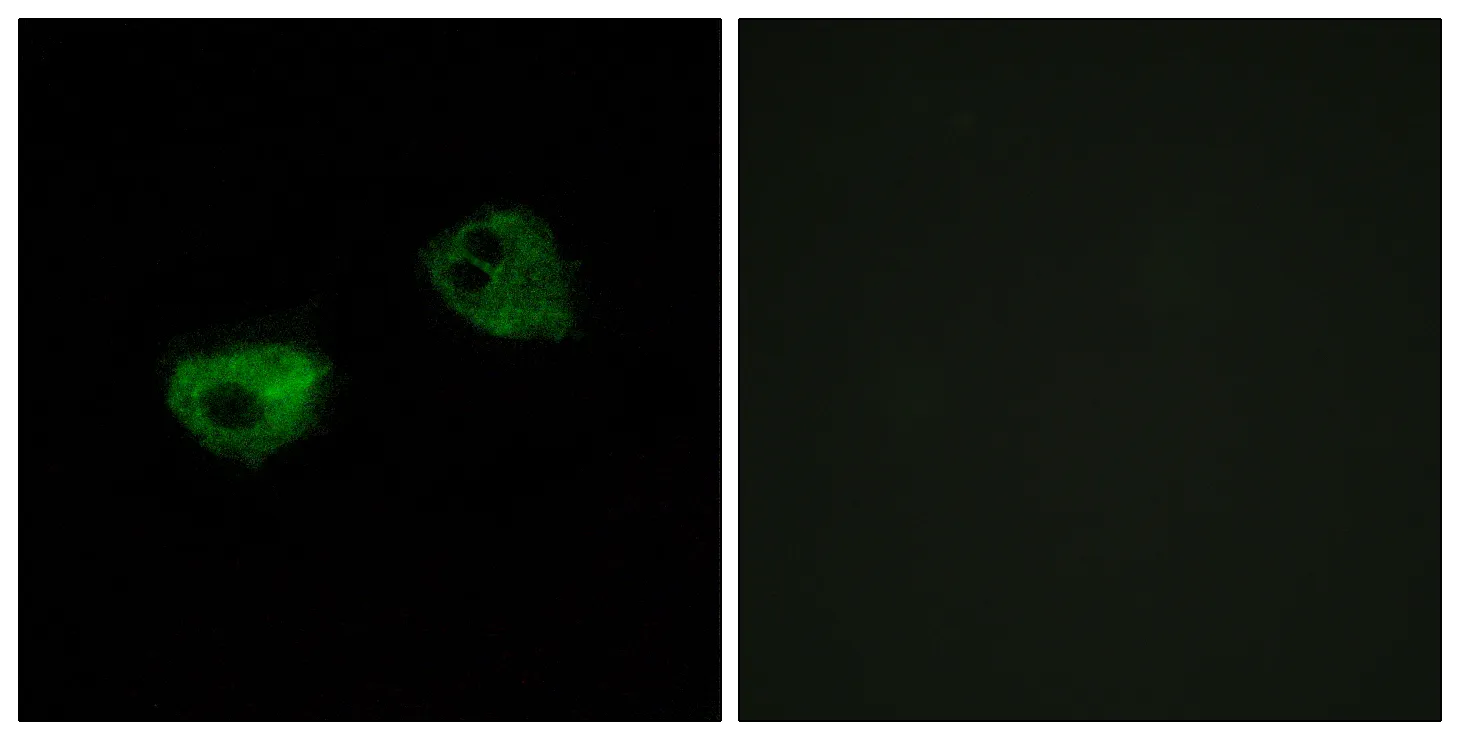
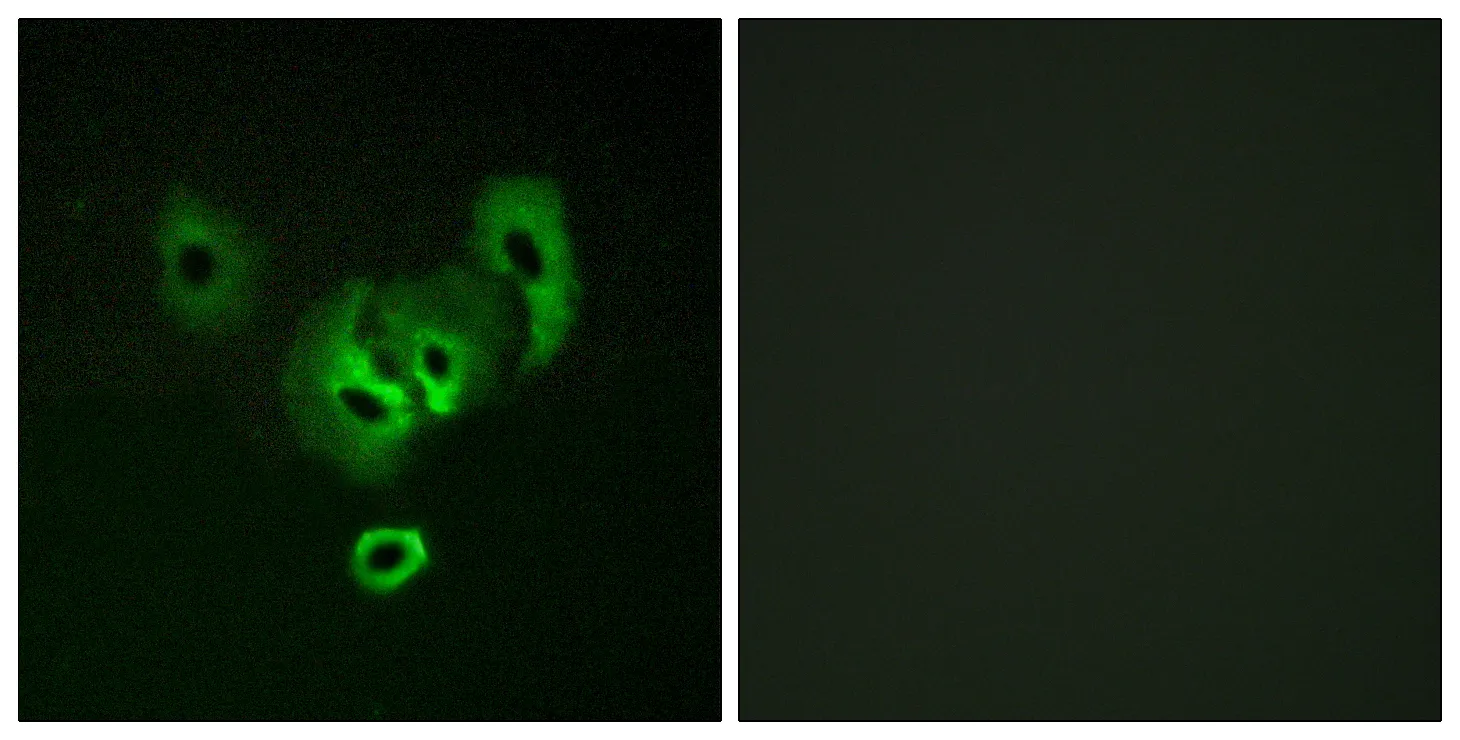
Uygulama:WB,IHC,ICC/IF,ELISA
Reaktivite:Human,Mouse
Konjuge:Unconjugated
İsteğe bağlı konjugeler: Biotin, FITC (ücretsiz). Diğer 26 konjugatı görün.

Gen Adı:COL11A2
Category: ポリクローナル抗体 Tags: , , , , , , , , ,
COL11A2 Rabbit Polyclonal Antibody
Konjugasyon: Unconjugated
Rabbit polyclonal Antibody
Uygulama
IHC  ICC/IF  ELISA WB,IHC,ICC/IF,ELISA
Reaktivite
Human,Mouse
Gen Adı
COL11A2
Saklama
Aliquot and store at -20°C (valid for 12 months). Avoid freeze/thaw cycles.
Özet
Ürün Adı COL11A2 Rabbit Polyclonal Antibody
Açıklama Rabbit polyclonal Antibody
Konak Rabbit
Reaktivite Human,Mouse
Konjugasyon Unconjugated
Modifikasyon Unmodified
İzotip IgG
Klonalite Polyclonal
Form Liquid
Konsantrasyon Unconjugated
Saklama Aliquot and store at -20°C (valid for 12 months). Avoid freeze/thaw cycles.
Nakliye Ice bags.
Tampon Liquid in PBS containing 50% glycerol, 0.5% protective protein and 0.02% New type preservative N.
Saflaştırma Affinity purification
Antijen Bilgisi
Gen Adı COL11A2
Alternatif İsimler COL11A2; Collagen alpha-2(XI) chain
Gen Kimliği 1302
SwissProt Kimliği P13942
İmmünojen The antiserum was produced against synthesized peptide derived from human Collagen XI alpha2. AA range:1211-1260
Uygulama
Uygulama WB,IHC,ICC/IF,ELISA
Seyreltme Oranı WB 1:500-1:2000,IHC 1:100-1:300,ICC/IF 1:50-1:200,ELISA 1:10000-1:20000
Moleküler Ağırlık 171kDa
Araştırma Alanı
Focal adhesion;ECM-receptor interaction;
Arka Plan
collagen type XI alpha 2 chain(COL11A2) Homo sapiens This gene encodes one of the two alpha chains of type XI collagen, a minor fibrillar collagen. It is located on chromosome 6 very close to but separate from the gene for retinoid X receptor beta. Type XI collagen is a heterotrimer but the third alpha chain is a post-translationally modified alpha 1 type II chain. Proteolytic processing of this type XI chain produces PARP, a proline/arginine-rich protein that is an amino terminal domain. Mutations in this gene are associated with type III Stickler syndrome, otospondylomegaepiphyseal dysplasia (OSMED syndrome), Weissenbacher-Zweymuller syndrome, autosomal dominant non-syndromic sensorineural type 13 deafness (DFNA13), and autosomal recessive non-syndromic sensorineural type 53 deafness (DFNB53). Alternative splicing results in multiple transcript variants. A related pseudogene is located nearby on chromosome 6. [provided by RefSeq, Jul 2009],alternative products:Isoforms lack exons 6, 7 or 8 or a combination of these exons. Experimental confirmation may be lacking for some isoforms,disease:Defects in COL11A2 are the cause of autosomal recessive otospondylomegaepiphyseal dysplasia (OSMED) [MIM:215150]. OSMED is a skeletal dysplasia accompanied by severe hearing loss. The phenotype overlaps that of autosomal dominant skeletal disorders (Stickler and Marshall syndromes) but can be distinguished by disproportionately short limbs and lack of ocular involvement.,disease:Defects in COL11A2 are the cause of non-syndromic sensorineural deafness autosomal dominant type 13 (DFNA13) [MIM:601868]. DFNA13 is a form of sensorineural hearing loss. Sensorineural deafness results from damage to the neural receptors of the inner ear, the nerve pathways to the brain, or the area of the brain that receives sound information.,disease:Defects in COL11A2 are the cause of non-syndromic sensorineural deafness autosomal recessive type 53 (DFNB53) [MIM:609706].,disease:Defects in COL11A2 are the cause of Stickler syndrome type 3 (STL3) [MIM:184840]. STL3 is an autosomal dominant non-ocular form of Stickler syndrome. Classical Stickler syndrome associates ocular signs with more or less complete forms of Pierre Robin sequence, bone disorders and sensorineural deafness. Ocular symptoms are absent in STL3. Robin sequence includes an opening in the roof of the mouth (a cleft palate), a large tongue (macroglossia), and a small lower jaw (micrognathia). Bones are affected by slight platyspondylisis and large, often defective epiphyses. Juvenile joint laxity is followed by early signs of arthrosis. The degree of hearing loss varies among affected individuals and may become more severe over time. Syndrome expressivity is variable.,disease:Defects in COL11A2 are the cause of Weissenbacher-Zweymueller syndrome (WZS) [MIM:277610]. WZS is an autosomal dominant disorder allelic with STL3 and OSMED. WZS is also referred to as heterozygous OSMED.,function:May play an important role in fibrillogenesis by controlling lateral growth of collagen II fibrils.,online information:Gene page,PTM:A disulfide-bonded peptide called proline/arginine-rich protein or PARP is released from the N-terminus during extracellular processing and is subsequently retained in the cartilage matrix from which it can be isolated in significant amounts.,PTM:Prolines at the third position of the tripeptide repeating unit (G-X-Y) are hydroxylated in some or all of the chains.,similarity:Belongs to the fibrillar collagen family.,similarity:Contains 1 TSP N-terminal (TSPN) domain.,subunit:Trimers composed of three different chains: alpha 1(XI), alpha 2(XI), and alpha 3(XI). Alpha 3(XI) is a post-translational modification of alpha 1(II). Alpha 1(V) can also be found instead of alpha 3(XI)=1(II).,
   💬 WhatsApp