CD276 Rabbit Polyclonal Antibody

CD276 Rabbit Polyclonal Antibody

Cat: APRab08323
Boyut:20μL Fiyat:$99_x000D_
Boyut:50μL Fiyat:$118_x000D_
Boyut:100μL Fiyat:$220_x000D_
Boyut:200μL Fiyat:$380_x000D_
Uygulama:WB,IHC,ICC/IF,ELISA
Reaktivite:Human,Mouse,Rat
Konjuge:Unconjugated
İsteğe bağlı konjugeler: Biotin, FITC (ücretsiz). Diğer 26 konjugatı görün.

Gen Adı:CD276
Category: ポリクローナル抗体 Tags: , , , , , , , , , ,
CD276 Rabbit Polyclonal Antibody
Konjugasyon: Unconjugated
Rabbit polyclonal Antibody
Uygulama
IHC  ICC/IF  ELISA WB,IHC,ICC/IF,ELISA
Reaktivite
Human,Mouse,Rat
Gen Adı
CD276
Saklama
Aliquot and store at -20°C (valid for 12 months). Avoid freeze/thaw cycles.
Özet
Ürün Adı CD276 Rabbit Polyclonal Antibody
Açıklama Rabbit polyclonal Antibody
Konak Rabbit
Reaktivite Human,Mouse,Rat
Konjugasyon Unconjugated
Modifikasyon Unmodified
İzotip IgG
Klonalite Polyclonal
Form Liquid
Konsantrasyon Unconjugated
Saklama Aliquot and store at -20°C (valid for 12 months). Avoid freeze/thaw cycles.
Nakliye Ice bags.
Tampon Liquid in PBS containing 50% glycerol, 0.5% protective protein and 0.02% New type preservative N.
Saflaştırma Affinity purification
Antijen Bilgisi
Gen Adı CD276
Alternatif İsimler CD276; B7H3; PSEC0249; CD276 antigen; 4Ig-B7-H3; B7 homolog 3; B7-H3; Costimulatory molecule; CD276
Gen Kimliği 80381
SwissProt Kimliği Q5ZPR3
İmmünojen The antiserum was produced against synthesized peptide derived from the Internal region of human CD276. AA range:271-320
Uygulama
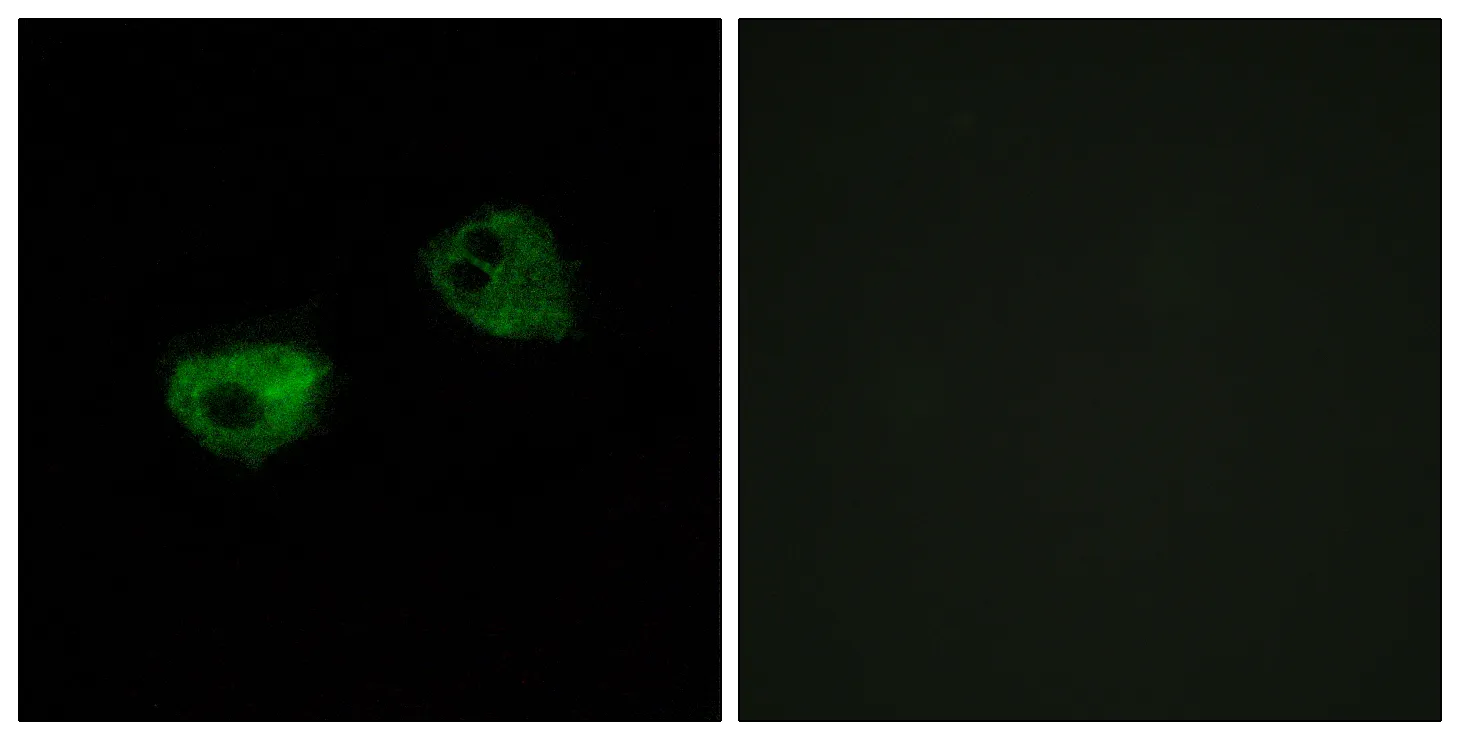
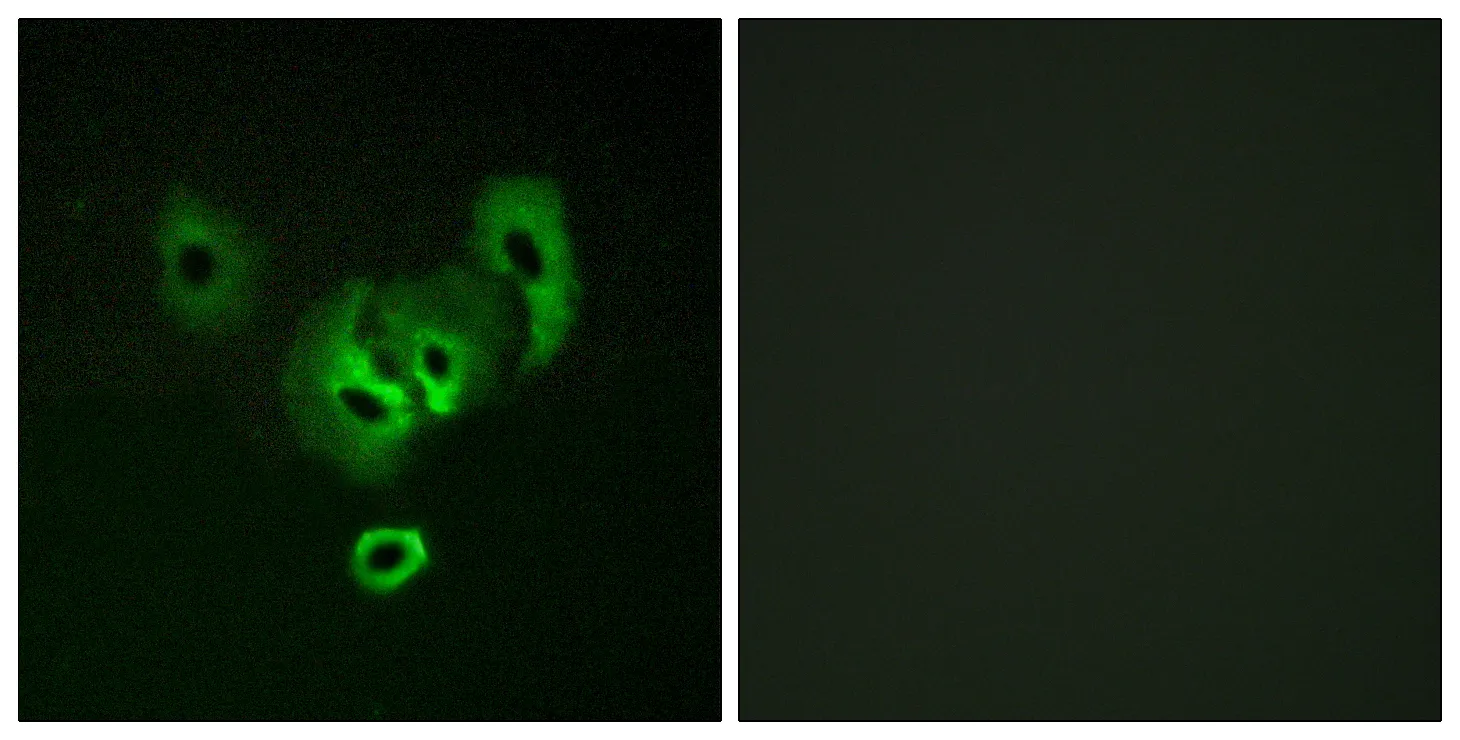
Uygulama WB,IHC,ICC/IF,ELISA
Seyreltme Oranı WB 1:500-1:2000,IHC 1:100-1:300,ICC/IF 1:50-1:200,ELISA 1:10000-1:20000
Moleküler Ağırlık 100kDa
Araştırma Alanı
Cell adhesion molecules (CAMs);
Arka Plan
The protein encoded by this gene belongs to the immunoglobulin superfamily, and thought to participate in the regulation of T-cell-mediated immune response. Studies show that while the transcript of this gene is ubiquitously expressed in normal tissues and solid tumors, the protein is preferentially expressed only in tumor tissues. Additionally, it was observed that the 3' UTR of this transcript contains a target site for miR29 microRNA, and there is an inverse correlation between the expression of this protein and miR29 levels, suggesting regulation of expression of this gene product by miR29. Alternatively spliced transcript variants encoding different isoforms have been found for this gene. [provided by RefSeq, Sep 2011],function:May participate in the regulation of T-cell-mediated immune response. May play a protective role in tumor cells by inhibiting natural-killer mediated cell lysis as well as a role of marker for detection of neuroblastoma cells. May be involved in the development of acute and chronic transplant rejection and in the regulation of lymphocytic activity at mucosal surfaces. Could also play a key role in providing the placenta and fetus with a suitable immunological environment throughout pregnancy. Both isoform 1 and isoform 2 appear to be redundant in their ability to modulate CD4 T-cell responses. Isoform 2 is shown to enhance the induction of cytotoxic T-cells and selectively stimulates interferon gamma production in the presence of T-cell receptor signaling.,induction:By LPS in monocytes and by ionomycin in T and B lymphocytes. Up-regulated in cells mediating rejection of human transplants.,miscellaneous:B7-H3 locus underwent genomic duplication leading to tandemly repeated immunoglobulin-like V and C domains (VC domains). The dominantly expressed human B7-H3 isoform contains tandemly duplicated VC domains. In contrast, mouse B7-H3 transcript contains only one single VC domain form due to an exon structure corresponding to V domain-(pseudoexon C)-(pseudoexon V)-C domain. This duplication appearing in primates is suggested to be very recent supporting a model of multiple independent emergence of tandem VC repeats within human and monkey species.,similarity:Belongs to the immunoglobulin superfamily. BTN/MOG family.,similarity:Contains 2 Ig-like C2-type (immunoglobulin-like) domains.,similarity:Contains 2 Ig-like V-type (immunoglobulin-like) domains.,subunit:Interacts with TREML2 and this interaction enhances T-cell activation.,tissue specificity:Ubiquitous but not detectable in peripheral blood lymphocytes or granulocytes. Weakly expressed in resting monocytes. Expressed in dendritic cells derived from monocytes. Expressed in epithelial cells of sinonasal tissue. Expressed in extravillous trophoblast cells and Hofbauer cells of the first trimester placenta and term placenta.,
   💬 WhatsApp