

CAC1A Rabbit Polyclonal Antibody

CAC1A Rabbit Polyclonal Antibody

Cat: APRab07811
Boyut:20μL Fiyat:$99_x000D_
Boyut:50μL Fiyat:$118_x000D_
Boyut:100μL Fiyat:$220_x000D_
Boyut:200μL Fiyat:$380_x000D_
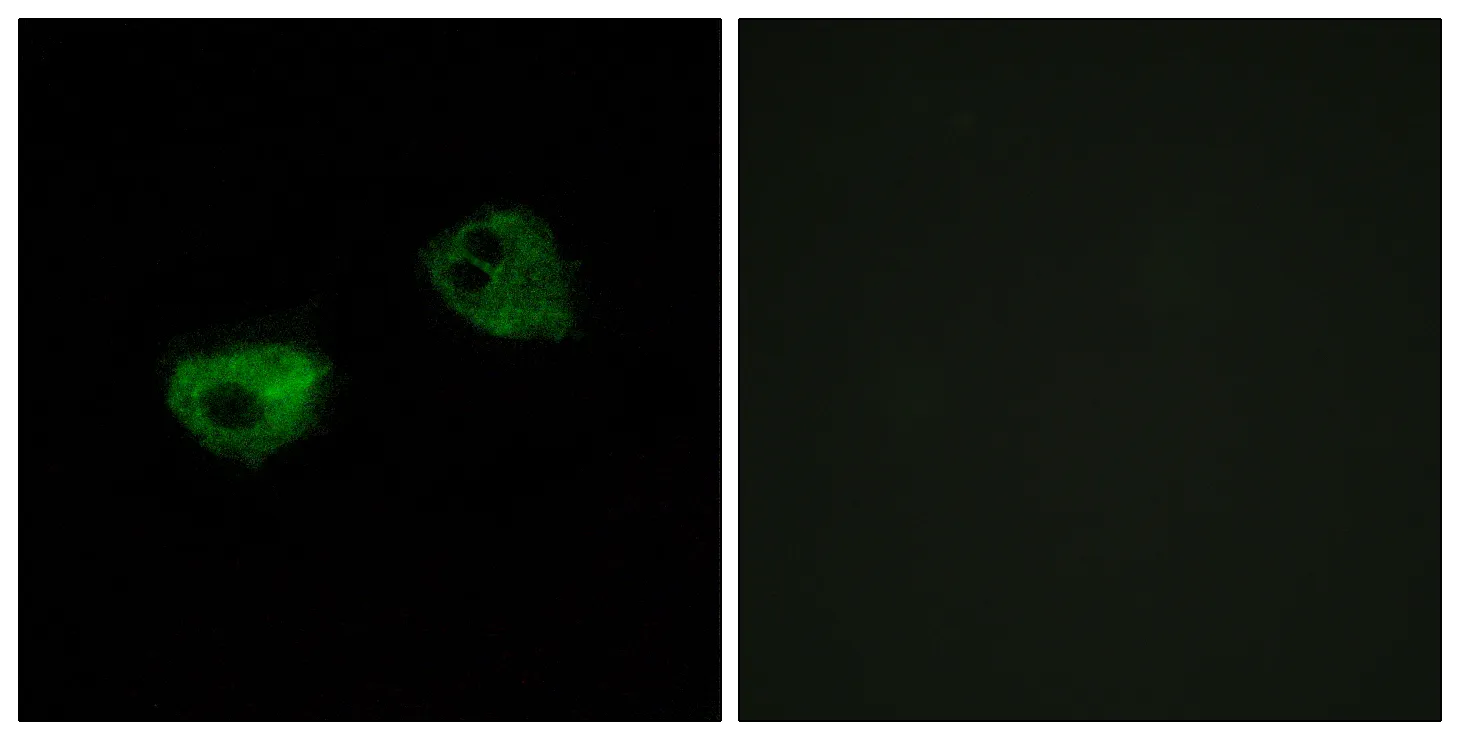
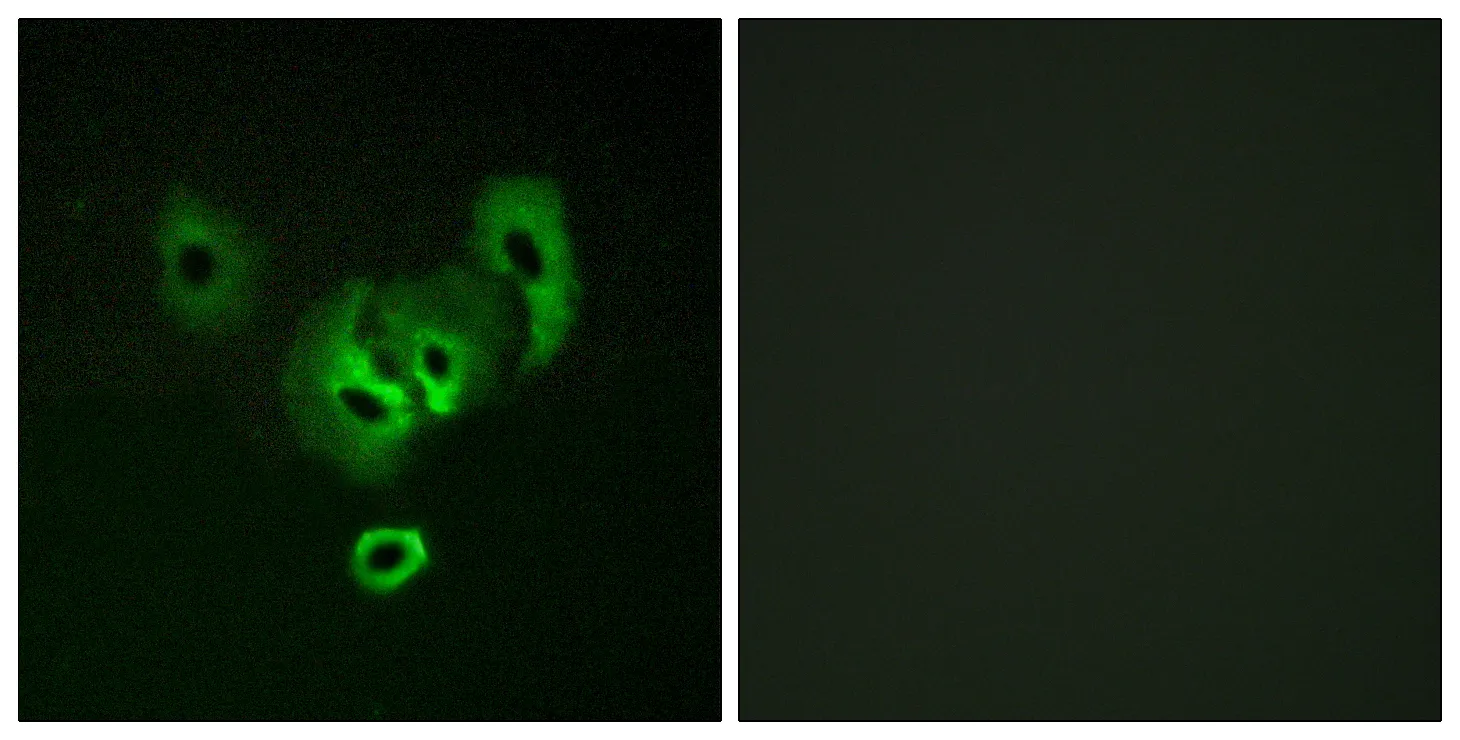
Uygulama:IHC,ICC/IF
Reaktivite:Human,Mouse,Rat
Konjuge:Unconjugated
İsteğe bağlı konjugeler: Biotin, FITC (ücretsiz). Diğer 26 konjugatı görün.

Gen Adı:CACNA1A
Category: ポリクローナル抗体 Tags: , , , , , , , ,
CAC1A Rabbit Polyclonal Antibody
Konjugasyon: Unconjugated
Rabbit polyclonal Antibody
Uygulama
IHC  ICC/IF  ELISA IHC,ICC/IF
Reaktivite
Human,Mouse,Rat
Gen Adı
CACNA1A
Saklama
Aliquot and store at -20°C (valid for 12 months). Avoid freeze/thaw cycles.
Özet
Ürün Adı CAC1A Rabbit Polyclonal Antibody
Açıklama Rabbit polyclonal Antibody
Konak Rabbit
Reaktivite Human,Mouse,Rat
Konjugasyon Unconjugated
Modifikasyon Unmodified
İzotip IgG
Klonalite Polyclonal
Form Liquid
Konsantrasyon Unconjugated
Saklama Aliquot and store at -20°C (valid for 12 months). Avoid freeze/thaw cycles.
Nakliye Ice bags.
Tampon Liquid in PBS containing 50% glycerol, and 0.02% New type preservative N.
Saflaştırma Affinity purification
Antijen Bilgisi
Gen Adı CACNA1A
Alternatif İsimler CACH4 CACN3 CACNL1A4
Gen Kimliği 773
SwissProt Kimliği O00555
İmmünojen Synthesized peptide derived from human protein . at AA range: 1401-1450
Uygulama
Uygulama IHC,ICC/IF
Seyreltme Oranı IHC 1:50-1:300,ICC/IF 1:50-1:200
Moleküler Ağırlık 275kDa
Araştırma Alanı
MAPK_ERK_Growth;MAPK_G_Protein;Calcium;Long-term depression;Taste transduction;Type II diabetes mellitus;
Arka Plan
calcium voltage-gated channel subunit alpha1 A(CACNA1A) Homo sapiens Voltage-dependent calcium channels mediate the entry of calcium ions into excitable cells, and are also involved in a variety of calcium-dependent processes, including muscle contraction, hormone or neurotransmitter release, and gene expression. Calcium channels are multisubunit complexes composed of alpha-1, beta, alpha-2/delta, and gamma subunits. The channel activity is directed by the pore-forming alpha-1 subunit, whereas, the others act as auxiliary subunits regulating this activity. The distinctive properties of the calcium channel types are related primarily to the expression of a variety of alpha-1 isoforms, alpha-1A, B, C, D, E, and S. This gene encodes the alpha-1A subunit, which is predominantly expressed in neuronal tissue. Mutations in this gene are associated with 2 neurologic disorders, familial hemiplegic migraine and episodic ataxia 2. This gene also exhibitsalternative products:Additional isoforms seem to exist,disease:Defects in CACNA1A are the cause of episodic ataxia type 2 (EA2) [MIM:108500]; also known as acetazolamide-responsive hereditary paroxysmal cerebellar ataxia (APCA). EA2 is an autosomal dominant disorder characterized by acetozolamide-responsive attacks of ataxia, migraine-like symptoms, interictal nystagmus, and cerebellar atrophy.,disease:Defects in CACNA1A are the cause of familial hemiplegic migraine (FHM) [MIM:141500]; also known as migraine familial hemiplegic 1 (MHP1). FHM, a rare autosomal dominant subtype of migraine with aura, is associated with ictal hemiparesis and, in some families, progressive cerebellar atrophy.,disease:Defects in CACNA1A are the cause of spinocerebellar ataxia type 6 (SCA6) [MIM:183086]. Spinocerebellar ataxia is a clinically and genetically heterogeneous group of cerebellar disorders. Patients show progressive incoordination of gait and often poor coordination of hands, speech and eye movements, due to degeneration of the cerebellum with variable involvement of the brainstem and spinal cord. SCA6 is mainly caused by expansion of a CAG repeat in the coding region of CACNA1A. There seems to be a correlation between the repeat number and earlier onset of the disorder.,domain:Each of the four internal repeats contains five hydrophobic transmembrane segments (S1, S2, S3, S5, S6) and one positively charged transmembrane segment (S4). S4 segments probably represent the voltage-sensor and are characterized by a series of positively charged amino acids at every third position.,function:Voltage-sensitive calcium channels (VSCC) mediate the entry of calcium ions into excitable cells and are also involved in a variety of calcium-dependent processes, including muscle contraction, hormone or neurotransmitter release, gene expression, cell motility, cell division and cell death. The isoform alpha-1A gives rise to P and/or Q-type calcium currents. P/Q-type calcium channels belong to the 'high-voltage activated' (HVA) group and are blocked by the funnel toxin (Ftx) and by the omega-agatoxin-IVA (omega-Aga-IVA). They are however insensitive to dihydropyridines (DHP), and omega-conotoxin-GVIA (omega-CTx-GVIA).,polymorphism:The poly-Gln region of CACNA1A is polymorphic: 6 to 17 repeats in the normal population, expanded to about 21 to 30 repeats in SCA6. Repeat expansion has been reported also in a EA2 family.,similarity:Belongs to the calcium channel alpha-1 subunit (TC 1.A.1.11) family.,subunit:Voltage-dependent calcium channels are multisubunit complexes, consisting of alpha-1, alpha-2, beta and delta subunits in a 1:1:1:1 ratio. The channel activity is directed by the pore-forming and voltage-sensitive alpha-1 subunit. In many cases, this subunit is sufficient to generate voltage-sensitive calcium channel activity. The auxiliary subunits beta and alpha-2/delta linked by a disulfide bridge regulate the channel activity.,tissue specificity:Brain specific; mainly found in cerebellum, cerebral cortex, thalamus and hypothalamus. No expression in heart, kidney, liver or muscle. Purkinje cells contain predominantly P-type VSCC, the Q-type being a prominent calcium current in cerebellar granule cells.,
   💬 WhatsApp