

Amphiphysin II Rabbit Polyclonal Antibody

Amphiphysin II Rabbit Polyclonal Antibody

Cat: APRab06838
Boyut:20μL Fiyat:$99_x000D_
Boyut:50μL Fiyat:$118_x000D_
Boyut:100μL Fiyat:$220_x000D_
Boyut:200μL Fiyat:$380_x000D_
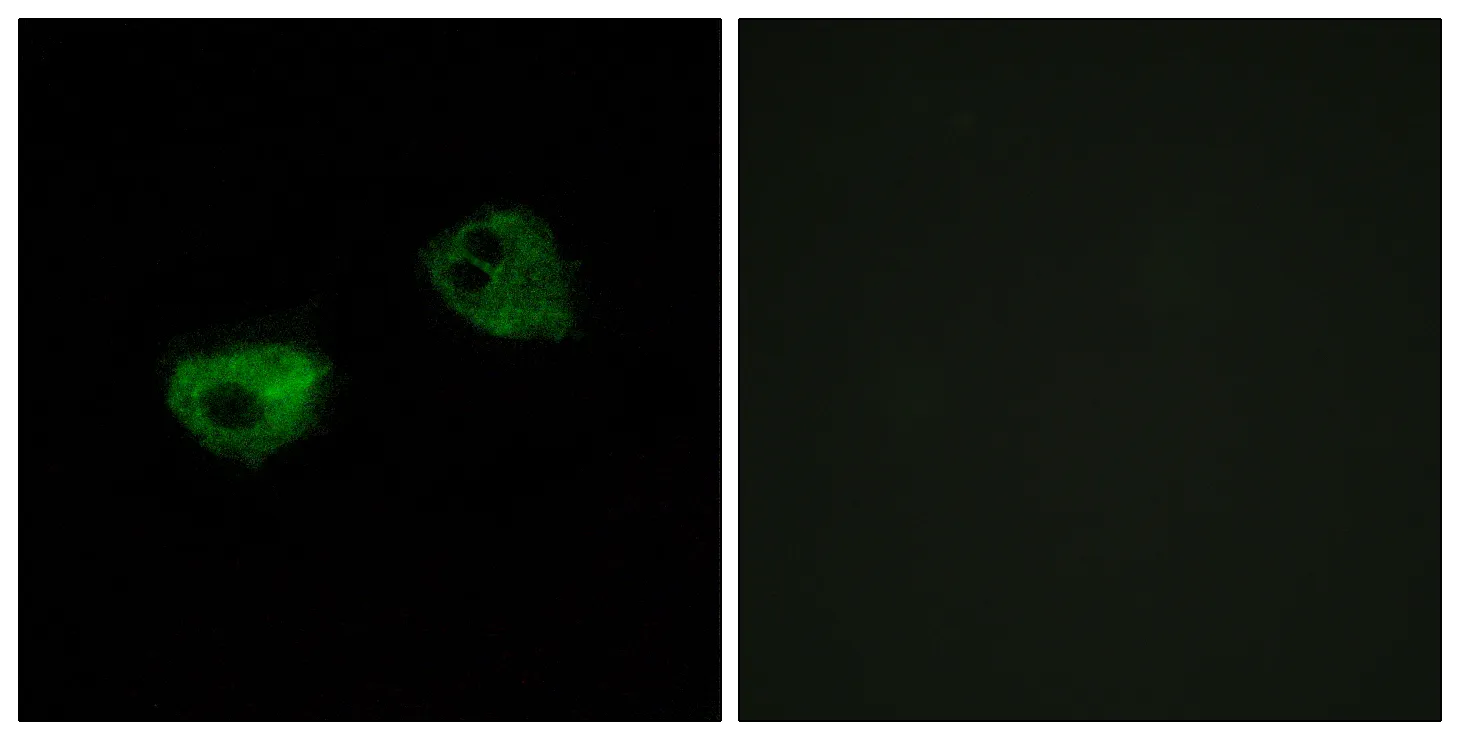
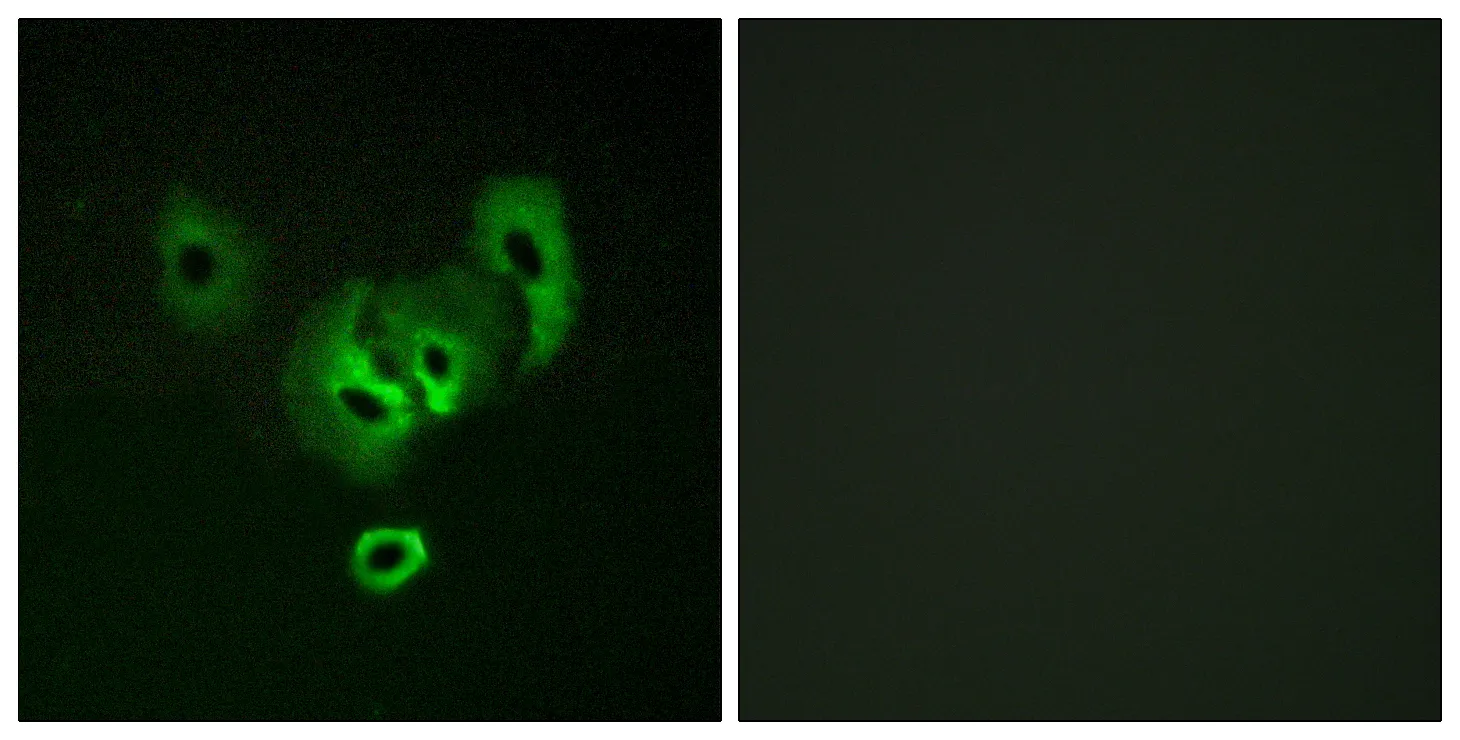
Uygulama:WB,IHC,ICC/IF,ELISA
Reaktivite:Mouse,Rat
Konjuge:Unconjugated
İsteğe bağlı konjugeler: Biotin, FITC (ücretsiz). Diğer 26 konjugatı görün.

Gen Adı:BIN1
Category: ポリクローナル抗体 Tags: , , , , , , , , ,
Amphiphysin II Rabbit Polyclonal Antibody
Konjugasyon: Unconjugated
Rabbit polyclonal Antibody
Uygulama
IHC  ICC/IF  ELISA WB,IHC,ICC/IF,ELISA
Reaktivite
Mouse,Rat
Gen Adı
BIN1
Saklama
Aliquot and store at -20°C (valid for 12 months). Avoid freeze/thaw cycles.
Özet
Ürün Adı Amphiphysin II Rabbit Polyclonal Antibody
Açıklama Rabbit polyclonal Antibody
Konak Rabbit
Reaktivite Mouse,Rat
Konjugasyon Unconjugated
Modifikasyon Unmodified
İzotip IgG
Klonalite Polyclonal
Form Liquid
Konsantrasyon Unconjugated
Saklama Aliquot and store at -20°C (valid for 12 months). Avoid freeze/thaw cycles.
Nakliye Ice bags.
Tampon Liquid in PBS containing 50% glycerol, 0.5% protective protein and 0.02% New type preservative N.
Saflaştırma Affinity purification
Antijen Bilgisi
Gen Adı BIN1
Alternatif İsimler BIN1; AMPHL; Myc box-dependent-interacting protein 1; Amphiphysin II; Amphiphysin-like protein; Box-dependent myc-interacting protein 1; Bridging integrator 1
Gen Kimliği 274
SwissProt Kimliği O00499
İmmünojen Synthesized peptide derived from the C-terminal region of human Amphiphysin II.
Uygulama
Uygulama WB,IHC,ICC/IF,ELISA
Seyreltme Oranı WB 1:500-1:2000,IHC 1:100-1:300,ICC/IF 1:50-1:200,ELISA 1:10000-1:20000
Moleküler Ağırlık 64kDa
Araştırma Alanı
Cell Biology
Arka Plan
This gene encodes several isoforms of a nucleocytoplasmic adaptor protein, one of which was initially identified as a MYC-interacting protein with features of a tumor suppressor. Isoforms that are expressed in the central nervous system may be involved in synaptic vesicle endocytosis and may interact with dynamin, synaptojanin, endophilin, and clathrin. Isoforms that are expressed in muscle and ubiquitously expressed isoforms localize to the cytoplasm and nucleus and activate a caspase-independent apoptotic process. Studies in mouse suggest that this gene plays an important role in cardiac muscle development. Alternate splicing of the gene results in several transcript variants encoding different isoforms. Aberrant splice variants expressed in tumor cell lines have also been described. [provided by RefSeq, Mar 2016],alternative products:Additional isoforms seem to exist,disease:Defects in BIN1 are the cause of centronuclear myopathy autosomal recessive (ARCNM) [MIM:255200]; also known as autosomal recessive myotubular myopathy. Centronuclear myopathies are congenital muscle disorders characterized by progressive muscular weakness and wasting involving mainly limb girdle, trunk, and neck muscles. It may also affect distal muscles. Weakness may be present during childhood or adolescence or may not become evident until the third decade of life. Ptosis is a frequent clinical feature. The most prominent histopathologic features include high frequency of centrally located nuclei in muscle fibers not secondary to regeneration, radial arrangement of sarcoplasmic strands around the central nuclei, and predominance and hypotrophy of type 1 fibers.,function:May be involved in regulation of synaptic vesicle endocytosis. May act as a tumor suppressor and inhibits malignant cell transformation.,PTM:Phosphorylated by protein kinase C.,similarity:Contains 1 BAR domain.,similarity:Contains 1 SH3 domain.,subunit:Heterodimer with AMPH. Binds SH3GLB1 (By similarity). Binds to SYNJ1 and DNM1 through its SH3 domain, and to clathrin through a region outside of the SH3 domain. Also binds AP2A2. Interacts with the N-terminal transactivation domain of MYC in a manner requiring the integrity of the conserved MYC box regions 1 and 2. Interacts with BIN2. Interacts with HCV NS5A through its SH3 domain.,tissue specificity:Ubiquitous. Highest expression in the brain and muscle. Isoform IIA is expressed only in the brain where it is concentrated in axon initial segments and nodes of Ranvier. Isoform BIN1 is widely expressed with highest expression in skeletal muscle.,
   💬 WhatsApp