

ALK(リン酸化Tyr1078)ウサギポリクローナル抗体
コンジュゲーション: 非共役
ウサギポリクローナル抗体
アプリケーション
反応性
ヒト、ラット、マウス
遺伝子名
ALK
保存
小分けして-20℃で保存してください(12ヶ月間有効)。凍結融解サイクルは避けてください。
要約
| 製品名 | ALK(リン酸化Tyr1078)ウサギポリクローナル抗体 |
| 説明 | ウサギポリクローナル抗体 |
| 宿主 | うさぎ |
| 反応性 | ヒト、ラット、マウス |
| コンジュゲーション | 非共役 |
| 修飾 | リン酸化 |
| アイソタイプ | IgG |
| クローン性 | ポリクローナル |
| 形態 | 液体 |
| 濃度 | 非共役 |
| 保存 | 小分けして-20℃で保存してください(12ヶ月間有効)。凍結融解サイクルは避けてください。 |
| 配送 | 氷嚢。 |
| バッファー | 50% グリセロール、0.5% 保護タンパク質、0.02% 新タイプ防腐剤 N を含む PBS 液。 |
| 精製 | アフィニティー精製 |
抗原情報
| 遺伝子名 | ALK |
| 別名 | ALK tyrosine kinase receptor (EC 2.7.10.1) (Anaplastic lymphoma kinase) (CD antigen CD246) |
| 遺伝子ID | 238 |
| SwissProt ID | Q9UM73 |
| 免疫原 | ヒトALK(Tyr1078)周囲の合成リン酸化ペプチド |
アプリケーション
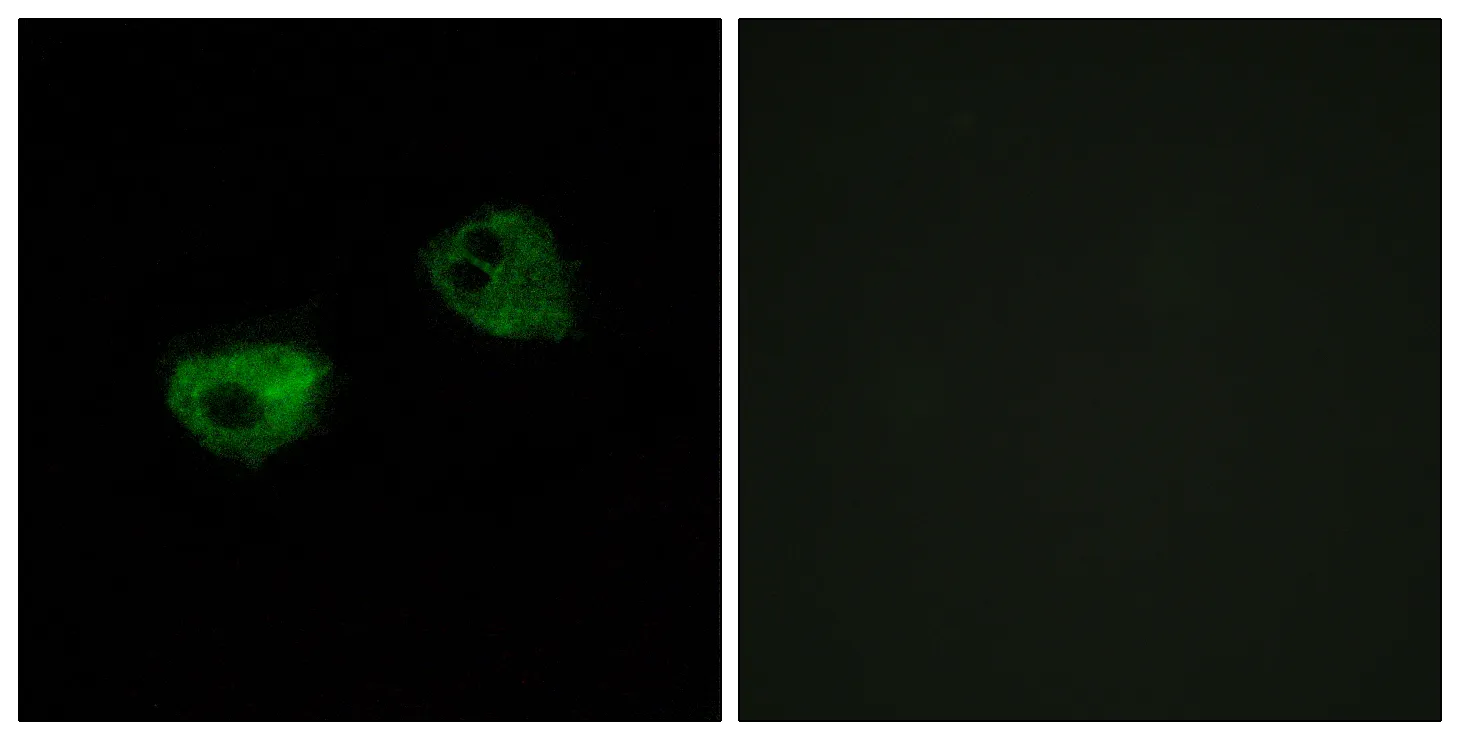
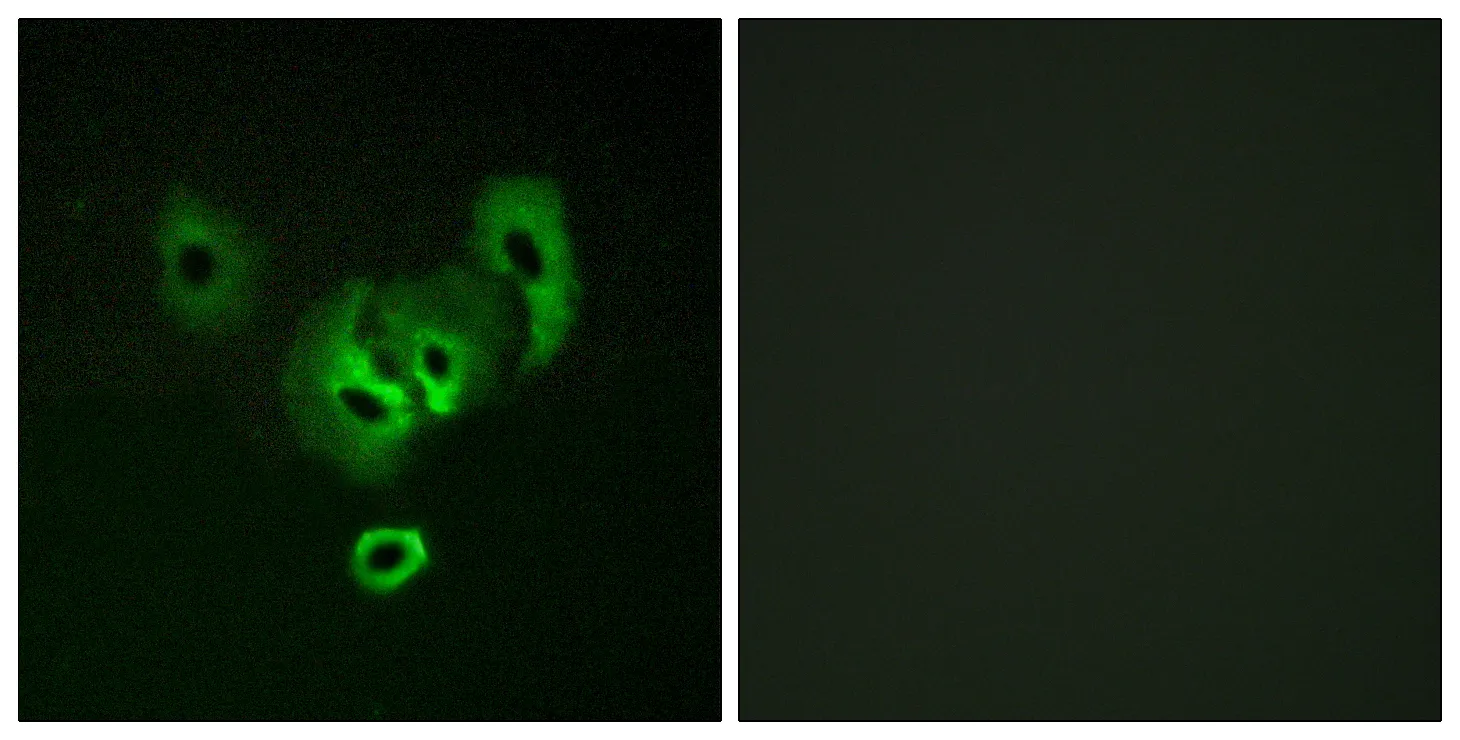
| アプリケーション | WB |
| 希釈倍率 | WB 1:1000-1:2000 |
| 分子量 | 150-240kDa |
研究分野
| Tags & Cell Markers |
背景
| この遺伝子は、インスリン受容体スーパーファミリーに属する受容体チロシンキナーゼをコードしています。このタンパク質は、細胞外ドメイン、1回膜貫通領域に相当する疎水性領域、および細胞内キナーゼドメインで構成されています。脳の発達に重要な役割を果たし、神経系の特定のニューロンに作用を及ぼします。この遺伝子は、未分化大細胞リンパ腫、神経芽腫、非小細胞肺がんなど、一連の腫瘍において再構成、変異、または増幅が認められています。この遺伝子における最も一般的な遺伝子変異は染色体再編成であり、腫瘍形成において複数の融合遺伝子の生成につながる。これには、ALK(染色体2)/EML4(染色体2)、ALK/RANBP2(染色体2)、ALK/ATIC(染色体2)、ALK/TFG(染色体3)、ALK/NPM1(染色体5)、ALK/SQSTM1(染色体触媒活性:ATP + a [タンパク質]-L-チロシン = ADP + a [タンパク質]-L-チロシンリン酸。,疾患:ALKに関連する染色体異常は、未分化大細胞リンパ腫(ALCL)と関連している。転座t(2;17)(p23;q25)とALO17。,疾患:ALKに関連する染色体異常は、炎症性筋線維芽細胞性腫瘍(IMT)。CARSとの転座t(2;11)(p23;p15);SEC31Aとの転座t(2;4)(p23;q21)。,疾患:非ホジキンリンパ腫の一種において、ALKに関連する染色体異常が認められる。NPM1との転座t(2;5)(p23;q35)。結果として生じるキメラNPM1-ALKタンパク質はホモ二量体化し、キナーゼは恒常的に活性化される。恒常的に活性化した融合タンパク質は、非ホジキンリンパ腫の5~10%の原因である。,機能:チロシンタンパク質キナーゼ活性を持つオーファン受容体。神経系の正常な発達と機能に重要な役割を果たすと考えられる。Y-x-x-x-Y-Y配列の最初のチロシンをほぼ独占的にリン酸化します。モチーフ。,PTM:N-グリコシル化。,類似性:タンパク質キナーゼスーパーファミリーに属する。チロシンキナーゼファミリー。インスリン受容体サブファミリー。,類似性:LDL受容体クラスAドメインを1つ含む。,類似性:タンパク質キナーゼドメインを1つ含む。,類似性:MAMドメインを2つ含む。,サブユニット:ホモ二量体。リガンドに結合すると、ホモ二量体となる。,組織特異性:脳と中枢神経系で発現する。小腸と精巣でも発現するが、正常リンパ球細胞では発現しない。, |