

AChRα10ウサギポリクローナル抗体
コンジュゲーション: 非共役
ウサギポリクローナル抗体
アプリケーション
反応性
ヒト、マウス、ラット
遺伝子名
CHRNA10
保存
小分けして-20℃で保存してください(12ヶ月間有効)。凍結融解サイクルは避けてください。
要約
| 製品名 | AChRα10ウサギポリクローナル抗体 |
| 説明 | ウサギポリクローナル抗体 |
| 宿主 | うさぎ |
| 反応性 | ヒト、マウス、ラット |
| コンジュゲーション | 非共役 |
| 修飾 | 未修正 |
| アイソタイプ | IgG |
| クローン性 | ポリクローナル |
| 形態 | 液体 |
| 濃度 | 非共役 |
| 保存 | 小分けして-20℃で保存してください(12ヶ月間有効)。凍結融解サイクルは避けてください。 |
| 配送 | 氷嚢。 |
| バッファー | 50% グリセロール、0.5% 保護タンパク質、0.02% 新タイプ防腐剤 N を含む PBS 液。 |
| 精製 | アフィニティー精製 |
抗原情報
| 遺伝子名 | CHRNA10 |
| 別名 | CHRNA10; NACHRA10; Neuronal acetylcholine receptor subunit alpha-10; Nicotinic acetylcholine receptor subunit alpha-10; NACHR alpha-10 |
| 遺伝子ID | 57053 |
| SwissProt ID | Q9GZZ6 |
| 免疫原 | 抗血清はヒトCHRNA10由来の合成ペプチドに対して作製された。アミノ酸範囲:394-443 |
アプリケーション
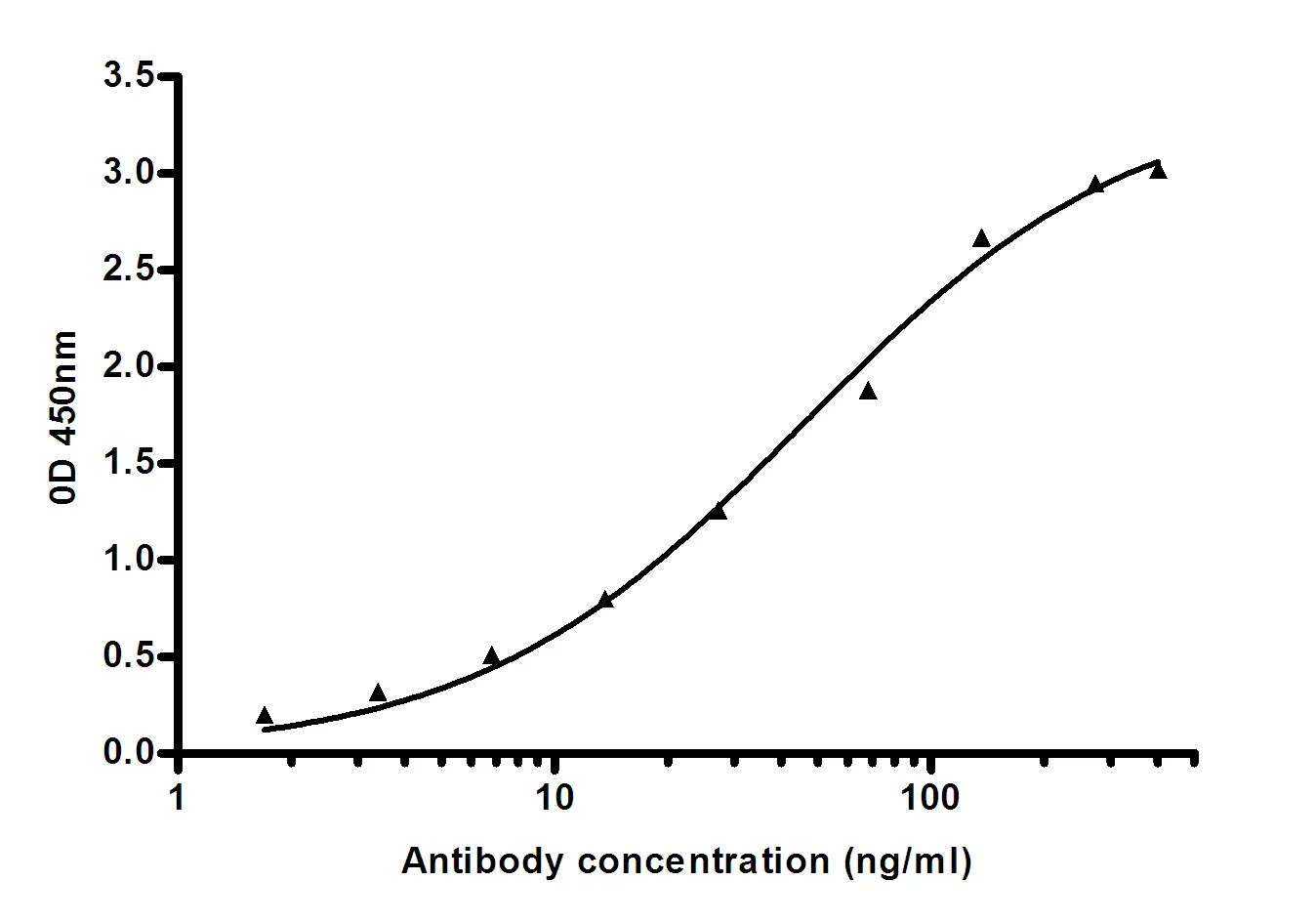
| アプリケーション | WB,ELISA |
| 希釈倍率 | WB 1:500-1:2000,ELISA 1:10000-1:20000 |
| 分子量 | 50kDa |
研究分野
背景
| 機能:聴覚刺激の調節に関与すると考えられるイオンチャネル型受容体。アゴニストとの結合は、全てのサブユニットに影響を及ぼす広範な構造変化を引き起こし、細胞膜を貫通するイオン伝導チャネルの開口につながる可能性がある。このチャネルはカルシウムを含む様々な二価陽イオンに対して透過性があり、これらのイオンの流入はカリウム電流を活性化し、細胞膜を過分極させる可能性がある。耳においては、これが基底膜の運動低下につながり、聴神経線維の活動を変化させ、動的聴力の範囲を狭める可能性がある。これは音響外傷から保護する可能性がある。,その他:CHRNA9とCHRNA10からなるヘテロオリゴマー受容体は、非定型の薬理学的プロファイルを有し、ストリキニーネ(グリシン受容体拮抗薬)やアトロピン(ムスカリン性アセチルコリン受容体拮抗薬)など、いくつかの非ニコチン性リガンドに結合します。,類似性:リガンド依存性イオンチャネル(TC 1.A.9)ファミリーに属します。,サブユニット:CHRNA9と結合してヘテロオリゴマーチャネルを形成します。天然の外耳感覚細胞受容体は、CHRNA9-CHRNA10ヘテロオリゴマーで構成されている可能性があります。,組織特異性:内耳組織、扁桃腺、不死化B細胞、培養T細胞、および末梢血リンパ球で発現しています。,機能:聴覚刺激の調節において役割を果たすと考えられるイオンチャネル型受容体。アゴニスト結合は、全てのサブユニットに影響を及ぼす広範な構造変化を引き起こし、細胞膜を横切るイオン伝導チャネルの開口につながる可能性があります。このチャネルはカルシウムを含む様々な二価陽イオンに対して透過性があり、これらのイオンの流入はカリウム電流を活性化し、細胞膜を過分極させる可能性があります。耳においては、これが基底膜の運動低下につながり、聴神経線維の活動を変化させ、動的聴力の範囲を狭める可能性があります。これは音響外傷から保護する可能性がある。,その他:CHRNA9とCHRNA10からなるヘテロオリゴマー受容体は、非定型的な薬理学的プロファイルを有し、ストリキニーネ(グリシン受容体拮抗薬)やアトロピン(ムスカリン性アセチルコリン受容体拮抗薬)など、いくつかの非ニコチン性リガンドに結合する。,類似性:リガンド依存性イオンチャネル(TC 1.A.9)ファミリーに属する。,サブユニット:CHRNA9と結合してヘテロオリゴマーチャネルを形成する。天然の外耳道内有毛細胞受容体は、CHRNA9-CHRNA10ヘテロオリゴマーから構成されている可能性がある。,組織特異性:内耳組織、扁桃腺、不死化B細胞、培養T細胞、末梢血リンパ球で発現する。, |