

AChRα1 Rabbit Polyclonal Antibody

AChRα1 Rabbit Polyclonal Antibody

Cat: APRab06495
Boyut:20μL Fiyat:$99_x000D_
Boyut:50μL Fiyat:$118_x000D_
Boyut:100μL Fiyat:$220_x000D_
Boyut:200μL Fiyat:$380_x000D_
Uygulama:IHC,ICC/IF,ELISA
Reaktivite:Human,Mouse,Rat
Konjuge:Unconjugated
İsteğe bağlı konjugeler: Biotin, FITC (ücretsiz). Diğer 26 konjugatı görün.

Gen Adı:CHRNA1
Category: ポリクローナル抗体 Tags: , , , , , , , , ,
AChRα1 Rabbit Polyclonal Antibody
Konjugasyon: Unconjugated
Rabbit polyclonal Antibody
Uygulama
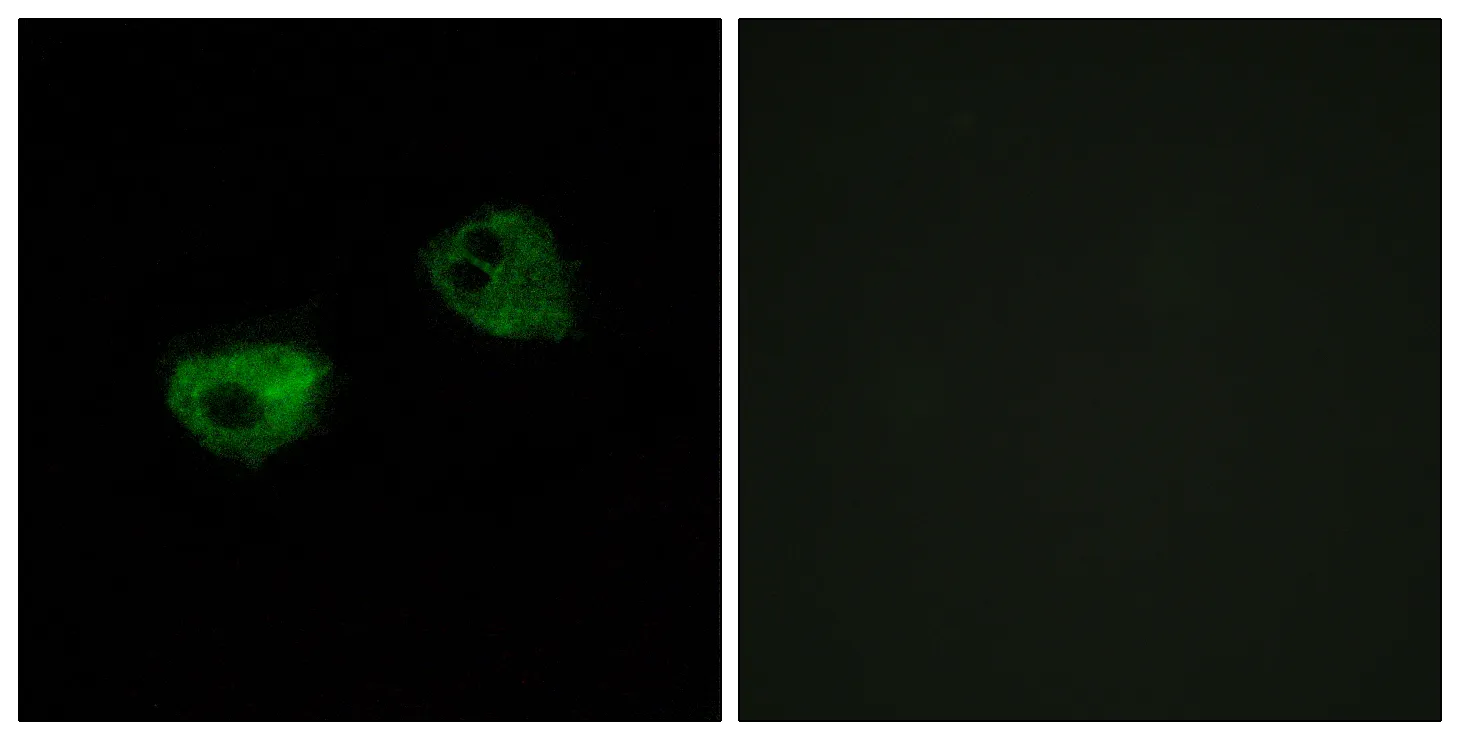
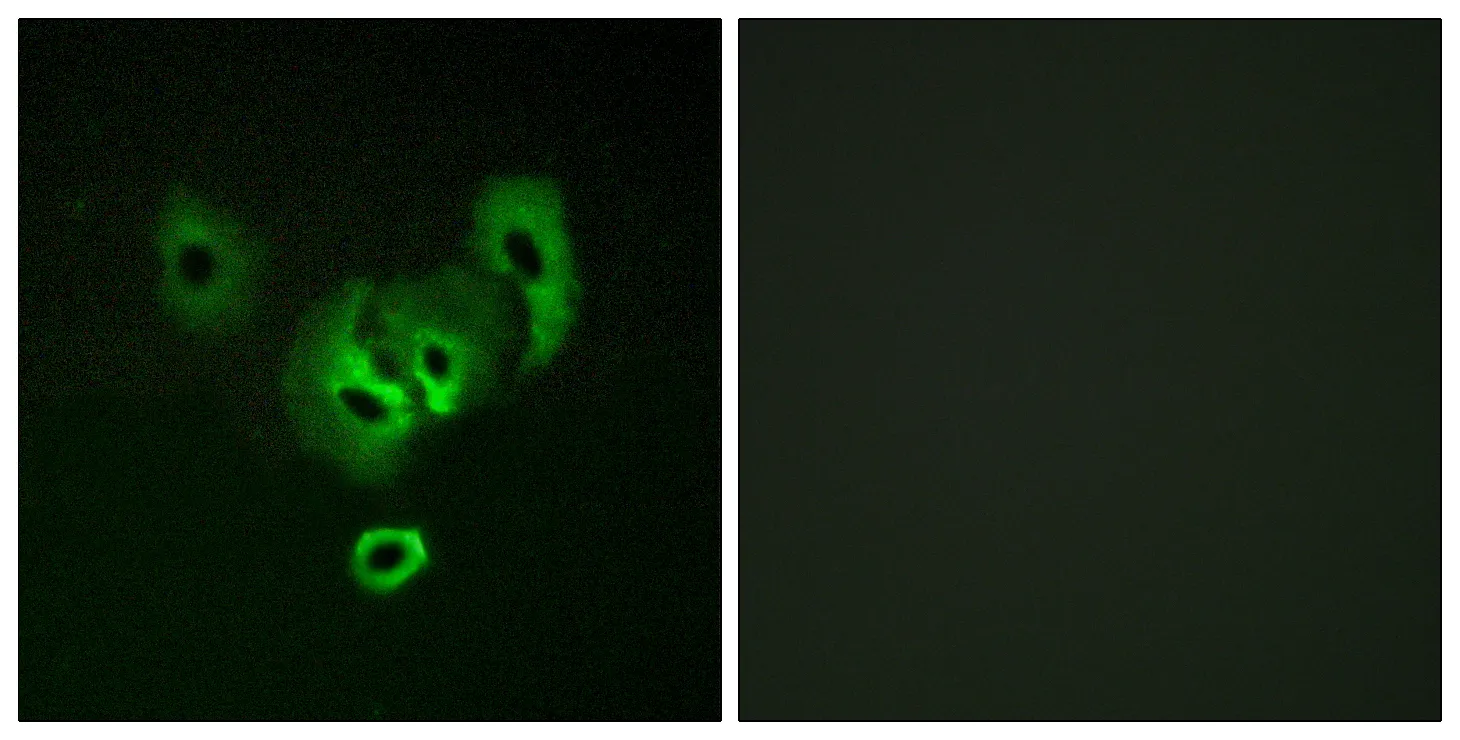
IHC  ICC/IF  ELISA IHC,ICC/IF,ELISA
Reaktivite
Human,Mouse,Rat
Gen Adı
CHRNA1
Saklama
Aliquot and store at -20°C (valid for 12 months). Avoid freeze/thaw cycles.
Özet
Ürün Adı AChRα1 Rabbit Polyclonal Antibody
Açıklama Rabbit polyclonal Antibody
Konak Rabbit
Reaktivite Human,Mouse,Rat
Konjugasyon Unconjugated
Modifikasyon Unmodified
İzotip IgG
Klonalite Polyclonal
Form Liquid
Konsantrasyon Unconjugated
Saklama Aliquot and store at -20°C (valid for 12 months). Avoid freeze/thaw cycles.
Nakliye Ice bags.
Tampon Liquid in PBS containing 50% glycerol, 0.5% protective protein and 0.02% New type preservative N.
Saflaştırma Affinity purification
Antijen Bilgisi
Gen Adı CHRNA1
Alternatif İsimler CHRNA1; ACHRA; CHNRA; Acetylcholine receptor subunit alpha
Gen Kimliği 1134
SwissProt Kimliği P02708
İmmünojen The antiserum was produced against synthesized peptide derived from human AChRalpha1. AA range:168-217
Uygulama
Uygulama IHC,ICC/IF,ELISA
Seyreltme Oranı IHC 1:100-1:300,ICC/IF 1:50-1:200,ELISA 1:5000-1:20000
Moleküler Ağırlık -
Araştırma Alanı
Neuroscience
Arka Plan
The muscle acetylcholine receptor consiststs of 5 subunits of 4 different types: 2 alpha subunits and 1 each of the beta, gamma, and delta subunits. This gene encodes an alpha subunit that plays a role in acetlycholine binding/channel gating. Alternatively spliced transcript variants encoding different isoforms have been identified. [provided by RefSeq, Nov 2012],disease:Defects in CHRNA1 are a cause of congenital myasthenic syndrome fast-channel type (FCCMS) [MIM:608930]. FCCMS is a congenital myasthenic syndrome characterized by kinetic abnormalities of the AChR. In most cases, FCCMS is due to mutations that decrease activity of the AChR by slowing the rate of opening of the receptor channel, speeding the rate of closure of the channel, or decreasing the number of openings of the channel during ACh occupancy. The result is failure to achieve threshold depolarization of the endplate and consequent failure to fire an action potential.,disease:Defects in CHRNA1 are a cause of congenital myasthenic syndrome slow-channel type (SCCMS) [MIM:601462]. SCCMS is the most common congenital myasthenic syndrome. Congenital myasthenic syndromes are characterized by muscle weakness affecting the axial and limb muscles (with hypotonia in early-onset forms), the ocular muscles (leading to ptosis and ophthalmoplegia), and the facial and bulbar musculature (affecting sucking and swallowing, and leading to dysphonia). The symptoms fluctuate and worsen with physical effort. SCCMS is caused by kinetic abnormalities of the AChR, resulting in prolonged endplate currents and prolonged AChR channel opening episodes.,disease:Defects in CHRNA1 are a cause of lethal type multiple pterygium syndrome [MIM:253290]. Multiple pterygia are found infrequently in children with arthrogryposis and in fetuses with fetal akinesia syndrome. In lethal multiple pterygium syndrome there is intrauterine growth retardation, multiple pterygia, and flexion contractures causing severe arthrogryposis and fetal akinesia. Subcutaneous edema can be severe, causing fetal hydrops with cystic hygroma and lung hypoplasia. Oligohydramnios and facial anomalies are frequent.,disease:The alpha subunit is the main focus for antibody binding in myasthenia gravis [MIM:254200]. Myasthenia gravis is characterized by sporadic muscular fatigability and weakness, occurring chiefly in muscles innervated by cranial nerves, and characteristically improved by cholinesterase-inhibiting drugs.,function:After binding acetylcholine, the AChR responds by an extensive change in conformation that affects all subunits and leads to opening of an ion-conducting channel across the plasma membrane.,similarity:Belongs to the ligand-gated ionic channel (TC 1.A.9) family.,subunit:Pentamer of two alpha chains, and one each of the beta, delta, and gamma (in immature muscle) or epsilon (in mature muscle) chains.,tissue specificity:Isoform 1 is only expressed in skeletal muscle whereas isoform 2 is constitutively expressed in skeletal muscle, brain, heart, kidney, liver, lung and thymus.,
   💬 WhatsApp