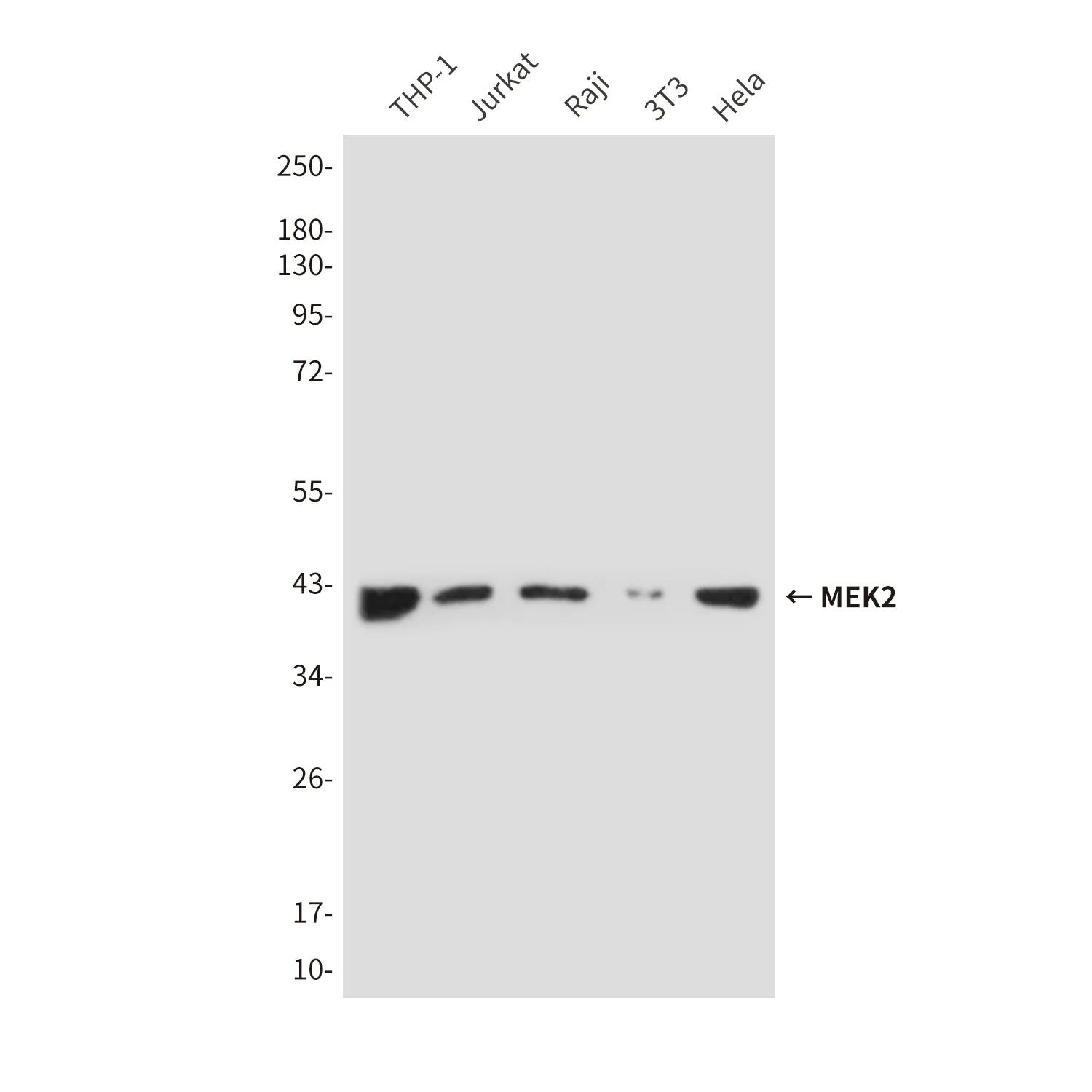
ITPK1ウサギモノクローナル抗体
コンジュゲーション: 非共役
組換えウサギモノクローナル抗体
アプリケーション
反応性
人間
遺伝子名
ITPK1
保存
小分けして-20℃で保存してください(12ヶ月間有効)。凍結融解サイクルは避けてください。
要約
| 製品名 | ITPK1ウサギモノクローナル抗体 |
| 説明 | 組換えウサギモノクローナル抗体 |
| 宿主 | うさぎ |
| 反応性 | 人間 |
| コンジュゲーション | 非共役 |
| 修飾 | 未修正 |
| アイソタイプ | IgG |
| クローン性 | モノクローナル |
| 形態 | 液体 |
| 濃度 | 非共役 |
| 保存 | 小分けして-20℃で保存してください(12ヶ月間有効)。凍結融解サイクルは避けてください。 |
| 配送 | 氷嚢。 |
| バッファー | 0.05% アジ化ナトリウム、0.05% 保護タンパク質、50% グリセロールを含む TBS で精製された抗体。 |
| 精製 | アフィニティー精製 |
抗原情報
| 遺伝子名 | ITPK1 |
| 別名 | ITRPK1 |
| 遺伝子ID | 3705 |
| SwissProt ID | Q13572 |
| 免疫原 | ヒトITPK1の合成ペプチド |
アプリケーション
| アプリケーション | WB,IP |
| 希釈倍率 | WB 1:500-1:1000,IP 1:10-1:20 |
| 分子量 | Calculated MW: 46 kDa; Observed MW: 46 kDa |
研究分野
背景
| Ins(3,4,5,6)P4やIns(1,3,4)P3など、様々なイノシトールポリリン酸をリン酸化できるキナーゼ。Ins(3,4,5,6)P4の1位をリン酸化してIns(1,3,4,5,6)P5を生成する。Ins(3,4,5,6)P4は細胞膜Ca2+活性化Cl-チャネルの阻害剤であるのに対し、Ins(1,3,4,5,6)P5は阻害剤ではないため、この反応は制御的に重要であると考えられている。また、Ins(1,3,4)P3のO-5およびO-6位をリン酸化して、ヘキサキスリン酸(InsP6)経路に必須の分子であるIns(1,3,4,6)P4を生成する。イノシトールポリリン酸ホスファターゼとしても機能し、Ins(1,3,4,5)P4およびIns(1,3,4,6)P4をIns(1,3,4)P3に、またIns(1,3,4,5,6)P5をIns(3,4,5,6)P4に脱リン酸化します。また、ADPおよびマグネシウム存在下でイノシトールテトラキスリン酸異性体であるIns(1,3,4,5)P4およびIns(1,3,4,6)P4を相互変換する異性化酵素としても機能する可能性があります。InsP6経路の律速酵素として機能すると考えられます。TNFRSF1A関連デスドメインの活性化を阻害することにより、TNF-α誘導性アポトーシスを修飾します。 |