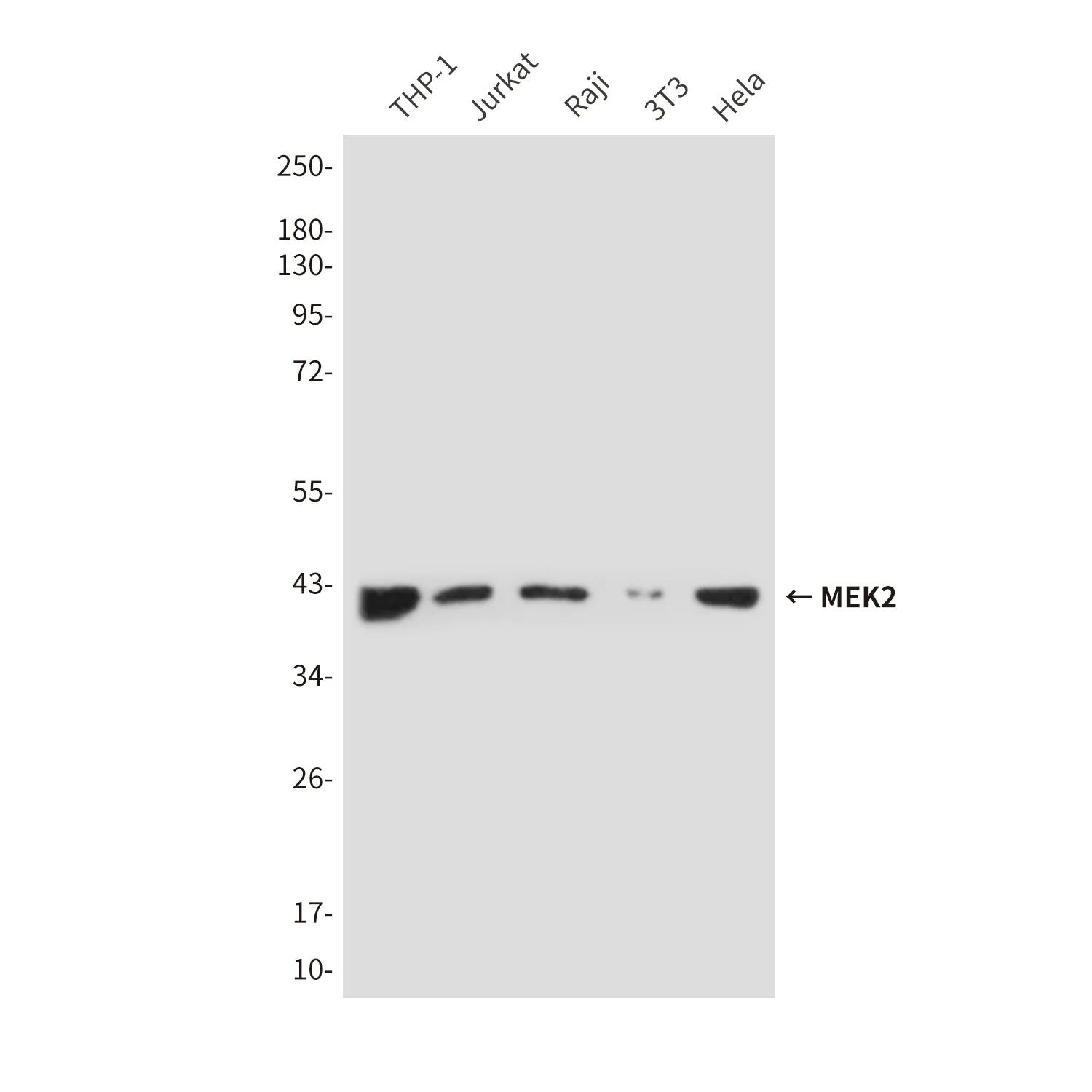


CTCFウサギモノクローナル抗体
コンジュゲーション: 非共役
組換えウサギモノクローナル抗体
アプリケーション
反応性
ヒト、マウス、ラット
遺伝子名
CTCF
保存
小分けして-20℃で保存してください(12ヶ月間有効)。凍結融解サイクルは避けてください。
要約
| 製品名 | CTCFウサギモノクローナル抗体 |
| 説明 | 組換えウサギモノクローナル抗体 |
| 宿主 | うさぎ |
| 反応性 | ヒト、マウス、ラット |
| コンジュゲーション | 非共役 |
| 修飾 | 未修正 |
| アイソタイプ | IgG |
| クローン性 | モノクローナル |
| 形態 | 液体 |
| 濃度 | 非共役 |
| 保存 | 小分けして-20℃で保存してください(12ヶ月間有効)。凍結融解サイクルは避けてください。 |
| 配送 | 氷嚢。 |
| バッファー | 50mMトリスグリシン(pH 7.4)、0.15M NaCl、40%グリセロール、0.01%アジ化ナトリウム、0.05%保護タンパク質を含む溶液で提供されます。受領日から12ヶ月間安定です。 |
| 精製 | アフィニティー精製 |
抗原情報
| 遺伝子名 | CTCF |
| 別名 | MRD21 |
| 遺伝子ID | 10664 |
| SwissProt ID | P49711 |
| 免疫原 | ヒトCTCFの合成ペプチド |
アプリケーション
| アプリケーション | WB,IHC,ICC/IF,FC |
| 希釈倍率 | WB 1:1000-1:5000,IHC 1:200-1:1000,ICC/IF 1:200-1:500,FC 1:50-1:100 |
| 分子量 | Calculated MW:83 kDa; Observed MW:140 kDa |
研究分野
背景
| この遺伝子はBORIS + CTCF遺伝子ファミリーのメンバーであり、11個の高度に保存されたジンクフィンガー(ZF)ドメインを持つ転写調節タンパク質をコードしています。この核タンパク質は、ZFドメインの様々な組み合わせを用いて、様々なDNA標的配列およびタンパク質に結合することができます。結合部位の状況に応じて、このタンパク質はヒストンアセチルトランスフェラーゼ(HAT)を含む複合体に結合して転写活性化因子として機能するか、ヒストン脱アセチル化酵素(HDAC)を含む複合体に結合して転写抑制因子として機能することができます。このタンパク質が転写インシュレーターエレメントに結合すると、エンハンサーと上流プロモーター間の情報伝達を阻害し、インプリント発現を調節することができます。この遺伝子の変異は、浸潤性乳がん、前立腺がん、およびウィルムス腫瘍と関連付けられています。この遺伝子には、異なるアイソフォームをコードする選択的スプライシング転写バリアントが見つかっています。[RefSeq提供、2010年7月] |