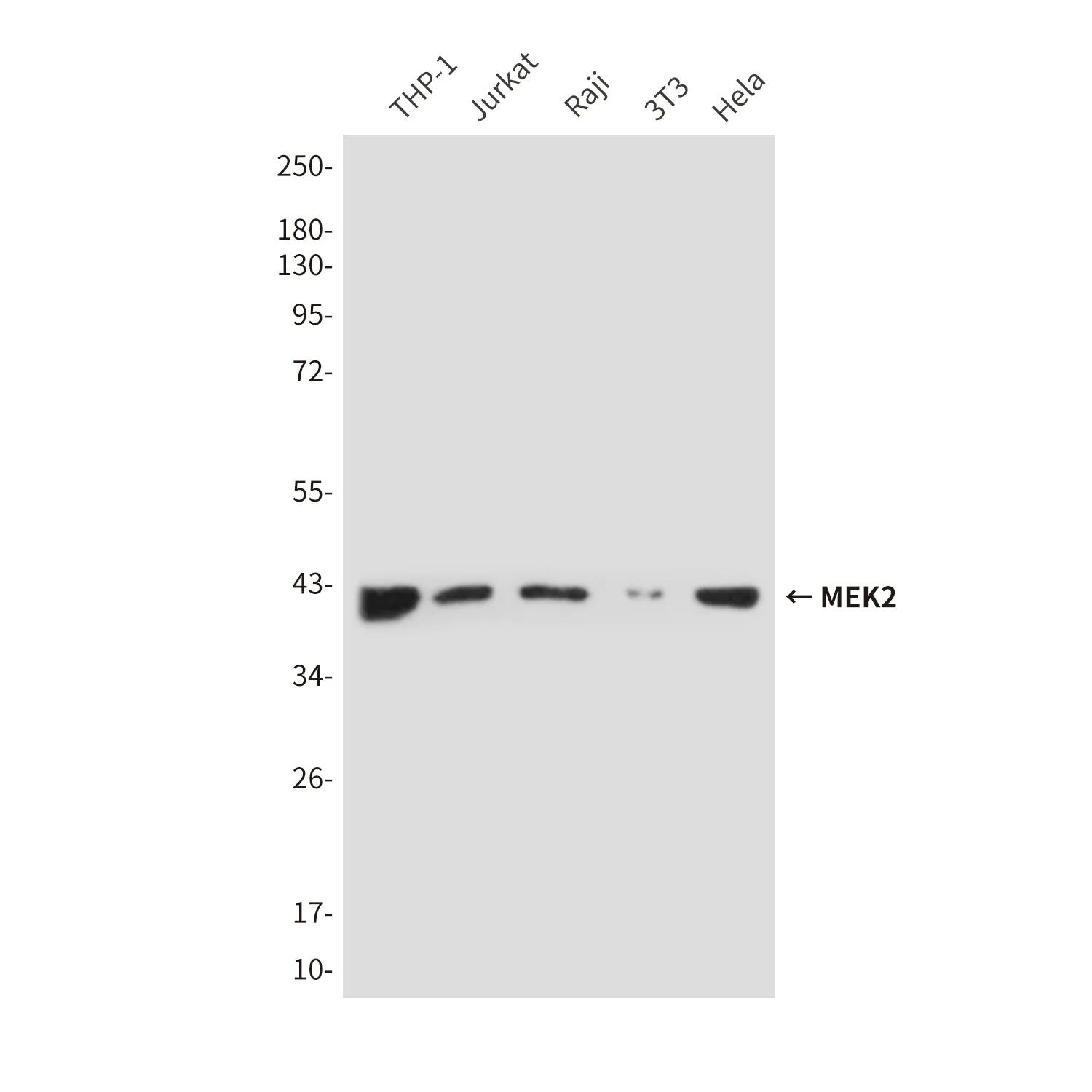
ADH5ウサギモノクローナル抗体
コンジュゲーション: 非共役
組換えウサギモノクローナル抗体
アプリケーション
反応性
ヒト、マウス、ラット
遺伝子名
ADH5
保存
小分けして-20℃で保存してください(12ヶ月間有効)。凍結融解サイクルは避けてください。
要約
| 製品名 | ADH5ウサギモノクローナル抗体 |
| 説明 | 組換えウサギモノクローナル抗体 |
| 宿主 | うさぎ |
| 反応性 | ヒト、マウス、ラット |
| コンジュゲーション | 非共役 |
| 修飾 | 未修正 |
| アイソタイプ | IgG |
| クローン性 | モノクローナル |
| 形態 | 液体 |
| 濃度 | 非共役 |
| 保存 | 小分けして-20℃で保存してください(12ヶ月間有効)。凍結融解サイクルは避けてください。 |
| 配送 | 氷嚢。 |
| バッファー | 50mMトリスグリシン(pH 7.4)、0.15M NaCl、40%グリセロール、0.01%アジ化ナトリウム、0.05%保護タンパク質を含む溶液で提供されます。受領日から12ヶ月間安定です。 |
| 精製 | アフィニティー精製 |
抗原情報
| 遺伝子名 | ADH5 |
| 別名 | FDH; ADHX; ADH-3; FALDH; GSNOR; GSH-FDH; HEL-S-60p |
| 遺伝子ID | 128, 11532, 100145871 |
| SwissProt ID | P11766, P28474, P12711 |
| 免疫原 | ヒトADH5の合成ペプチド |
アプリケーション
| アプリケーション | WB,IHC,FC |
| 希釈倍率 | WB 1:1000-1:5000,IHC 1:50-1:100,FC 1:10-1:100 |
| 分子量 | Calculated MW:40 kDa; Observed MW:40 kDa |
研究分野
背景
| この遺伝子はアルコール脱水素酵素ファミリーのメンバーをコードしています。このファミリーのメンバーは、エタノール、レチノール、その他の脂肪族アルコール、ヒドロキシステロイド、脂質過酸化生成物など、多様な基質を代謝します。コードされているタンパク質はホモ二量体を形成します。エタノール酸化に対しては実質的に活性を示しませんが、長鎖第一級アルコールの酸化、およびホルムアルデヒドとグルタチオンとの自発的付加物であるS-ヒドロキシメチルグルタチオンの酸化に対して高い活性を示します。この酵素は、流涙、鼻炎、咽頭炎、接触性皮膚炎を引き起こす強力な刺激性および感作性物質であるホルムアルデヒドの除去における細胞代謝の重要な構成要素です。ヒトゲノムには、この遺伝子に関連する非転写偽遺伝子がいくつか含まれています。[RefSeq提供、2008年10月] |